Becoming licensed in the U.S. after earning a nursing degree abroad is only part of the journey. To build a sustainable, rewarding career, foreign-educated nurses need to think strategically about clinical experience, immigration and visa pathways, and the importance of selecting the right school from the beginning.

While international programs may prepare you well academically, U.S. employers and state boards often prefer — or even require — some level of clinical training or work experience within the U.S.
- Internships and Externships
- Short-term placements in hospitals or clinics where you can shadow and support nursing teams.
- These experiences strengthen your resume and demonstrate familiarity with U.S. healthcare practices.
- Volunteer Work
- Serving in hospitals, nursing homes, or community health programs is often more accessible than paid work initially.
- Volunteering shows initiative and commitment while helping you adapt to U.S. healthcare culture.
- Residency/Transition-to-Practice Programs
- Some hospitals offer special onboarding programs designed for new or international nurses.
- These include mentorship, skills refreshers, and structured support to ease your transition into U.S. nursing.
Tip: Even after passing the NCLEX, clinical exposure in the U.S. is often the factor that helps secure a first job offer.
Immigration & Work Visas
Nursing is considered a high-demand occupation in the U.S., which can make visa sponsorship more achievable. However, each visa type has different requirements.
- H-1B Visa (Specialty Occupations)
- Some advanced practice or specialized nursing roles may qualify.
- Highly competitive and typically requires an advanced degree or unique specialty.
- TN Visa (for Canadian and Mexican Citizens)
- Available under the USMCA agreement.
- Provides a relatively straightforward pathway for RNs from Canada or Mexico with recognized credentials.
- Employment-Based Green Card (EB-3)
- A common pathway for foreign-trained nurses.
- Employers in shortage areas (such as rural or underserved regions) are often more open to sponsorship.
- Underserved Area Opportunities
- Hospitals and clinics in rural or high-need areas may offer visa sponsorship or relocation incentives.
- This route can accelerate your ability to work legally in the U.S. while serving communities in need.
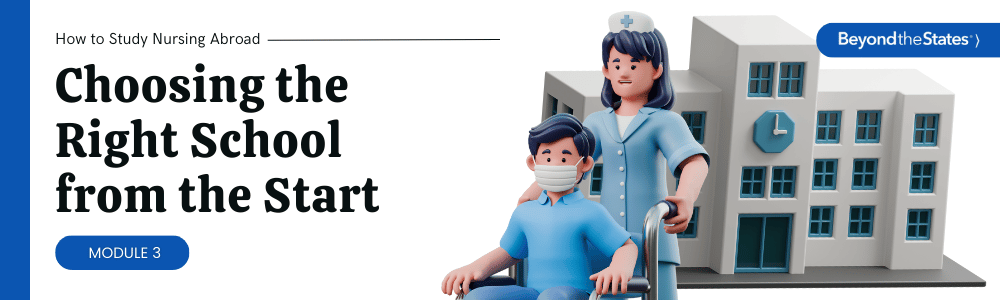
Your choice of nursing school abroad can greatly affect how smooth your licensure and career pathway will be later.
Some universities abroad even have partnerships with U.S. hospitals or exchange programs, making the transition easier.
Check Global Directories
Make sure the program is listed in the World Directory of Nursing Schools or equivalent recognized listings.
This signals legitimacy to state boards and credentialing agencies.
Graduate Outcomes Matter
Ask if alumni have successfully become licensed and employed in the U.S.
Programs with strong track records give you confidence in your own prospects.
Look for Career Support Services
Schools that offer career counseling, NCLEX prep resources, or alumni networking can give you a major advantage.