Best Universities in Spain
College tuition in the United States has gone up more than 180% since 1980, rising much faster than inflation and family income.
For many families, it can feel like the only options are expensive private universities, stressful admissions decisions, or years of student debt.
But there’s another path that often gets overlooked.
You can earn a fully accredited bachelor’s degree in Europe, often in English for much less than you’d pay in the U.S. And Spain is one of the best places to do it.
Here’s why that matters.
Spain offers respected universities, strong international programs, and a growing number of English-taught degrees built specifically for international students. For U.S. students willing to look beyond the traditional college admissions process, the best universities in Spain can offer a high-quality education at a much more reasonable cost.
Let’s take a closer look.
Summary
Why Spain Is Becoming a Popular Destination for American Students
Spain has always been popular for semester-long study abroad programs. But lately, more international students are choosing to complete their full degree there instead.
There are a few big reasons for that.
1. Lower tuition
Compared to U.S. private universities charging $40,000–$70,000 per year, many Spanish universities are far more affordable.
That difference alone changes the conversation for a lot of families.
2. Increasing number of English-taught degrees
More universities in Spain now offer full bachelor’s programs taught entirely in English, especially in fields like:
- Business
- Economics
- International relations
- Engineering
- Data science
- Hospitality and tourism
This makes it much easier for U.S. students to study abroad without needing fluency in Spanish from day one.
3. Globally recognized universities
Spain is home to several respected institutions that rank among the top universities in Europe.
4. Clearer admissions requirements
Many European universities rely on transparent academic criteria instead of unpredictable holistic admissions reviews.
That’s a big shift.
Instead of hoping for acceptance from a small group of U.S. schools, students can apply to programs where the academic requirements are clearly published upfront.
Best Universities in Spain for English-Taught Degrees
Spain has more than 80 universities, but only some offer full bachelor’s degrees taught in English.
Here are some of the best universities in Spain for international students looking to earn a full degree.
1. IE University
Location: Segovia and Madrid

IE University is one of the most internationally focused schools in Spain. Nearly all undergraduate programs are taught in English.
Popular programs include:
- Business Administration
- International Relations
- Data and Business Analytics
- Computer Science and Artificial Intelligence
- Architecture
IE has a highly global student body and strong ties with international employers.
2. Universitat Pompeu Fabra (UPF)
Location: Barcelona

UPF consistently ranks among Spain’s top universities, especially for economics, business, and the social sciences.
It offers several English-taught programs, including:
International Business Economics
Global Studies
Business Administration
Barcelona also gives students a strong international environment and a great student lifestyle.
3. ESADE Business School (Ramon Llull University)
Location: Barcelona
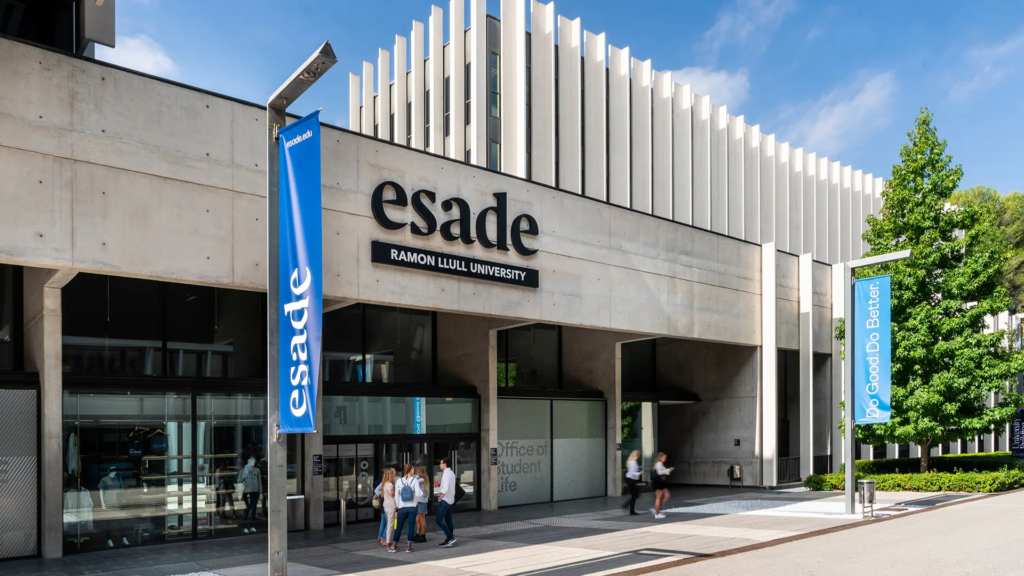
ESADE is one of Europe’s most respected business schools.
Its Bachelor in Business Administration (BBA) is taught fully in English and attracts students from around the world.
Key strengths include:
Corporate partnerships
Global internship opportunities
Strong reputation in business education
4. Universidad Carlos III de Madrid
Location: Madrid
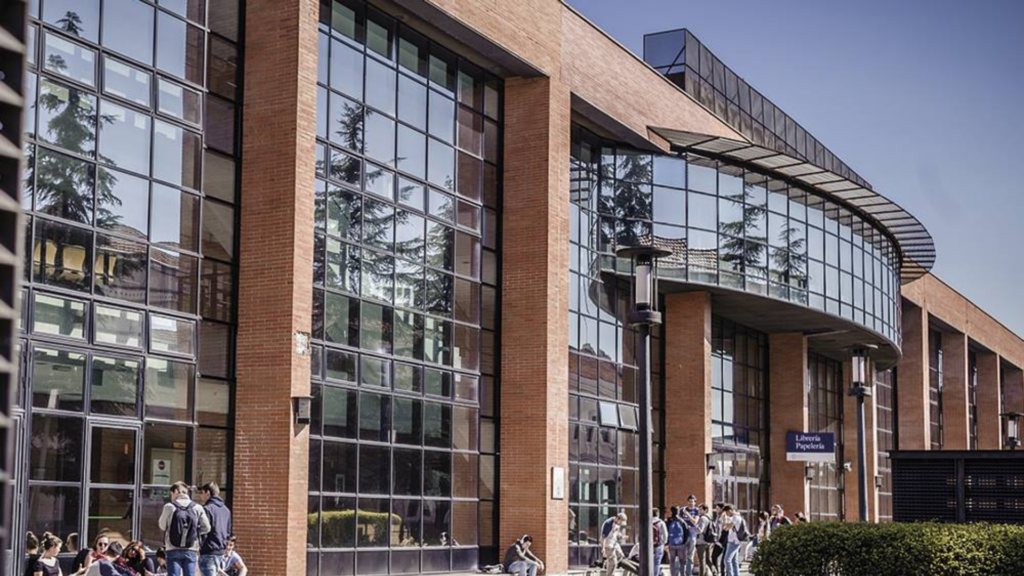
UC3M is a public university known for strong academics and growing international programs.
It offers English-taught programs in:
- Business Administration
- Economics
- Political science
- Engineering
Because it’s a public university, tuition is often much lower than private schools.
5. EU Business School (Barcelona Campus)
Location: Barcelona
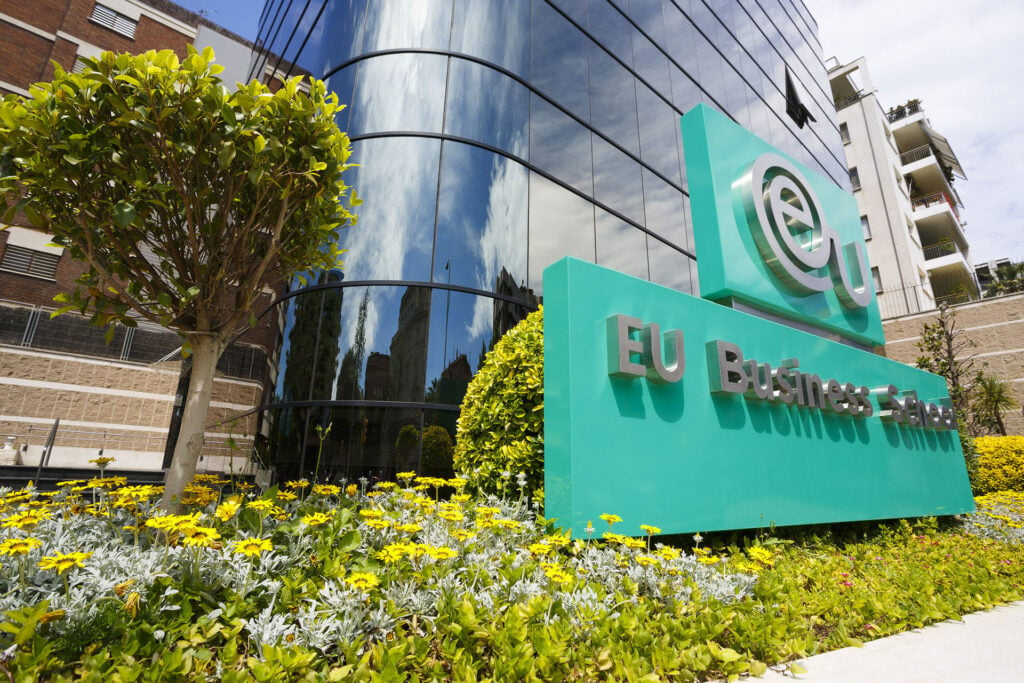
EU Business School focuses heavily on international business education and offers programs fully taught in English.
Programs include:
- Business Administration
- Communication and Public Relations
- Sports Management
- Digital Business
Its programs place a strong focus on internships and practical experience.
Discover all the English-taught European college programs in one place.
Beyond the States provides easy access to 12,600+ European bachelor’s and master’s programs across 870 universities, 550 cities, and 212 areas of study, plus all the resources you need to get there.
3400+
English-taught bachelor’s programs in our database.
550
Beautiful European cities to choose from.
$360,170
Typical savings against a private university in the US.
8200+
English-taught master’s programs in our database.
870
Top-tier universities accepting international students.
$65,038
Typical savings against in-state tuition in the US.
Comparing Top Universities in Spain
| University | Location | Known For | English-Taught Programs | Approx Tuition |
| IE University | Madrid / Segovia | Business, tech, international focus | Many | $20k–$30k |
| Pompeu Fabra University | Barcelona | Economics, social sciences | Several | $8k–$12k |
| ESADE | Barcelona | Business education | Business degrees | $18k–$25k |
| Carlos III University | Madrid | Economics, engineering | Growing options | $7k–$10k |
| EU Business School | Barcelona | Business programs | Many | $15k–$20k |
These schools represent different paths:
Private global universities
Public research universities
Specialized business schools
The right choice depends on your academic goals, budget, and where you’d like to live.
Cost of Studying at Universities in Spain
Affordability is one of the biggest reasons students look at Spain.
Here’s a realistic breakdown.
Tuition
Annual tuition usually falls between:
Public universities: $7,000–$12,000
Private universities: $15,000–$30,000
Even the more expensive private programs are often still cheaper than U.S. private universities.
Living Expenses
Monthly costs depend on the city.
| Expense | Madrid | Barcelona | Smaller Cities |
| Housing | $600–$1,200 | $650–$1,200 | $400–$800 |
| Food | $250–$350 | $250–$350 | $200–$300 |
| Transport | $40–$60 | $40–$60 | $30–$50 |
| Total Monthly | $1,000–$1,700 | $1,000–$1,700 | $800–$1,200 |
Estimated total annual cost:
$18,000–$35,000 per year, including tuition and living expenses.
For many families, that’s close to what they’d pay for in-state public tuition in the U.S.
Are Degrees from Spain Recognized in the U.S.?
This is one of the first questions families ask.
The short answer: yes, if you choose the right university.
Most major Spanish universities are part of the European Higher Education Area (EHEA), which helps standardize degree structures across Europe.
That means:
Degrees follow internationally recognized formats
Many universities hold global accreditation
Graduates regularly pursue U.S. graduate programs
Students from Spanish universities go on to graduate schools around the world, including in the United States.
What matters most is accreditation and institutional reputation, not just the country.
That’s why Beyond The States focuses on researching recognized universities and properly accredited programs.

Admissions Requirements for Spanish Universities
Admissions for English-taught universities in Spain are usually more straightforward than the U.S. holistic admissions process.
Requirements usually include:
- High school diploma
- Academic transcripts
- Proof of English proficiency (sometimes waived for U.S. students)
- Personal statement
- Occasionally an interview or entrance exam
Some universities may also ask for SAT or ACT scores, but many do not.
What families often appreciate most is the transparency.
European universities typically publish clear academic thresholds, so students can better understand where they stand.
Student Visa Process for Spain
American students studying long term in Spain need a student visa.
The process usually includes:
- Acceptance from a Spanish university
- Proof of financial support
- Health insurance
- Background check
- Visa application through a Spanish consulate
Once approved, students can live in Spain for the full length of their degree.
Many are also allowed to work part-time while studying.
Who Is a Degree in Spain a Good Fit For?

Studying abroad for a full degree isn’t the right choice for everyone.
But it can be a great option for students who:
- Want a globally focused education
- Are open to living abroad for several years
- Prefer clear admissions criteria
- Want to reduce the cost of a bachelor’s degree
- Are interested in international career
Students who enjoy travel, independence, and cultural exploration often do especially well in this environment.
Common Misconceptions About Studying in Spain
“Classes won’t be in English.”
Many English-taught university programs in Spain are created specifically for international students.
Entire degrees are taught in English.
“The degree won’t be recognized.”
Degrees from respected universities in Spain are widely recognized internationally.
Many graduates continue to graduate school or careers in the U.S.
“It’s only for study abroad.”
A lot of Americans think of Spain only as a semester-abroad destination.
But full degrees are becoming much more common, and often much more affordable.
Frequently Asked Questions
We’re here to help answer your questions about best universities in Spain.
Yes. Several universities offer bachelor’s degrees fully taught in English, especially in business, economics, engineering, and international relations.
Total annual costs usually range from $18,000 to $35,000, including tuition and living expenses.
Yes. Many universities actively recruit international students and accept U.S. high school diplomas.
For many students, yes.
Spain combines respected universities, lower tuition, and a high quality of life.
Post-study work options vary, but Spain and other European countries do offer pathways that allow international graduates to stay and look for employment.
Exploring Universities in Spain
For American students open to earning their degree abroad, Spain offers a strong mix of respected universities, lower costs, and internationally recognized education.
But choosing the right program takes real research.
At Beyond The States, we focus specifically on full English-taught degrees in Europe not semester study abroad programs. We research universities, vet programs, and help families understand what their options actually look like.
If you’d like to explore whether Spain, or another European country might be the right fit, you can:
Take the Beyond The States program matching quiz
Explore vetted English-taught degrees across Europe
Or schedule a strategy session to discuss your goals
For many students, the path to a great education may simply start by looking beyond the United States.