Hey, Carlee!
Your Best Fit List is ready 👍
I’ve selected programs that uniquely represent your personality and needs. Below every listing you’ll find an explanation as to why I selected that specific program for you. I also recommend you keep digging into each selected college, city, and country for relevant information.
I really enjoyed building this list for you! In your case, I worked hard to find a couple programs that are a bit broader, that give you some curriculum flexibility, and may easily combine your various interests, but I also include a couple more specialized options – there’s a lot of food for thought here. One thing of note is Communications programs in Europe are a bit different than in the US in that they tend to focus more on marketing/PR, rather than journalism. And often, in Europe, the path to a journalism career doesn’t necessarily entail an undergraduate degree in Journalism, but rather pursuing the field of knowledge that the student aims to report on. I’ve taken all of this into account when it comes to balancing your list here. One program I didn’t include on your list, but thought I should just make reference to given your lean towards photography, is this Photography program at the esteemed TU Dublin, since it is one of the few programs that folds in a photojournalism component; your list, otherwise, focuses more on Communications and Journalism programs.
Regarding your preferred locations, there were no fitting programs for you in Croatia or in Switzerland, for a number of reasons. Most programs in Italy require US students to have 3-4 APs of 3+ scores, and the one program in Spain I was most excited to suggest requires (which I discovered while speaking with the school) a B2 level of Spanish for admissions. I wasn’t sure if you had that level of Spanish, but most importantly we need to remove it from our database since we only represent programs that are 100% English-taught – occasionally a program slips in like this. So, in the end, I was able to find some great options for you in Greece, the Netherlands, Czech Republic, and also Ireland.
Coincidentally, there are 2 programs on your list that are American-accredited schools – it just so happens that your area of study (and other parameters) lined up with these particular schools. I think this may work in your favor actually in that it may soften the blow and offer some reassurance for your parents. These American schools/programs do tend to mimic the US college experience, across all facets, more-so than non-American schools in Europe, and there may in fact be a large American student presence at these universities as well – just something to take into consideration. And the program(s) in Ireland that I include may also bring reassurance to your folks in that of course Ireland is an English-speaking country, and may provide a softer landing for you as an international student. Finally, I would recommend that you and your parents join our private Facebook group, if you haven’t already, since many of our members are attending some of the schools/programs on your list, and they can offer insight and camaraderie.
Okay, here we go!
Details
#1 – Anglo American University
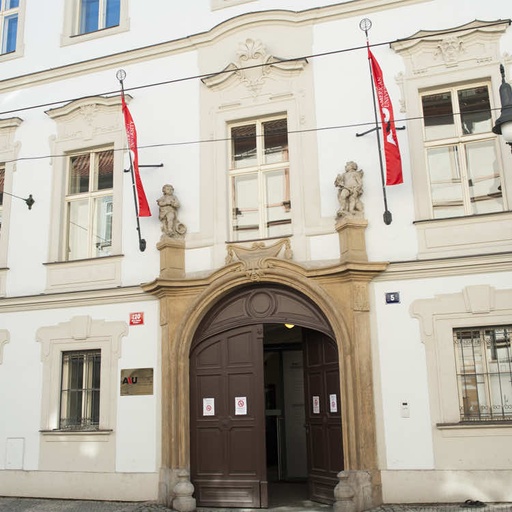
Journalism and Media Studies
Prague, Czech Republic
3 Years | €10,460 Yearly Tuition
Why I selected this for you
This is one of the most esteemed English-taught Journalism programs in Europe, and it’s the first of the American-accredited universities on your list. This 3-year program has a reputation for being unique and rigorous in the EU, and a number of our other members have enrolled in it because of its esteem. One of our past student ambassadors attends this school (in his final year now), and has really enjoyed it and found it to be a great educational experience. Plus…it’s in Prague, a super livable, walkable and notably safe city!
The school says: “The curriculum offers a balanced mix of courses in journalism and media studies: reporting, media theory, digital media, visual journalism, film, and marketing, which is complemented by foundation courses in history, politics, sociology and psychology.” A good thing is that all students at AAU have some courses they need to take-like gen ed requirements but that don’t take as long. This makes it easier to change majors if you decide one program would be a better fit than the one you initially choose. For example, another interesting option for you to consider at AAU is their Humanities, Society and Culture program.
Private schools, in this region of Europe, only came into existence after the end of the Cold War. Though AAU is a fairly young school, in terms of Prague universities, founded in 1990, it is the oldest private institution of higher education in the Czech Republic. There are a number of schools throughout Europe that are accredited by US agencies and they use that as a way to charge American-sized tuition – but not AAU, which is a truly affordable choice. All of their programs are English conducted, they tout an American style of teaching, and they have WASC accreditation, an agency that also accredits schools like Stanford University.
The facilities at AAU are incredible. They recently moved to a location in a great part of the city near the Prague Castle. It’s a historic building that they renovated for school use. AAU prides itself on small class size (max of 25 students), and interactive group work and class discussions. The small student body does not mean that students have a limited choice of classes. Over 200 courses are generally offered each semester, and many of the class options sound super interesting.
This is an American-accredited university, and the school does work with FAFSA in the US. This is a program with a relatively low-barrier to admissions, and would require only US high school transcripts/diploma for application, and your GPA. You may also need to provide a CV/Resume and/or a Personal Statement, and there is more clarity on the program’s web page on guidelines. They have rolling admissions all year long, but the deadline for applying to the fall program is May. I always encourage students to apply early.
#2 – University of Limerick
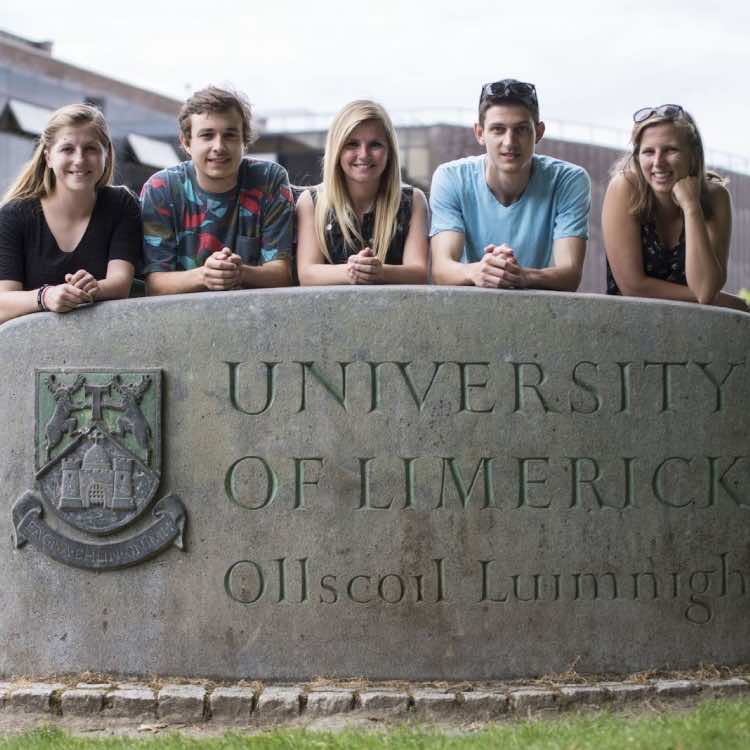
Journalism and Digital Communication
Limerick, Ireland
4 Years | €13500 Yearly Tuition
Why I selected this for you
I know that Ireland wasn’t a preferred country on your list, but I found a program (and university actually) that I think offers some interesting options in your areas of study. Also, Ireland has one of the strongest education systems in the whole of the EU, and arguably in the world – their schools are well-funded, and their programs are so robust. Beyond the States founder, Jenn Viemont, wrote after her visit to the school last year,“I think what impresses me the most about this school is their interest in the whole student. They have options for students to explore a variety of academic interests in a number of different ways. They have ways to develop their students as future employees. They are known for their sports programs, and in addition to a regular orientation, they also have a unique Seven Week Orientation for first year students with weekly themes that help students find their way around campus, learn study skills and resources, connect with their academic advisor, and more.”
First, let’s talk about their 4-year Journalism and Digital Communication program. The bulk of the program is journalism-specific. Over the course of your 4 years you will study a core set of journalism, but you will also have the opportunity to study 2 electives in your first year of the course, and then you will choose 1 of these to continue studying to the end of the course. These pathways are Economics, English Literature, History, Law, Politics, Sociology, and French or Japanese or German or Spanish (that last one may appeal to you). As well, during the degree you will: produce their own radio reports and TV bulletins (in their state of the art studios); work on the awarding winning Limerick Voice news website, social media platforms and local newspaper (www.limerickvoice.com); produce and design an online magazine; work with the latest digital publishing and editing software programmes including Adobe Audition, Final Cut Pro and Indesign; use social media to self-publish and promote work; and learn key fact-checking and online verification skills. The program includes a six-month work placement opportunity in a national or regional news organization and an international study abroad placement.
But there are 2 other programs at the University of Limerick that I think you should look closely at as well. First, there’s an “Arts” program here, which we at BTS have featured as a Program of the Month in the past. Okay, it’s important to understand what Liberal Arts (or in this case it’s confusingly called “Arts”) programs entail. These dynamic, multidisciplinary programs, across the EU, allow students to explore and shape their own curriculum, and in your case cover a lot of Humanities and Social Sciences ground, including Communication and Media, and Linguistics. Check out this program in-depth to get a better sense of what is on offer here, and how you can shape a curriculum that might include many of your different interests.
The last program to consider, which I also think checks a lot of your boxes, but is a different approach is the school’s Social Sciences program.
Limerick is a major city in Ireland, set in Munster province in the south of the country. Its compact old town is known for the medieval-era St. Mary’s Cathedral and St. John’s square, which is lined with Georgian townhouses. Standing along the River Shannon, the 13th-century King John’s Castle is one of the city’s most recognisable sites. Limerick is one of the most affordable cities in Ireland for student living, and at the University of Limerick you can choose from various types of accommodation to suit your budget, either on campus or in neighborhoods within a few minutes’ walk of the University.
I usually double-confirm the admissions requirements we have listed in our database when building a BFL, but they aren’t currently listed on the university’s site right now, and this may be because they are reviewing next year’s requirements. This year’s requirements however, which we had listed in our database, are this: High School Graduation with GPA 3.3 and either SAT 1250 with 600 minimum in Maths or ACT 25 with 25 in Maths, but this may not be entirely accurate since each university program has their own required scores. You may want to consider retaking your ACT in this case, or taking the SAT, if you’re feeling drawn to this school and its programs. Given my experience however, I wouldn’t be too concerned about your eligibility here, and I would certainly apply regardless (if this program appeals to you). Ireland is one of the only countries that actually appreciates seeing other academic achievements included on an application, and so I would include your AP classes (although these aren’t mandatory). The school has rolling admissions, which typically opens in the fall, and the deadline is July. I would encourage you to apply early.
#3 – HANZE University of Applied Sciences
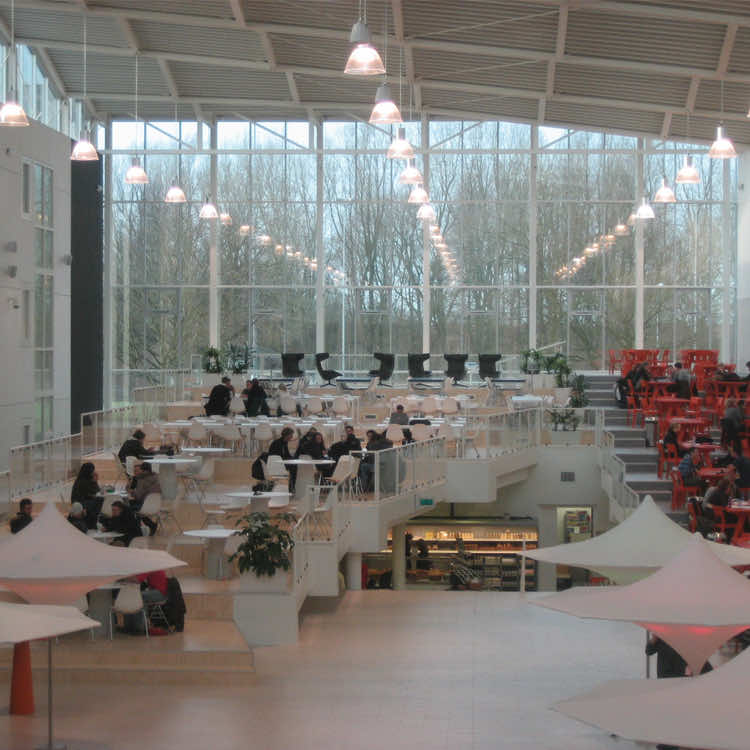
Internal Communication
Assen, Groningen
4 Years | €7900 Yearly Tuition
Why I selected this for you
Here is the only Dutch program on your list, at a reputable university of applied sciences. Dutch universities of applied science (UAS) are full bachelor’s degree programs where the focus is on acquiring the practical skills and knowledge that will prepare you for a career. Accreditation for these types of universities is tied to employment rates, and UASs work closely with businesses and organizations for the benefit of internships and post-graduate employment. These programs are typically 4-years and don’t require AP scores.
The 4-year International Communication program “will give you the skills and knowledge needed for an international career in communication. You will develop the flexibility to adapt to changes in a fast moving industry, identify the dynamics behind effective communication and put the knowledge and skills you have gained into practice. You will learn about public relations, marketing, consultancy, crisis communication, public affairs and business communication. You will receive media training, learn how to write publications and organize an international event. Throughout the programme, special attention is paid to developing intercultural competencies and facilitation skills.”
The first year is chock full, and you will learn about cultural differences (intercultural competencies), develop media skills and be introduced to research methods and communication theories.You will learn how to monitor international media, how to write a press release and how to organize a press conference. You’ll develop online texts and visuals for real clients to increase their brand recognition or to promote their products. You will come up with an entrepreneurial concept and learn how to pitch that in a specific media format. You will get camera training and create a personal brand video.
In the second year you will develop a media campaign and explore the theory of intercultural communication to help organizations establish and maintain international and intercultural relations. In the third year you will do an internship with an organization of your choosing, which can be anywhere in the world. The other half of the year is spent on exchange at one of their many international partner universities.
In the first semester of your fourth year, you will be able to choose from a broad range of elective courses. In the final semester, you will do a graduation assignment in which you take on the role of a junior consultant and offer a solution to a communication problem for a client of your choosing. This will be supported by research and will offer strategic advice at an advanced level. Overall, this is a very hands-on, practical and dynamic program.
The admissions requirements are very low-barrier here, and your US high school transcripts/diploma alone should suffice, but although they don’t require APs or SAT/ACT scores, they may be looking at your transcript Math grades. They have rolling admissions, but their application deadline for fall start is June 1. I would encourage you to apply early.
For all Best Fit Lists that include a program in the Netherlands, I’ve been sharing this recent announcement by the Dutch Ministry of Education – the possibility that all Dutch higher-ed programs post-2025 will be taught in Dutch only. At BTS, we’re keeping our finger on the pulse of this, and so far feeling optimistic about it: https://www.dutchnews.nl/2023/06/study-in-the-netherlands-from-2025-youll-need-to-speak-dutch/?fbclid=IwAR0w8lVgHjG0QvqhKC57wuPUw8Z-DGxvXiTnmN-VriszHpi8jDR4n7-xIdQ
#4 – American College of Greece

Liberal Arts and Sciences: Communication Major
Athens, Greece
4 Years | €10,220 Yearly Tuition
Why I selected this for you
I was really pleased to find you a program of merit in Greece that’s in your area of study – this country can be a tough one to find accredited programs. Located in Athens, The American College of Greece is the oldest American-accredited college in Europe, and the largest private college in the country of Greece. Obviously, it is the second of the American-accredited universities on your list.
Given this is a liberal arts program, it’s going to have some of the beneficial qualities of an American-style liberal arts experience where you’ll have a large degree of flexibility with how you shape your Communications degree. From their site: “The Communication program allows students to explore a range of media-related areas, providing them with a foundational understanding of the communication techniques that enable professionals in advertising, audio-visual communication, journalism, and public relations to communicate with a variety of audiences. Students also build a foundation in many of the theoretical approaches media practitioners and academics take to understanding media content and study the social and technological contexts in which people create and consume media.”
You’ll have core courses, such as: Academic Writing and Research, Introduction to Information Systems, and Mathematics for Liberal Arts, and elective options like STEM/Natural Sciences, Social and Behavioral Sciences, Humanities, or Fine and Performing Arts. Program required courses are many, like: Intro to Digital Video, Intro to Advertising, Communication Theories, and Media Ethics. From here you’ll have an array of courses within one of the specializations you choose from, which include: Advertising; Audiovisual Communication; Journalism; or Public Relations.
Arguably, Athens is the historical capital of Europe. It is one of the world’s oldest cities, and is the birthplace of democracy, the arts, science, and philosophy in western civilization. Here you’ll find the homes of Plato, Socrates, Pericles, Euripides, Sophocles, and Aeschylus. Athens’ recorded history spans around 3,400 years. and it has been inhabited since the 11th millennium B.C. E. Today, under the shadow of the Parthenon, the contemporary urban scenery of the sprawling city reflects its exciting history, its multicultural modern personality, as well as its infrastructure, and facilities.
Admissions here are rolling, and are pretty straightforward; the admissions deadline for fall start is June 15. No APs are required but there is an essay and recommendation letter needed, beyond your high school transcripts/diploma.
Recommended Reading
- The Problems With US Education Quality
 Will the end result of your top US college choice be worth it? According to my reading, the answer is no. Let’s talk about the quality of the learning experience that undergraduates receive on campus.
 - EU Master’s: 3 Reasons to Get Your Master’s in Europe
 Interested in learning why so many Americans are excited about getting their master’s degree in Europe?
 - 4 Tips to Navigate European College Admissions Like a Pro
 It is virtually impossible to excel in every category colleges are looking at, so students and parents feel inadequate and vulnerable to rejection. Here’s advice on how to prepare for European college admissions process.
 - 5 Myths About Studying in Europe (And the Truth Behind Them)
 If you’re considering studying in Europe as an American student, you may have heard a few myths about the experience. While studying abroad can be an exciting and rewarding opportunity, it’s important to separate fact from fiction in order to make an informed decision. Here are five common myths about studying in Europe, and the truth behind them:
 - 9 Reasons to Go to College in France
 Did you know you don’t have to speak French to go to college in France? There are dozens of colleges in France that offer a total of 540 bachelor’s and master’s degree programs – entirely taught entirely in English.