Hey, Peter!
Your Best Fit List is ready 👍
I’ve selected programs that uniquely represent your personality and needs. Below every listing you’ll find an explanation as to why I selected that specific program for you. I also recommend you keep digging into each selected college, city, and country for relevant information.
I enjoyed working on this list for you! You’ll certainly have a lot to take into consideration here; there are few different approaches to getting your degree. I have tried my best to keep all of your preferences and needs in mind, balancing your academic and personal profile, but there most likely will be some tradeoffs. Most of the English-taught programs in your specific area(s) of study will require Math (Calc) and Physics AP scores for admissions and many of these programs are selective. But some programs may want to simply see your high school math classes/scores, or specific to your SAT – something to keep in mind. Including any relevant APs you’ve already taken (or are taking) can’t hurt to add to any of your applications, and I encourage you to do so, although none of the programs on your list here require an AP score as part admissions. I’ve found 1 school in Spain, 2 in the Netherlands, and 1 in Ireland.
Okay, let’s discuss the Netherlands: I wanted to clarify for you the few different types of universities in the Netherlands: research universities, universities of applied science, and university colleges; they each have their own educational approach. Dutch university colleges are self-contained honors programs within a larger research university – these are called Liberal Arts programs, offering a flexible curriculum, allowing students to explore where they want to take their degree. These schools have AP requirements (+ other scores) and are selective – so getting in isn’t a given. Dutch research universities typically have 3-year bachelor’s programs with a more theoretical focus, and a goal of preparing students for master’s degree programs. These programs require US students to have 3-4 AP scores of 3+ (depending on school/program), OR an IB diploma, OR a year of college credit (not from a community college) OR an associate’s degree. Dutch universities of applied science (UAS) are full bachelor’s degree programs where the focus is on acquiring the practical skills and knowledge that will prepare you for a career. Accreditation for these types of universities is tied to employment rates, and UASs work closely with businesses and organizations for the benefit of internships and post-graduate employment. These UAS programs are typically 4-years and don’t require AP scores. Keep in mind that in the Netherlands you can only apply to up to 4 schools, and only up to 2 Numerus Fixus programs (selective).
There weren’t fitting options (for a variety of reasons) in most of the other countries on your preferred list, but I do include 2 Dutch UAS programs. With this in mind, I want you to take something into consideration, especially now that you have a better understanding of the different universities and their admissions in the Netherlands. You might consider doing your first year at one of the 2 Dutch UASs on your list, since you don’t meet most of the admissions requirements at the Dutch research or tech universities in your area of study. And then applying for one of the more rigorous, selective programs, such as the 3-year Aerospace Engineering program at Delft U of Technology, for instance -totaling 4 years of undergrad. Speaking of Delft, one of your UAS options below is Delft, NL, and may make for an easy transition. Many students take this route when they don’t meet admissions requirements. Remember that 1 year of college credit (from a 3-4 year college, not a community college), can often sub in for the APs and other requirements at these schools, but you may find (like many of our members who take this approach) that you prefer the UAS you are attending and see-through your entire degree there.
Finally, something else to keep in mind, there are so many more Aerospace Engineering programs at the master’s level taught in English in the EU, across many countries and budgets, if you choose to do your graduate degree in Europe, versus the US. And yes, to address your query, you may have to do a Pre-Master year at a technical or research university with an undergraduate engineering degree from a UAS, but this will truly depend on the master’s program’s requirements.
For all Best Fit Lists that include a program in the Netherlands, I’ve been sharing this recent announcement by the Dutch Ministry of Education – the possibility that all Dutch higher-ed programs post-2025 will be taught in Dutch only. At BTS, we’re keeping our finger on the pulse of this, and so far feeling optimistic about it: https://www.dutchnews.nl/2023/06/study-in-the-netherlands-from-2025-youll-need-to-speak-dutch/?fbclid=IwAR0w8lVgHjG0QvqhKC57wuPUw8Z-DGxvXiTnmN-VriszHpi8jDR4n7-xIdQ
Details
#1 – Carlos III University of Madrid

Aerospace Engineering
Leganes, Spain
4 Years | €7714 Yearly Tuition
Why I selected this for you
Here is a really good, exciting option for you. The program boasts a strong practical and applied approach, with small class sizes, and the opportunity to carry out an internship at a company in the aerospace industry in the fourth year. There are welcome events, a buddy program, a number of international student associations, and advisors specific for international students at the program level. There is also an English-taught master’s degree in this same category at UC3M that you could easily track to. And the school is located in the Madrid area, where you’ll have access to a larger, vibrant city, matching your preference.
From the school: “The Bachelor’s Degree in Aerospace Engineering aims to train professionals to work in companies that design, manufacture and certify a large variety of products and systems, ranging from space shuttles and satellites, to helicopters and airplanes, to rocket and jet engines. Aerospace companies also design and certify airport and air navigation systems, as well as the tools the specialist needs to maintain such vehicles and systems.To acquire these skills, the degree student studies subjects shared with other branches of engineering: mathematics, physics, materials, structures and fluid mechanics. Then specific aerospace engineering subjects are covered: aerodynamics, propulsion, flight dynamics and control, aircraft design, air navigation and transport, among others.”
One thing I like about the curriculum is their subtle integration of soft skills and humanities courses – you can see the full degree curriculum on their web page. In terms of employability, UC3M has agreements with over 3000 companies and institutions in which students can undertake internships and access job openings. A total of 93.4 % of graduates from this university enter the job market the first year after finishing their studies. Another notable feature of UC3M is their current study abroad program – they are the only school we know of that has allowed for students to study abroad for up to two years at another institution, including studying abroad (but keeping the UC3M tuition) at some Ivy league schools in the US. Beyond the States Founder, Jenn, wrote this blog post a while back about her positive impressions of this institution – take a look. One thing also to keep in mind is that UC3M has mandatory Spanish classes as part of the curriculum, and expects students to reach conversational proficiency by the time they finish their degree – this may or may not appeal to you.
Admissions are competitive at this university, and are usually based on GPA, but there appear to still be no SAT/ACT or AP requirements. Each bachelor’s program has a minimum GPA required, with most between 3.2-3.65 (weighted).The admissions rate for international students is just 8%, which sounds pretty discouraging. Remember though, many of those who are not admitted didn’t have the minimum GPA. Further, you can increase your chances (assuming you meet the GPA) if you apply earlier. The rolling admissions process is from October-April and so decisions are issued monthly, and there is an early admissions procedure too, but requires strong grades to do so. They use a common application. They also offer a Foundation Year program to fill in any admissions gaps, and this is good to keep in your back pocket. The EU tuition rate for this program is 1,277 US dollars. Here is UC3M’s web page on Disability Supports.
#2 – Inholland University of Applied Sciences
Aeronautical Engineering
Delft, Netherlands
4 Years | €8899 Yearly Tuition
Why I selected this for you
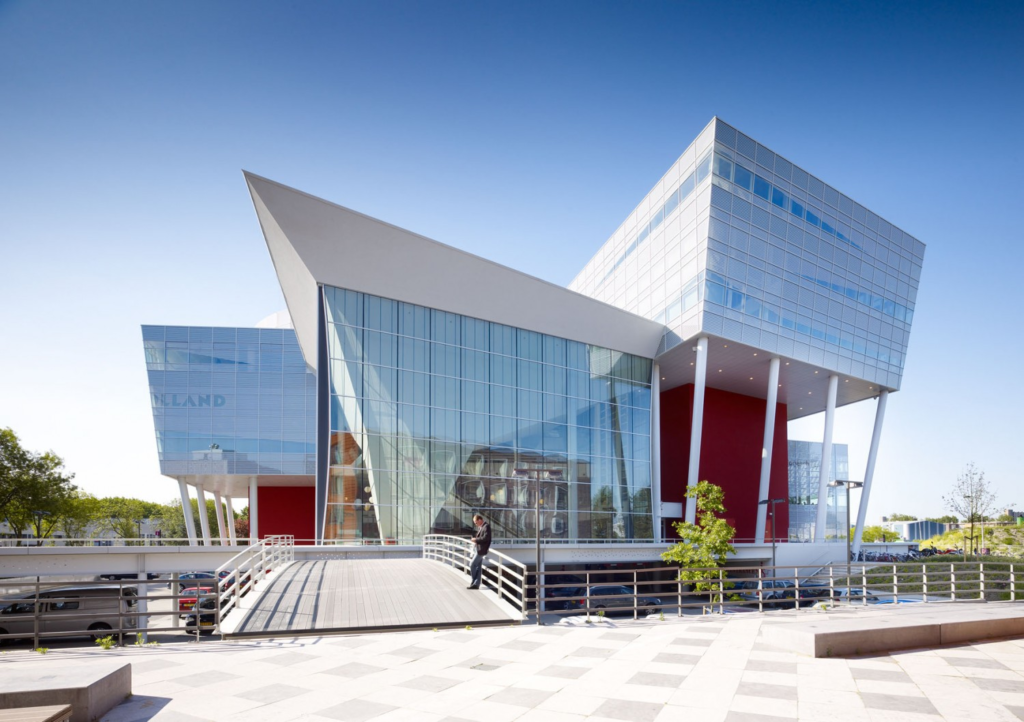
Okay, here is the first of the 2 UASs on your list, but this is the only direct Aeronautical Engineering program. It’s located in Delft, NL, adjacent to one of the more selective universities in your area of study, Delft University of Technology. Delft is a smaller, historic Dutch city (which may or may not appeal to you), with a population of nearly 100,000. It’s a popular tourist destination because the city center is renowned for its well-preserved old buildings and canals. However, it’s located in-between Rotterdam and The Hague, two large cities, and Delft’s impressive transportation system can take you to the big city quite easily. I think Delft may have been on your agenda to visit, but you weren’t able to make it.
I think this program is well-suited for your particular interests – it happens to be the only English-taught Aeronautical Engineering bachelor’s degree in the Netherlands. From their site: “Aeronautical Engineering focuses on the design and production of aircrafts and aircraft components. You work on a solid technical background, which makes you attractive to employers in different sectors. Naturally in international aviation, but also in the automotive industry. You get a good dose of theory that you put into practice during projects and an internship. You follow the course in an ultramodern building on the Delft University of Technology campus. Here you are able to test your constructions in the wind tunnel, composites laboratory or aircraft simulator. And who knows, you might move on to a master’s degree at our ‘technical neighbor’.
There are two components to the bachelor’s degree in Aeronautical Engineering at Inholland: the major and the specializations. The major is the core of the program and will account for half of your studies. This is where you will acquire your general professional knowledge and skills. The specializations allow you to tailor the final two years to your personal ambitions.
During the first year, you will work on the technical engineering skills that you need as an engineer. You focus on mathematics and mechanics, but also on the practical skills that are needed in this industry. In the second year you will expand your basic technical skills. You will study topics such as aircraft structures, aircraft performances and materials, but also spend much of your time again on mathematics and mechanics. After completing the first two years, you have sufficient knowledge of aviation technology to choose your own specialization. In your third year you’ll do a 5-month internship with an international company, such as: Airbus in Germany to Boeing in Chicago, or stay in the Netherlands and work for Fokker, TNO, Airborne, Nayak, KLM, Martinair or Transavia. And then you’ll move into your specialization phase where you can choose between two main tracks: Design and Development or Lightweight Structures. During your final year, In addition to the final theoretical component, you will dedicate a period of approximately five months to your graduation project, where you’ll work independently on a project on behalf of a company. You will present your work to the Aeronautical Engineering department and the company you worked for.
Given this is a 4-year University of Applied Science, there are no SAT/ACT or AP requirements here beyond your US high school diploma which equates to the Dutch HAVO diploma, but they may be looking at any Math and Physics classes and scores in your transcripts. You’re applying as an international applicant (although you’re eligible for the EU tuition benefit), and the deadline is May 1. The enrollment procedure can take up to three months to complete, and so I encourage you to apply as early as you’re able. Currently, the statutory tuition fee for EU-citizens is 2,209 euros, and your first year may be even less than that.
Inholland does work with and provides resources for students with varying disabilities, and they have a page that speaks to this on their site here.
#3 – Fontys University of Applied Sciences

Mechanical Engineering
Eindhoven, Netherlands
4 Years | €11190 Yearly Tuition
Why I selected this for you
Here is the second Dutch UAS on your list, but this time in the Mechanical Engineering category. Fontys UAS, in the city of Eindhoven, Netherlands, is one of the larger and more familiar universities of applied science in this country. Comparatively, I found it to be the most fitting for you based on your profile and preferences in this specific area of study. Eindhoven has a population of over 231,000, making it the largest city in the south. It’s centrally located in Europe and easily accessible via Eindhoven Airport (or three other airports within a 1.5-hour drive). Eindhoven is a bustling city in transition, with a constant flow of new developments in the fields of creativity, innovation, technology, design, and knowledge.
In this program, “you will learn the theory and the practical skills that you need to design, make and maintain equipment, production processes and machines to make products. Many of your teachers have worked in that sector. You will train your technical skills and will carry out challenging (company) assignments. An important part of a mechanical engineer’s work consists of technical design. This degree offers a good mix between theory and practice, and professional assignments and projects”.
In Year 1 you’ll take courses such as energy and process technology, construction and mechanics, production technology, materials science, measurement and control technology, mathematics and physics, and you’ll work on designing products in project groups right from the start. In lab classes, you’ll practice technical skills such as machining, welding, CAD designing, 3D printing, and modeling and simulation. In Year 2, you’ll expand your fundamental theoretical knowledge and skills with in-depth courses and projects, taking advantage of many opportunities to engage in applied research. Together with your lecturers you’ll work on innovative technologies with companies as part of your education program, and you can also participate in other research projects such as adaptive robotics in the Mechatronics program or new electric vehicles in the Automotive program. In Year 3 you’ll participate in an internship and a minor. Your internship is at a company that matches your interests, in the Netherlands or abroad, and your free minor will give you the opportunity to deepen or broaden your knowledge, and allow you to specialize. In Year 4 you’ll choose a specialization from these 3 options: Precision Engineering, Energy and Process Engineering, and Innovative Engineering, along with working on a professional project and writing your thesis.
The Mechanical Engineering course in Eindhoven works closely with companies in the Brainport Region. In addition, Fontys UAS has its own project office called ExPo. Together with students from other engineering courses, you’ll carry out projects from the business community. In Eindhoven, the Engineering programs have a brand-new location at the TU/e site with labs that are equipped with the latest developments.
Given this is a 4-year University of Applied Science, there are no SAT/ACT or AP requirements here beyond your US high school diploma which equates to the Dutch HAVO diploma, but they may be looking at any Math and Physics classes and scores in your transcripts. You’re applying as an international applicant (although you’re eligible for the EU tuition benefit), and the deadline is May 1. The enrollment procedure can take up to three months to complete, and so I encourage you to apply as early as you’re able. Currently, the statutory tuition fee for EU-citizens is 1,157 euros.
According to this single inclusivity web page, Fontys UAS does support students with a variety of disabilities – scroll down on this page to get contact information for their student counselors and disability office. This is the general page for the Netherlands regarding inclusivity policies – each country’s policies are represented via this site.
#4 – Carlow Institute of Technology
Aerospace Engineering
Carlow, Ireland
4 Years | €10250 Yearly Tuition
Why I selected this for you
I wanted to give you an option in Ireland since it was a preferred country on your list, and because they have such consistently high-quality programs across the board. There are some really good options for you in Ireland, but most of them are way out of budget (*read more below on why you don’t qualify for the EU tuition benefit in this country). Because they are an English-speaking country, obviously they have the most programs to offer international students in English in the EU. Note: Carlow Institute of Technology has just recently become South East Technological University.
So in Ireland, they have a few types of higher-ed institutions: research universities, institutes of technology, and technological universities. Similar to the Netherlands, one of the biggest differences is related to approach. With institutes of technology and technological universities, the approach will be much more hands-on, and a greater practical focus. Recently, Ireland has started putting money and resources into merging some of the better tech institutes into tech universities, such as this one. Bachelor’s degrees are available at both tech institutes and universities, but the resources and reputation of the technological universities are better than the smaller institutes.
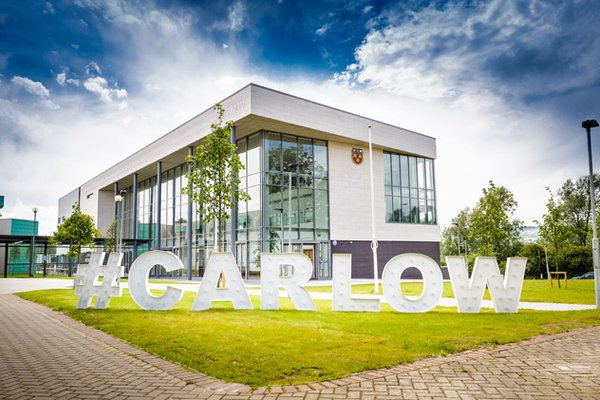
The Bachelor of Engineering in Aerospace Engineering is structured to provide students with a real-world aviation work environment. SETU Carlow has an on-campus aerospace center comprising a fleet of different fixed and rotary wing aircraft, a modern avionics, a UAS laboratory, Garmin equipped flight simulator (Cessna 172), and a wind tunnel for aerofoil design and analysis. These unique facilities ensure students have the very best learning environment, combining theory with practical hands-on experience. Students use industry standard design tools such as SOLIDWORK, ANSYS and MATLAB to design, analyze and simulate flights of aerial vehicles. The program provides students with skill-sets in the areas of aerodynamics, propulsion, aircraft computer networks, flight dynamics, control systems, aircraft leasing, embedded systems and individual and team design projects. In Year 3 of the program students complete a work placement module within the engineering sector.
The University campus is a short walk into Carlow town, which has a population of just over 24,000. Here, student accommodation is plentiful and the town offers a superb range of eateries, bars, cinema and nightlife. For shopping, Carlow offers a mix of national and international street brands as well as independent fashion boutiques. Students love the friendly community feel of Carlow town and it has easy access to the rest of the country. Carlow is also home to several international businesses that offer both work experience and employment to the students and graduates. Since Ireland is such a compact country, it is easy to travel to bigger cities, like Dublin, which I know is a priority for you – Carlow to Dublin is 1.5 hours by coach.
There are few pros and cons for you specifically, when it comes to Ireland. First, Ireland is the only EU country that requires residency, not citizenship, in an EU country for 3 of the past 5 years, to receive the decreased EU tuition rate – and so this means you wouldn’t be eligible for that benefit. The tuition rate here is around 10,000 euros, and so still within your listed budget, but far above the other options on your list where you do receive that tuition benefit. On the pro side, with the higher tuition rate comes a number of amenities that you won’t find in many other European countries. For instance, many schools own student housing, have beautiful centralized campuses, access to many activities relative to schools on the continent, along with extensive sports facilities. As well, there are often increased resources around the non-academic needs of the students; speaking of which, here is their student Disability Supports site page. And more than any other country in Europe, more schools in Ireland offer scholarships for international students or have FAFSA numbers, and some even work with US loans.
Regarding admissions, they don’t list specific requirements for US students on their site; I’ve reached out to them to receive this information but have yet to hear back. But most likely, as in most of Ireland, they will require an SAT score from you as a US prospect, and may have specific scores they’re looking for in math; otherwise no AP scores are mandatory. But given my knowledge of Ireland and their admissions, I feel good about your prospects here. (If/when I hear back from them, and their requirements don’t align with your background, I will let you know immediately.) You should know that SETU Carlow also offers a Foundation Year program for students who may need to fill in missing pieces of their transcripts – good to know. Otherwise, May is their admissions deadline, but I would apply as early as you’re able.
I noticed that SETU Carlow also offers a bachelor’s degree in Mechanical Engineering as well, if you want to explore that too.
Recommended Reading
- The Problems With US Education Quality
 Will the end result of your top US college choice be worth it? According to my reading, the answer is no. Let’s talk about the quality of the learning experience that undergraduates receive on campus.
 - EU Master’s: 3 Reasons to Get Your Master’s in Europe
 Interested in learning why so many Americans are excited about getting their master’s degree in Europe?
 - 4 Tips to Navigate European College Admissions Like a Pro
 It is virtually impossible to excel in every category colleges are looking at, so students and parents feel inadequate and vulnerable to rejection. Here’s advice on how to prepare for European college admissions process.
 - 5 Myths About Studying in Europe (And the Truth Behind Them)
 If you’re considering studying in Europe as an American student, you may have heard a few myths about the experience. While studying abroad can be an exciting and rewarding opportunity, it’s important to separate fact from fiction in order to make an informed decision. Here are five common myths about studying in Europe, and the truth behind them:
 - 9 Reasons to Go to College in France
 Did you know you don’t have to speak French to go to college in France? There are dozens of colleges in France that offer a total of 540 bachelor’s and master’s degree programs – entirely taught entirely in English.