Most Affordable MBA Programs
Let’s talk about the elephant in the boardroom.
MBA programs in the U.S. are criminally expensive.
We’re talking $100,000 to $200,000+ for two years at top programs. Even mid MBA programs can run you $60,000-$120,000. And that’s before you factor in two years of lost income while you’re studying instead of working. Don’t even get me started on the cost of living these days as well.
The traditional advice says you need to take on massive debt because “an MBA is an investment in yourself” and “you’ll make it back in salary increases.”
Sure, maybe eventually.
But what if I told you there’s a way to get a quality MBA for a fraction of that cost—sometimes for less than the price of a used Honda Civic?
Welcome to the world of European MBA programs, where you can get a highly respected degree, gain international experience, build a global network, and actually have money left over to, you know, live your life.
Summary

Quality Doesn’t Have to Cost Six Figures
Here’s what you’ll never hear from American business schools….
Some of the world’s best MBA programs are in Europe, and many of them cost 90% less than comparable U.S. programs.
We’re not talking about sketchy diploma mills or unknown schools. We’re talking about internationally accredited (often the same as the one’s back home), highly ranked programs that European and global executives have been attending for decades.
Believe it or not, you can get an MBA for half the price and graduate a whole year sooner in Europe.
Why European MBAs Are So Much Cheaper
European countries view education differently. Many business schools receive public funding or operate with different cost structures than American universities. They’re not trying to build massive endowments or construct luxury student centers with rock climbing walls.
Plus, most European MBA programs take one year instead of two. That’s:
- Half the tuition
- Half the living expenses
- One less year of foregone income
- Faster return to the workforce
When you do the math, a one-year European MBA can save you $150,000-$250,000 compared to a two-year American program.
Let that sink in.
One more time.
Okay, now let’s dive into the details.

The Most Affordable MBA Programs in Europe
Let’s break down your options by country, because this is where it gets really exciting.
Germany
Elite MBAs at Discount Prices
Germany’s commitment to affordable education extends to graduate programs, including MBAs. While German MBA programs aren’t completely free like some undergraduate programs, they’re shockingly affordable compared to U.S. options.
ESMT Berlin (European School of Management and Technology)
Program Overview:
- Full-time MBA: One year
- Ranked in top European MBA programs
- Strong placement in consulting and tech
- Berlin location offers incredible quality of life
Cost Breakdown:
- Tuition: Around €39,000 ($42,000)
- Living expenses in Berlin: €900-€1,200/month (€10,800-€14,400/year)
- Total program cost: Approximately $55,000-$60,000
Compare to U.S.:
- Average top-tier U.S. MBA: $150,000-$220,000 for two years
- Savings: $90,000-$160,000

Mannheim Business School
Program Overview:
- One-year full-time MBA
- Germany’s leading business school
- Triple-accredited (AACSB, EQUIS, AMBA)
- Strong corporate partnerships
Cost Breakdown:
- Tuition: Around €44,000 ($48,000)
- Living expenses in Mannheim: €800-€1,000/month
- Total program cost: Approximately $57,000-$60,000
Frankfurt School of Finance & Management
Program Overview:
- One-year MBA
- Finance specialization strengths
- Located in Germany’s financial capital
- Strong alumni network in banking
Cost Breakdown:
- Tuition: Around €47,000 ($51,000)
- Living expenses: €1,000-€1,300/month
- Total program cost: Approximately $63,000-$67,000
France
Prestige for Less
France is home to some of Europe’s most prestigious business schools, and while the top programs aren’t dirt cheap, they’re still significantly more affordable than equivalent U.S. programs.
INSEAD
Program Overview:
- Consistently ranked in global top 10
- One-year program with multi-campus experience
- Incredibly diverse cohort (90+ nationalities)
- Unparalleled international network
Cost Breakdown:
- Tuition: Around €98,000 ($106,000)
- Living expenses: €1,200-€1,500/month (€14,400-€18,000/year)
- Total program cost: Approximately $122,000-$130,000
Why it’s still a deal: Yes, INSEAD is expensive compared to other European programs. But compared to Harvard ($115,000/year x 2 = $230,000 tuition alone), you’re saving over $100,000 while getting a top-tier, globally recognized MBA in one year.
HEC Paris
Program Overview:
- Top-ranked European business school
- 16-month program
- Strong in strategy and entrepreneurship
- Located near Paris
Cost Breakdown:
- Tuition: Around €78,000 ($84,500)
- Living expenses: €1,000-€1,400/month
- Total program cost: Approximately $100,000-$110,000
ESSEC Business School
Program Overview:
- One-year Global MBA
- Triple-accredited
- Strong in luxury brand management
- Multiple campus locations
Cost Breakdown:
- Tuition: Around €50,000 ($54,000)
- Living expenses: €1,000-€1,300/month
- Total program cost: Approximately $66,000-$70,000
Spain
Sunshine, Siestas, and Savings
Spain offers excellent MBA programs at prices that’ll make you wonder why anyone pays American tuition rates.
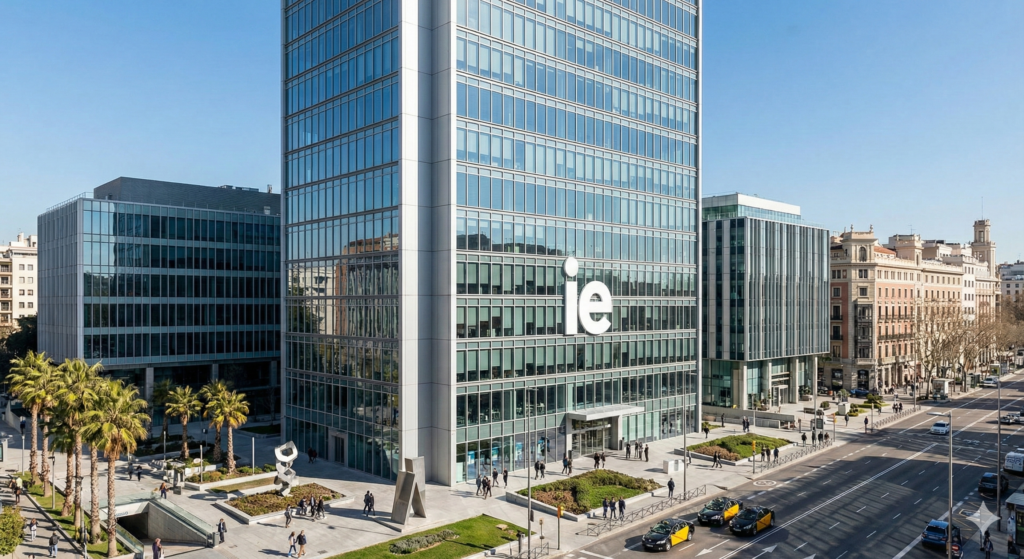
IE Business School (Madrid)
Program Overview:
- Top-ranked international MBA
- One-year intensive program
- Extremely diverse student body
- Strong entrepreneurship focus
Cost Breakdown:
- Tuition: Around €72,000-€79,000 ($78,000-$86,000)
- Living expenses in Madrid: €900-€1,200/month
- Total program cost: Approximately $88,000-$100,000
ESADE Business School (Barcelona)
Program Overview:
- 12-month full-time MBA
- Ranked among Europe’s top programs
- Beautiful Barcelona location
- Strong social impact focus
Cost Breakdown:
- Tuition: Around €72,000 ($78,000)
- Living expenses in Barcelona: €800-€1,100/month
- Total program cost: Approximately $88,000-$92,000
EADA Business School (Barcelona)
Program Overview:
- 12-month International MBA
- Smaller class sizes
- Affordable option in Barcelona
- Strong regional network
Cost Breakdown:
- Tuition: Around €28,000 ($30,000)
- Living expenses: €800-€1,100/month
- Total program cost: Approximately $40,000-$45,000
This is insane value: A full MBA in Barcelona for less than one year of tuition at many U.S. programs.
Netherlands
International Business Hub
The Netherlands is incredibly business-friendly and international, making it perfect for MBA students.
Rotterdam School of Management (Erasmus University)
Program Overview:
- 12-month full-time MBA
- Triple-accredited
- Rotterdam is Europe’s largest port and major business center
- Strong in supply chain and international business
Cost Breakdown:
- Tuition: Around €57,000 ($62,000)
- Living expenses: €900-€1,200/month
- Total program cost: Approximately $73,000-$77,000
Nyenrode Business University
Program Overview:
- Full-time MBA
- Netherlands’ only private university
- Castle campus (yes, really)
- Small class sizes
Cost Breakdown:
- Tuition: Around €45,000 ($49,000)
- Living expenses: €800-€1,000/month
- Total program cost: Approximately $58,000-$61,000
UK
One-Year Programs Are Standard
The UK pioneered the one-year MBA model, and while top programs like London Business School are expensive, there are affordable options.
Warwick Business School
Program Overview:
- 12-month full-time MBA
- Top UK business school outside London
- Strong corporate partnerships
- Triple-accredited
Cost Breakdown:
- Tuition: Around £46,950 ($60,000)
- Living expenses: £1,000-£1,300/month
- Total program cost: Approximately $75,000-$80,000
Durham University Business School
Program Overview:
- 12-month MBA
- Beautiful historic city
- Smaller program, more personal attention
- Strong in finance and consulting
Cost Breakdown:
- Tuition: Around £33,500 ($43,000)
- Living expenses: £800-£1,100/month (lower cost area)
- Total program cost: Approximately $53,000-$57,000
Strathclyde Business School (Glasgow)
Program Overview:
- 12-month MBA
- Scotland’s largest business school
- Triple-accredited
- Affordable cost of living in Glasgow
Cost Breakdown:
- Tuition: Around £32,000 ($41,000)
- Living expenses: £800-£1,000/month
- Total program cost: Approximately $51,000-$54,000
Ireland
English-Language Education
University College Dublin (Smurfit)
Program Overview:
- 12-month full-time MBA
- Ireland’s leading business school
- Triple-accredited
- Strong in tech and pharma sectors
Cost Breakdown:
- Tuition: Around €34,500 ($37,000)
- Living expenses in Dublin: €1,200-€1,500/month
- Total program cost: Approximately $52,000-$56,000
Poland
Hidden Gem for Value
Kozminski University (Warsaw)
Program Overview:
- One of Poland’s top business schools
- International MBA program
- English-taught
- Extremely affordable
Cost Breakdown:
- Tuition: Around €12,000-€15,000 ($13,000-$16,000)
- Living expenses: €500-€800/month
- Total program cost: Approximately $19,000-$26,000
Yes, you read that right: A full MBA for less than $30,000. In Warsaw, a vibrant, growing business center.
Portugal
Quality of Life Meets Affordability
Nova School of Business and Economics (Lisbon)
Program Overview:
- One-year international MBA
- Growing reputation
- Lisbon offers incredible quality of life
- Strong in entrepreneurship
Cost Breakdown:
- Tuition: Around €30,000 ($32,500)
- Living expenses in Lisbon: €700-€1,000/month
- Total program cost: Approximately $41,000-$45,000
The Most Affordable MBA Programs in the United States
If you’re committed to staying in the U.S., there are affordable options though “affordable” is relative when it comes to American MBAs.
Public Universities (In-State Tuition)
University of Florida (Warrington)
- In-state tuition: Around $12,737/year
- Two-year program: Approximately $25,500 tuition
- Living expenses: $15,000-$20,000/year
- Total program cost: $55,000-$65,000
- Strong regional reputation
University of Georgia (Terry)
- In-state tuition: Around $13,404/year
- Total two-year program: Approximately $60,000-$70,000
- Ranked top 50 nationally
Brigham Young University (Marriott)
- Tuition (LDS members): Around $13,680/year
- Tuition (non-LDS): Around $27,360/year
- Total program: $40,000-$70,000
- Excellent value with strong reputation
University of Washington (Foster)
- In-state tuition: Around $38,000/year
- Total two-year program: Approximately $110,000
- Highly ranked West Coast program
Texas A&M (Mays)
- In-state tuition: Around $13,000/year
- Total two-year program: Approximately $60,000-$70,000
- Strong Texas network
University of Pittsburgh (Katz)
- In-state tuition: Around $27,000/year
- Total two-year program: Approximately $85,000-$95,000
Online and Part-Time Programs
University of North Carolina (Kenan-Flagler) – Online MBA@UNC
- Total program cost: Around $115,000
- Top-ranked online program
- Same degree as full-time program
Arizona State University (W.P. Carey) – Online
- Total program cost: Around $59,000
- Flexible format
- More affordable online option
University of Massachusetts Amherst (Isenberg) – Online
- Total program cost: Around $40,000-$50,000
- AACSB accredited
- Very affordable online option
Indiana University (Kelley) – Kelley Direct Online
- Total program cost: Around $73,000
- Highly ranked online program
The Catch with U.S. “Affordable” MBAs
Even the cheapest U.S. MBA programs cost $40,000-$70,000, which is still more than many excellent European programs. Plus:
- U.S. programs are typically two years (double the opportunity cost)
- You miss out on international experience
- Less diverse cohort in many cases
- No built-in European network
Discover all the English-taught European college programs in one place.
Beyond the States provides easy access to 12,600+ European bachelor’s and master’s programs across 870 universities, 550 cities, and 212 areas of study, plus all the resources you need to get there.
3400+
English-taught bachelor’s programs in our database.
550
Beautiful European cities to choose from.
$360,170
Typical savings against a private university in the US.
8200+
English-taught master’s programs in our database.
870
Top-tier universities accepting international students.
$65,038
Typical savings against in-state tuition in the US.
Why a European MBA Is a Game-Changer
Let’s talk about the benefits beyond just saving money (though saving $100,000+ is pretty compelling).
1. One Year = Faster Career Advancement
You’re back in the workforce earning a salary 12 months earlier than your peers in two-year programs. That’s:
- An extra year of salary (potentially $70,000-$150,000)
- Faster progression in your career
- Less time out of the job market
- One year less of aging on your resume
2. International Network
Your MBA cohort in Europe will include students from 40-80+ different countries. This isn’t just diversity for diversity’s sake. it’s incredibly valuable when:
- Your company expands internationally
- You’re looking for opportunities abroad
- You need connections in different markets
- You want a truly global perspective on business
3. Living in Europe for a Year
You have to think about life, it isn’t just about your degree. It’s about:
- Weekend trips to Paris, Rome, Barcelona, Amsterdam for $30-$100
- Immersing yourself in different business cultures
- Learning or improving foreign language skills (but again not required we have thousands of programs 100% in English)
- Experiencing different management styles
- Building confidence working across cultures
4. Stand Out to Employers
An international MBA makes you memorable. It shows:
- Cultural adaptability
- Willingness to take risks
- Global mindset
- Independence and initiative
In increasingly global markets, these traits are valuable.
5. European Work Opportunities
Many European countries offer post-study work visas:
- Germany: 18 months to find work after graduation
- Netherlands: One-year job search visa
- UK: Two-year post-study work visa
- France: APS visa allowing job search
This opens doors to international work experience that can significantly boost your career.
6. Quality of Life During Your MBA
Studying in Europe often means:
- Better work-life balance (Europeans don’t glorify burnout)
- Healthcare included or very affordable (shockingly affordable compared to the USA)
- Public transportation instead of car dependence
- Cultural experiences on your doorstep
- Generally less stress than intense U.S. programs (who doesn’t want less stress)



The Real Cost Comparison
Let’s look at total cost of ownership for comparable programs:
Harvard Business School (U.S.):
- Tuition: $73,440/year x 2 = $146,880
- Living expenses: $30,000/year x 2 = $60,000
- Lost income: $100,000 x 2 = $200,000
- Total cost: $406,880
ESMT Berlin (Germany):
- Tuition: $42,000
- Living expenses: $14,000
- Lost income: $100,000
- Total cost: $156,000
Savings: $250,880
Even comparing mid-tier programs:
Generic State University MBA (U.S.):
- Total cost with opportunity cost: $200,000-$250,000
Rotterdam School of Management (Netherlands):
- Total cost with opportunity cost: $170,000-$180,000
Savings: $30,000-$70,000
What About Rankings?
Let’s address the elephant in the conference room: “But what about U.S. News rankings?”
Here’s the truth: outside the U.S., those rankings matter less. European and international employers recognize European business schools. Many European programs rank highly in Financial Times, Economist, and QS rankings—the ones that actually matter globally.
Plus, for most people, the MBA is about:
- Career transition
- Salary increase
- Skill development
- Network building
All of which you can achieve at a strong European program while saving $100,000+.
If you’re targeting investment banking or consulting at McKinsey/Goldman Sachs, yes, Harvard/Stanford/Wharton carry weight. But for most career paths, a strong European MBA gets you where you want to go at a fraction of the cost.
Scholarships and Financial Aid for European MBAs
Many European business schools offer scholarships for international students:
Merit-based scholarships:
- Many programs offer 20-50% tuition reduction for strong candidates
- Based on GMAT scores, work experience, and application strength
Diversity scholarships:
- For underrepresented groups in business
- Women in business scholarships common
Need-based aid:
- Less common in Europe than U.S., but available
Country-specific scholarships:
- DAAD scholarships for studying in Germany
- Erasmus Mundus scholarships for specific programs
- Fulbright for graduate study
Tips:
- Apply early (scholarships are often first-come, first-served)
- Strong GMAT scores help (700+ opens many doors)
- Demonstrate clear career goals and motivation
Is a European MBA Right for You?
Consider a European MBA if:
- You want to save $50,000-$150,000+
- You’re interested in international career opportunities
- You value cultural experiences and travel
- You want a one-year program to minimize time out of workforce
- You’re open to new perspectives and ways of thinking
A U.S. MBA might be better if:
- You’re targeting specific U.S. employers with strong school preferences
- You need to maintain U.S. geographic ties
- You want a longer, more traditional program structure
- You have significant scholarships or employer sponsorship for U.S. programs
Common Concerns Addressed
“Will U.S. employers recognize my European MBA?”
Yes, especially top European programs (INSEAD, LBS, IESE, HEC, IMD, etc.). Many American companies actively recruit from these schools. For smaller employers, you might need to explain, but the international experience is often seen as a plus.
“What about networking back home?”
European programs have extensive alumni networks in the U.S. Plus, you’ll have classmates from around the world, including Americans. The global network often proves more valuable than a purely domestic one.
“Can I get student loans?”
Some U.S. lenders offer international student loans. Some European programs have partnerships with lenders. It’s more complex than U.S. loans but definitely possible.
“What if I don’t speak the language?”
Most international MBA programs are taught entirely in English. You’ll pick up some local language, but it’s not required for English-taught programs.
The Bottom Line: Your MBA Doesn’t Have to Break the Bank
The American MBA industrial complex wants you to believe that a quality MBA requires six-figure debt. That career advancement requires paying $200,000+. That international programs are risky or less valuable.
It’s not true.
You can get an excellent MBA education, build a valuable international network, gain cultural experiences that transform your worldview, and save anywhere from $50,000 to $200,000+ by looking beyond U.S. borders.
The world of business is global. Your MBA location should reflect that reality. And your bank account will thank you for thinking internationally.
Ready to Explore Your Options?
Start researching European MBA programs. Check accreditations (look for AACSB, EQUIS, or AMBA). Review curricula and specializations. Calculate total costs including living expenses.
Connect with alumni from programs you’re interested in. Most are happy to share their experiences.
And remember: the best MBA isn’t necessarily the most expensive one. It’s the one that gets you where you want to go without drowning you in debt.
Your future self—the one with an international network, global business perspective, and money in the bank—will thank you for thinking bigger than the traditional American path.
Because sometimes the smartest business decision starts with where you get your business degree.