Best Nursing Schools in the World
The cost of nursing school in the U.S. can feel like a brick wall.
Average tuition for a bachelor’s in nursing? Around $40,000–$50,000 per year.
And admissions? They can feel messy—grades, essays, clinical hours, waitlists, and sometimes even lotteries.
What many families don’t realize is this: you don’t have to stay in the U.S. to earn a fully accredited nursing degree.
In fact, some of the best nursing schools in the world are in Europe, and many offer programs taught entirely in English.
That’s where things start to look different. Studying abroad often means clearer admissions, lower tuition, and strong career outcomes.
And here’s the part that really matters: you can earn your full nursing degree abroad, graduate from an accredited program, and return to the U.S. for licensure—or build a career internationally.
Summary
Why Consider Nursing School Abroad?

Nursing is one of the most trusted and essential professions in healthcare. It focuses on patient care, prevention, and health education, as explained by the American Nurses Association.
A lot of U.S. students assume staying local is the safest option, but Europe offers some real advantages:
Lower tuition costs – Public universities in countries like Germany, the Netherlands, and Norway often charge under $5,000 per year.
English-taught programs – Many strong nursing programs no longer require fluency in the local language.
Merit-based admissions –Less emphasis on essays and subjective factors.
Strong accreditation – Degrees are recognized internationally and can qualify for U.S. NCLEX licensure.
Clinical exposure –High-quality, hands-on clinical training is built directly into the curriculum.
One important distinction: these are not “study abroad” programs. They’re full degree programs, not just a semester overseas. That matters for accreditation, visas, and long-term career recognition.
If you want a step-by-step guide to studying nursing internationally, Beyond The States offers a dedicated course that helps students choose accredited programs, understand licensing requirements, and prepare strong applications.

Top Nursing Schools in the World
The universities below consistently rank among the top nursing schools worldwide for research, academic reputation, and clinical training.
1. Karolinska Institutet — Sweden

Located in Stockholm, Karolinska Institutet is widely considered Europe’s top medical university and one of the most influential health science institutions in the world.
Key highlights:
Location: Stockholm, Sweden
Program length: 3 years (Bachelor’s)
Language: English options available in advanced programs
Estimated tuition: ~$14,000–$16,000 per year for non-EU students
Global reputation: Home institution responsible for awarding the Nobel Prize in Physiology or Medicine
Karolinska’s nursing programs combines strong classroom learning with clinical placements across Sweden’s advanced healthcare system.
Students also benefit from being surrounded by one of Europe’s most research-intensive medical environments.
That means graduates leave with both clinical confidence and exposure to cutting-edge healthcare research.
2. University of Edinburgh — United Kingdom

The University of Edinburgh is one of the UK’s most respected research universities and home to a highly regarded nursing program within its School of Health in Social Science.
Key highlights
- Location: Edinburgh, United Kingdom
- Program length: 4 years
- Language: English
- Estimated tuition: ~$28,000–$34,000 per year for international students
- Global reputation: Known for leadership in healthcare education and public health research
The program focuses on evidence-based practice, patient-centered care, and strong clinical placements throughout Scotland’s healthcare system.
Students graduate with both academic rigor and meaningful hands-on experience.
3. KU Leuven — Belgium

KU Leuven is one of Europe’s oldest and most respected universities, with a strong reputation in biomedical research.
Key highlights
- Location: Leuven, Belgium
- Program length: 3–4 years
- Language: English options available in advanced healthcare programs
- Estimated tuition: ~$7,000–$10,000 per year for international students
- Global reputation: Consistently ranked among Europe’s leading universities for medical research
The program emphasizes interdisciplinary healthcare education and clinical placements within Belgium’s modern hospital system.
Graduates leave with strong practical nursing skills and a deeper understanding of healthcare research.
4. University of Amsterdam — Netherlands

The University of Amsterdam is one of Europe’s most internationally focused universities and a major center for healthcare and medical research education.
Key highlights
- Location: Amsterdam, Netherlands
- Program length: 3–4 years
- Language: English and Dutch program pathways
- Estimated tuition: ~$9,000–$15,000 per year for non-EU students
- Global reputation: Known for innovative healthcare education and global research collaboration
Students benefit from the Netherlands’ advanced healthcare system and teaching methods that balance theory with practical training.
Graduates build strong analytical and clinical skills that translate well internationally.
5. Trinity College Dublin — Ireland

Trinity College Dublin is Ireland’s highest-ranked university and one of its leading institutions for healthcare education and research.
Key highlights
- Location: Dublin, Ireland
- Program length: 4 years
- Language: English
- Estimated tuition: ~$25,000–$30,000 per year for international students
- Global reputation: Known for strong partnerships with major Irish hospitals
The nursing program blends academic coursework with extensive clinical placements across Dublin’s healthcare system.
That structure helps students develop strong clinical judgment and communication skills early.
6. King’s College London — United Kingdom

King’s College London has one of the largest and most respected nursing faculties in Europe.
Location: London, United Kingdom
Program length: 3 years
Language: English
Estimated tuition: ~$28,000–$35,000 per year for international students
The university works closely with the UK’s National Health Service (NHS), giving students substantial clinical experience during their studies.
It also consistently ranks among the world’s top universities for nursing research and healthcare innovation.
7. University of Toronto — Canada
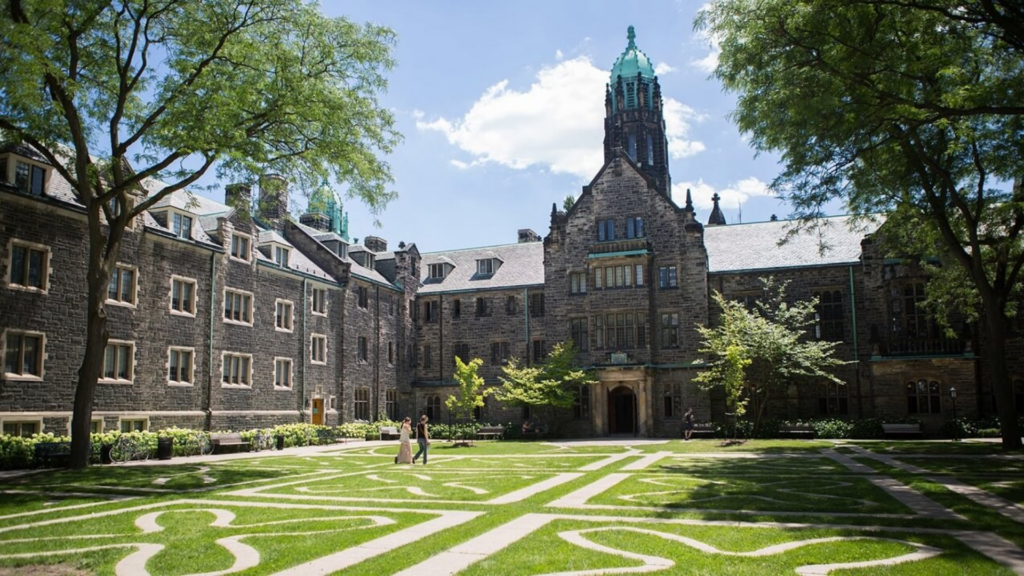
Canada’s top-ranked nursing program is located at the University of Toronto.
Location: Toronto, Canada
Program length: 4 years
Language: English
Estimated tuition: ~$40,000–$45,000 per year for international students
The program combines strong academic training with excellent hospital partnerships throughout Toronto’s healthcare network.
Graduates are well prepared for careers in clinical nursing, research, or advanced practice.
8. University of Sydney — Australia

The University of Sydney is one of the most internationally recognized universities in the Southern Hemisphere.
Location: Sydney, Australia
Program length: 3–4 years
Language: English
Estimated tuition: ~$38,000–$42,000 per year for international students
The program emphasizes:
strong clinical placements
simulation-based training
interdisciplinary healthcare education
Australia’s healthcare training standards are highly respected globally, which gives graduates strong international career flexibility.
9. National University of Singapore — Singapore

The National University of Singapore is one of Asia’s most prestigious universities and a major leader in healthcare education.
Location: Singapore
Program length: 4 years
Language: English
Estimated tuition: ~$30,000–$38,000 per year for international students
Students benefit from a modern healthcare system, strong research resources, and growing international recognition for Singapore’s medical education sector.
Discover all the English-taught European college programs in one place.
Beyond the States provides easy access to 12,600+ European bachelor’s and master’s programs across 870 universities, 550 cities, and 212 areas of study, plus all the resources you need to get there.
3400+
English-taught bachelor’s programs in our database.
550
Beautiful European cities to choose from.
$360,170
Typical savings against a private university in the US.
8200+
English-taught master’s programs in our database.
870
Top-tier universities accepting international students.
$65,038
Typical savings against in-state tuition in the US.
Comparing the Top Nursing Schools
| University | Country | Program Length | Tuition (Int’l Students) | Language | Global Strength |
| Karolinska Institutet | Sweden | 3 years | $14k–$16k | English options | Research & clinical innovation |
| University of Edinburgh | UK | 4 years | $28k–$34k | English | Evidence-based practice & clinical excellence |
| KU Leuven | Belgium | 3–4 years | $7k–$10k | English options | Interdisciplinary healthcare & research |
| University of Amsterdam | Netherlands | 3–4 years | $9k–$15k | English & Dutch | Innovative healthcare education & research |
| Trinity College Dublin | Ireland | 4 years | $25k–$30k | English | Strong clinical placements & hospital partnerships |
| King’s College London | UK | 3 years | $28k–$35k | English | NHS clinical partnerships |
| University of Toronto | Canada | 4 years | $40k–$45k | English | Academic research leadership |
| University of Sydney | Australia | 3–4 years | $38k–$42k | English | Advanced simulation training |
| National University of Singapore | Singapore | 4 years | $30k–$38k | English | Modern healthcare system |
Let’s break this down.
Every school on this list offers:
strong clinical placements
internationally respected degrees
English-language instruction
research-driven healthcare training
The differences mainly come down to tuition costs, healthcare systems, and program structure.
Read more: College Tuition Calculator
Cost of Studying Nursing Abroad
For many families, cost is the deciding factor. Here’s a realistic look at annual expenses.
Europe (Sweden, UK, Belgium, Netherlands, Ireland)
Typical annual costs:
- Tuition: $7,000–$35,000
- Living expenses: $10,000–$15,000
Canada
Typical annual costs:
Tuition: $40,000–$45,000
Living expenses: $12,000–$18,000
Australia
Typical annual costs:
Tuition: $38,000–$42,000
Living expenses: $14,000–$18,000
Singapore
Typical annual costs:
Tuition: $30,000–$38,000
Living expenses: $12,000–$16,000
Many universities also offer scholarships, especially for strong international applicants.
And honestly, this changes the math. Some students find studying abroad costs the same as, or even less than a private university in the U.S.



Who Is This a Good Fit For?

A European nursing degree is a strong option for students who:
Want a full, accredited degree, not a short-term study abroad experience.
are comfortable living independently overseas.
Prefer transparent, merit-based admissions.
Plan to return to the U.S. for NCLEX test preparation or work internationally.

Common Myths About Studying Nursing Abroad
Myth 1: Degrees won’t be recognized in the U.S.
Truth: Most European programs are accredited and eligible for NCLEX or state licensure.
Myth 2: You must be fluent in the local language.
Truth: Many top programs teach entirely in English. Knowing the local language can help during clinical placements, but it’s not always required.
Myth 3: It’s unsafe or isolated.
Application Timelines & Admissions Tips
Research programs early – Application deadlines are often 6–12 months before the program starts.
Prepare transcripts & English tests – IELTS or TOEFL typically required.
Highlight clinical or volunteer experience – European schools value hands-on experience and academic merit.
Check visa requirements – Student visas rules vary by country, and many allow part-time work.
One big difference from the U.S.: many European schools use clearer, formula-based admissions instead of unpredictable holistic review.
That makes the process feel a lot less chaotic.
Career Outcomes & Recognition

Graduates from these top European programs:
Qualify for NCLEX in the U.S.
Work across Europe and internationally
Benefit from strong job placement rates because of built-in clinical rotations
Graduate from programs recognized by EU, WHO, and international nursing bodies
According to the U.S. Bureau of Labor Statistics, registered nursing remains one of the fastest-growing healthcare careers, with strong demand across hospitals, clinics, and community health settings.
Frequently Asked Questions
We’re here to help answer your questions about the best nursing school in the world.
Yes. Many European nursing programs are recognized for NCLEX eligibility and state licensure.
Yes. Many universities offer merit-based scholarships or government funding for international students.
Usually 3–4 years, depending on the country and program.
Yes. Universities typically provide housing support, healthcare guidance, and international student services.
It helps, but it’s not always required. Some programs include clinical training from the first year.
Final Thoughts
Earning a fully accredited nursing degree abroad isn’t just possible—it can actually be the smarter move.
Lower costs, clearer admissions, English-taught programs, and strong global recognition make Europe a serious option worth considering.
Take time to compare programs, countries, and tuition carefully.
To get started, Beyond The States offers:
Attend a strategy sessions to map your path abroad
Platinum Admissions Package for vetted, transparent programs
It’s your full degree—accredited, career-ready, and built for global nursing practice.
The goal is simple: make the decision with clarity, confidence, and the right support.