Study in Europe
Why More Americans Than Ever Are Studying in Europe
Studying in Europe has quickly become one of the smartest alternatives to the traditional U.S. college path. With degrees taught entirely in English, lower tuition, and internationally recognized universities, Europe offers students the chance to earn a full bachelor’s or master’s degree abroad without sacrificing quality or career outcomes.

World-Class Universities, Global Perspective
Study at historic and highly respected universities while gaining international experience, cultural fluency, and a global network that lasts long after graduation.
Countries like the Netherlands, Germany, Denmark, Italy, Spain, Ireland, and France have become top choices for Americans (and BTS students) pursuing full degrees abroad. These destinations offer English-taught programs, clear admissions paths, and student-friendly visa policies.

Most Sought-after Degree Programs Abroad
Bachelors
Master
Graduate Faster
Bachelor’s degrees in Europe typically take three years, and master’s degrees often take one to two years. That means less time in school, less debt, and a faster start to your career.
Career Outcomes
European degrees are fully accredited and widely recognized by U.S. employers and graduate schools. Many programs also include internships, applied learning, and post-graduation work opportunities.
See Your Options in One Place
Finding the right university, country, and degree abroad can feel overwhelming. We help families compare real options, understand admissions requirements, and make confident decisions without guesswork.
The Financial Advantage
The cost difference is crazy!
Many American students graduate with over $50,000 in debt from just undergraduate studies, never mind grad school. Meanwhile, students who study in Europe often complete entire bachelor’s degrees for less than a single year’s tuition at a U.S. public university. We have countless students who can confirm too. Countries like Germany, Norway, and Austria offer tuition-free or extremely low cost college education even for international students, while countries like Spain, Portugal, and Poland provide quality degrees at prices that seem almost too good to be true. Often between $1,000 and $5,000 per year. Hard to believe right?
Academic Excellence
European universities consistently rank among the world’s best institutions. When you study in Europe, you’ll find centuries-old universities that have educated Nobel laureates, world leaders, and groundbreaking researchers. The Bologna Process has standardized degree structures across Europe, ensuring your credits transfer easily between countries and your qualifications are recognized globally. Universities here emphasize critical thinking, independent research, and practical application of knowledge. Better yet they often have the exact same accreditation as universities in the U.S..
FREE INSIDER’S GUIDE
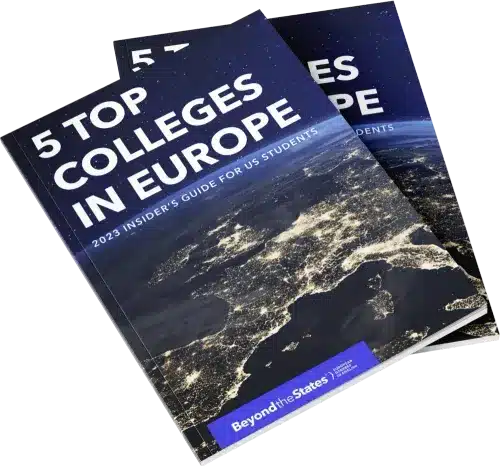
Top 5 English-Taught Colleges in Europe
Kickstart you education abroad with a powerful degree taught entirely in English, all without taking on any student loans!
English-Taught Programs Everywhere
Most people hold off thinking they need to learn an entire new language, but the truth is you don’t need to. The reality is that over 4,500 bachelor’s programs and countless master’s programs are taught entirely in English across Europe. You can study computer science in Germany, business in the Netherlands, medicine in Poland, or engineering in Sweden. All without speaking the local language.
Discover all the English-taught European college programs in one place.
Beyond the States provides easy access to 12,600+ European bachelor’s and master’s programs across 870 universities, 550 cities, and 212 areas of study, plus all the resources you need to get there.
3400+
English-taught bachelor’s programs in our database.
550
Beautiful European cities to choose from.
$360,170
Typical savings against a private university in the US.
8200+
English-taught master’s programs in our database.
870
Top-tier universities accepting international students.
$65,038
Typical savings against in-state tuition in the US.
Top Countries to Study In Europe
Germany
Germany stands out as the premier destination for American students seeking to study in Europe without breaking the bank. Public universities charge no tuition for undergraduate and many graduate programs, requiring only a nominal semester fee of around $300-400. This covers public transportation and student services often worth the fee on its own.
German universities excel in engineering, computer science, business, and natural sciences. Cities like Berlin, Munich, and Hamburg offer vibrant student cultures, while smaller university towns like Heidelberg and Freiburg provide classic collegiate atmospheres. The country’s central location makes weekend trips to neighboring countries remarkably easy.
Most bachelor’s programs require German proficiency, but hundreds of master’s programs operate entirely in English. The investment in learning German pays dividends, as Germany’s economy offers excellent internship and post-graduation work opportunities.
The Netherlands
Dutch universities have embraced English-language instruction more than almost anywhere in Europe. When you study in Europe’s Netherlands, you’ll find over 2,100 programs taught in English, more than any other non-English-speaking country. Nearly everyone speaks English fluently, making daily life comfortable while you learn Dutch gradually.
Universities like Leiden, Utrecht, and the University of Amsterdam rank globally for research output and teaching quality. Tuition for EU students stays around $2,000-2,500 annually, while non-EU students pay approximately $6,000-15,000 depending on the program—still significantly less than comparable U.S. institutions.
The Dutch educational approach emphasizes problem-based learning and group work, preparing students for collaborative professional environments. The country’s bike-friendly cities, progressive culture, and strategic location make it easy to explore Europe during breaks.
Spain
Spain combines Mediterranean lifestyle with surprisingly affordable education. Public universities charge international students between $1,000-4,000 annually for undergraduate programs. While many programs require Spanish proficiency, the number of English-taught options grows each year, particularly at the master’s level.
When you study in Europe’s Spain, you’re choosing cities like Barcelona, Madrid, Valencia, and Seville that blend historic architecture with modern innovation. The country’s relaxed pace of life, incredible food culture, and emphasis on work-life balance create an enriching student experience beyond academics.
Spanish universities particularly excel in architecture, business, tourism management, and renewable energy programs. The country’s growing tech sector and tourism industry provide internship opportunities, while learning Spanish opens doors throughout Latin America and beyond.
Norway
Norway extends tuition-free education to all students, regardless of nationality, at its public universities. You’ll only pay a small semester fee of around $60-80. This policy reflects Norway’s commitment to education as a public good rather than a commodity.
Norwegian universities offer hundreds of programs entirely in English, particularly at the master’s level. The country ranks consistently as one of the world’s best places to live, with stunning natural beauty, high safety standards, and progressive social policies. Students gain access to Norway’s outdoor recreation culture, from fjord hiking to northern lights viewing.
The high cost of living represents the main consideration when choosing to study in Europe’s Norway. Budgeting $1,500-2,000 monthly for accommodation and expenses requires planning, though part-time work opportunities and the lack of tuition help balance costs.
France
France has recently increased tuition for non-EU students at public universities, now charging around $3,000-4,000 annually for bachelor’s programs and slightly more for master’s degrees—still a fraction of U.S. costs. French grandes écoles and specialized institutions charge more but offer exceptional programs in engineering, business, and design.
Paris obviously draws many students, but cities like Lyon, Toulouse, Bordeaux, and Montpellier offer excellent universities with lower living costs and distinct regional characters. France’s cultural richness, from world-class museums to café culture, creates an unmatched study abroad experience.
English-taught programs have expanded significantly, though learning French greatly enhances your experience and opens more program options. France’s position as Europe’s second-largest economy provides internship opportunities in aerospace, luxury goods, agriculture, and technology sectors.
Poland
Poland offers some of Europe’s lowest tuition rates without sacrificing quality. Public universities charge international students between $2,000-4,000 annually, while private institutions remain affordable at $3,000-6,000. Living costs in Polish cities rank among Europe’s lowest, with students often spending just $500-800 monthly on accommodation and expenses.
Medical programs in English attract international students particularly, offering pathways to medical careers at prices far below U.S. medical school costs. Cities like Warsaw, Krakow, and Wroclaw blend medieval architecture with modern amenities and active student scenes.
Poland’s location in Central Europe makes travel convenient, while its growing tech industry and multinational corporate presence create internship and career opportunities for graduates.
Portugal
Portugal has emerged as an increasingly popular destination for Americans seeking to study in Europe. Tuition at public universities ranges from $1,000-1,500 annually for bachelor’s programs, among Europe’s lowest rates. Lisbon and Porto offer coastal beauty, thriving startup scenes, and welcoming international communities.
Portuguese universities are expanding English-taught programs, particularly in business, tourism, engineering, and marine sciences. The country’s mild climate, affordable Mediterranean lifestyle, and safe environment appeal to students who want European education without harsh winters or high costs.
Learning Portuguese opens opportunities not just in Portugal but throughout Brazil and Portuguese-speaking Africa. The country’s growing digital nomad community and startup ecosystem create dynamic environments for entrepreneurial students.
How to Study In Europe: Application Process
Research and Selection
Begin researching universities 12-18 months before your intended start date. Most European universities admit students for fall (September/October) and sometimes spring (January/February) semesters. Consider factors beyond cost, including program structure, location, language requirements, and career goals.
Use resources like the Beyond The States community, Facebook group and extensive courses we offer to create your own list. If you need help we’re always here, and we also offer full service college admissions services so you don’t have to do the research yourself. Definitely speak to an advisor today if you’re interested.

Application Requirements
European university applications typically require high school transcripts, standardized test scores, letters of recommendation, and personal statements or motivation letters. Unlike U.S. applications, European universities often focus heavily on academic qualifications rather than extracurricular activities.
You’ll need your high school diploma or GED officially translated and often apostilled, a certification making documents valid internationally. Some countries require your credentials evaluated by specific agencies. SAT or ACT scores may strengthen applications, particularly for competitive programs, though many European universities don’t require them.
English-taught programs require proof of English proficiency through TOEFL (typically 80+ internet-based) or IELTS (typically 6.0-6.5+). Native English speakers such as you, or those who completed secondary education in English can sometimes get exemptions.
Letters of recommendation should come from teachers who know your academic abilities well. European motivation letters differ from U.S. personal statements, they focus more on why you’re qualified for and interested in the specific program rather than personal narratives. We also have a course on this or again we can help out with the edits with our experience from helping thousands of students go abroad each year.
Acceptance and Enrollment
Universities typically notify students of decisions 4-8 weeks after applying, though timelines vary. Acceptance letters include information about confirming your spot, paying any required deposits, and next steps for enrollment.
After acceptance, you’ll need to apply for a student visa or residence permit, arrange housing, and secure health insurance. Start visa applications immediately upon acceptance, as processing times can extend several months in some countries.



Cost of Living When You Study In Europe
Housing Costs
Housing can be your largest expense when you study in Europe. University dorms offer the most affordable option, typically costing $250-600 monthly depending on location and room type. Apply early, as spaces fill quickly and they can be very competitive depending on the market.
Private apartments or shared flats (flat-sharing is common) range from $400-1,000 monthly depending on city and whether you share. Major capitals like Paris, Amsterdam, and Copenhagen cost more, while smaller cities and Eastern European locations offer significant savings.
Daily Expenses
Food costs vary by country and cooking habits. Shopping at local markets and cooking at home, students typically spend $150-300 monthly on groceries. Eating out regularly increases costs substantially, particularly in Northern and Western Europe. That being said, it’s considerably more affordable than almost any city in the U.S., so keep that in mind.
Transportation costs remain low compared to the United States. Many cities offer student public transportation passes for $30-60 monthly, and some universities include transit passes in semester fees. Bikes provide free transportation in flat cities like Amsterdam or Copenhagen. Depending on where you end up, you probably won’t need a car either. That’s an incredible amount of savings between payments, gas, insurance and registration.
Books and supplies cost considerably less than in the United States, as European universities rely less on expensive textbooks. Digital resources, library copies, and reasonably priced books keep academic materials affordable.
Working While You Study In Europe
EU Student Work Rights
Work regulations vary by country when you study in Europe. Most European countries allow international students to work part-time during studies, typically 15-20 hours weekly during semesters and full-time during breaks.
Germany permits 120 full days or 240 half days of work annually. The Netherlands allows 16 hours weekly during terms and full-time in summer. France permits up to 964 hours annually. Spain restricts students to 30 hours weekly. Research specific regulations for your destination country, as rules change and violations can affect visa status.
Health Insurance Requirements
All European countries require health insurance when you study in Europe. Options include purchasing private international student insurance or, in some cases, enrolling in public health systems.
Germany, for example, requires either public or private health insurance costing approximately $110 monthly for students. The Netherlands requires Dutch health insurance at around $120 monthly once you obtain residence permits. France offers affordable student health insurance through its public system.
Research specific requirements for your destination country and compare options. Some universities arrange group insurance plans for international students. Ensure coverage meets all visa requirements and provides adequate protection.
Academic Culture and Expectations
Teaching Styles
European teaching emphasizes independent learning more than typical American education. Professors present material in lectures, but students must independently study, research, and prepare for exams. Office hours exist but aren’t used as frequently as in the United States.
Class participation and ongoing homework count less toward final grades than in American universities. Instead, final exams or major projects often determine entire course grades. This system requires strong self-discipline and time management.
Assessment Methods
Written exams predominate in many European universities, particularly at undergraduate levels. These exams test comprehensive understanding of material rather than memorization of specific facts. Essay-based questions requiring critical analysis appear frequently.
Group projects, presentations, and research papers supplement exams, especially in business and social science programs. Science and engineering programs include laboratory work and practical components. Grading scales differ from American standards—a 70% might represent excellent work in some European grading systems.
Academic Calendar
Most European universities follow semester systems starting in September/October and January/February. Academic years typically include two semesters with exam periods in January/February and June/July. Summer breaks last 2-3 months, while winter breaks span 2-4 weeks.
Some countries, like Germany, have lecture-free periods rather than traditional breaks, during which students complete projects and prepare for exams rather than attending classes. Understanding your university’s specific calendar helps you plan travel and employment.
Post-Graduation Opportunities
Job Search Visas
Many European countries now offer post-study work visas allowing graduates to seek employment. Germany provides 18 months to find work related to your degree. The Netherlands offers one year. France recently introduced a one-year job search visa for graduates. Portugal offers 12 months.
These visas recognize that international students contribute to economies and fill skill gaps. Requirements typically include graduating from a recognized institution, having sufficient financial means during the job search, and maintaining valid health insurance.
Pathway to Residency
Working in Europe after graduation can lead to permanent residency. EU Blue Card programs facilitate highly skilled worker immigration. Requirements vary by country but generally include job offers meeting minimum salary thresholds and relevant qualifications.
Some countries have clearer immigration pathways than others. Germany’s system particularly supports skilled worker immigration. Research long-term possibilities before choosing where to study in Europe if you’re considering permanent relocation.
Credential Recognition
European degrees are recognized worldwide, particularly from established universities. The Bologna Process standardized degree structures, making European credentials easily understood by employers and universities globally.
If returning to the United States, ensure your university is properly accredited and appears in international databases. Professional careers like medicine, law, and teaching may have specific licensing requirements, research these thoroughly before committing to European programs in regulated fields.
Taking the First Step
Deciding to study in Europe represents a significant choice that can reshape your personal and professional trajectory. The combination of affordable tuition, quality education, cultural immersion, and European adventure attracts growing numbers of American students annually.
Start by researching programs that match your academic interests. Identify countries whose cultures appeal to you and whose universities offer your desired programs. Connect with education consultancies or advisors who specialize in European university placement for American students.
Join online communities of students currently studying in Europe or those who have completed European degrees. Facebook groups, Reddit communities, and university-specific forums provide honest insights into the reality of studying abroad.
The journey to study in Europe requires planning, paperwork, and persistence, but thousands of students navigate the process successfully each year. With proper research and preparation, you can join them in experiencing world-class education at prices that won’t burden you with decades of debt.
Your European education adventure awaits. The question isn’t whether it’s possible to study in Europe—it absolutely is. The question is whether you’re ready to take that first step toward an experience that could define your future.
Ready to learn more about studying in Europe? Beyond The States provides comprehensive resources, guidance, and support for American students seeking affordable European education. Explore our country guides, program databases, and application support services to begin your journey.