Universities That Offer Foundation Year in UK
More than 30% of international students in the UK start with a foundation year. Not because they aren’t qualified, but because the academic system works differently.
That’s the part many families miss.
A lot of U.S. students think studying abroad is simple: either you qualify for direct entry or you don’t. But the UK has a built-in pathway designed specifically for students who need a bridge before starting their degree.
Here’s the key thing to understand: you can still earn a fully accredited bachelor’s degree in the UK, often in just three years after the foundation year even if you don’t meet direct entry requirements right away. For many students, the foundation year is what makes that possible.
Summary
What Is a Foundation Year in the UK?
A foundation year is a preparatory program for students who don’t yet meet the requirements for direct entry into a UK bachelor’s degree.
Most programs last one academic year and usually include:
- Subject-specific classes like business, engineering, or humanities
- Academic writing and research skills
- English language support if needed
After completing the program successfully, students usually move directly into Year 1 of their degree. In some cases, they may enter Year 2 depending on the program structure.
And no, it’s not “falling behind.”
You’re still progressing toward the same degree. The foundation year just gives you a more supported and structured starting point.
Why International Students Choose Foundation Year in the UK

The UK education system is more specialized than the U.S. system. Students apply directly to a subject area, and admissions tend to focus more on academics than extracurriculars.
That creates a few common gaps for U.S. students:
- No AP/IB courses in a relevant subject
- GPA doesn’t meet direct entry thresholds
- Wanting to switch academic fields
- Needing stronger preparation before starting university-level work
A foundation year is designed to solve those problems.
Why students choose this route
- Clear progression pathways into universities
- More transparent admission requirements
- Better preparation for UK-style coursework
- Access to universities that may have been out of reach otherwise
Instead of getting rejected outright, students are often redirected into a pathway that still leads to the same end goal.
How Foundation Years Help Students Enter Top UK Universities

Many well-known UK universities offer foundation pathways either directly or through partner organizations.
The process is usually straightforward:
- Apply to a foundation program connected to a university
- Complete the program and meet the grade requirements
- Progress into the bachelor’s degree
What makes this appealing is the transparency.
The requirements are usually spelled out from the start. If you meet them, you move forward.
Compared to U.S. admissions, which can sometimes feel unpredictable the UK system is often much more direct.
Best Universities in the UK With Foundation Year Programs
Many respected UK universities offer foundation pathways that lead into full bachelor’s degrees. These are not separate or “lesser” qualifications.
Here are some of the most established options.
University of Manchester (via INTO)
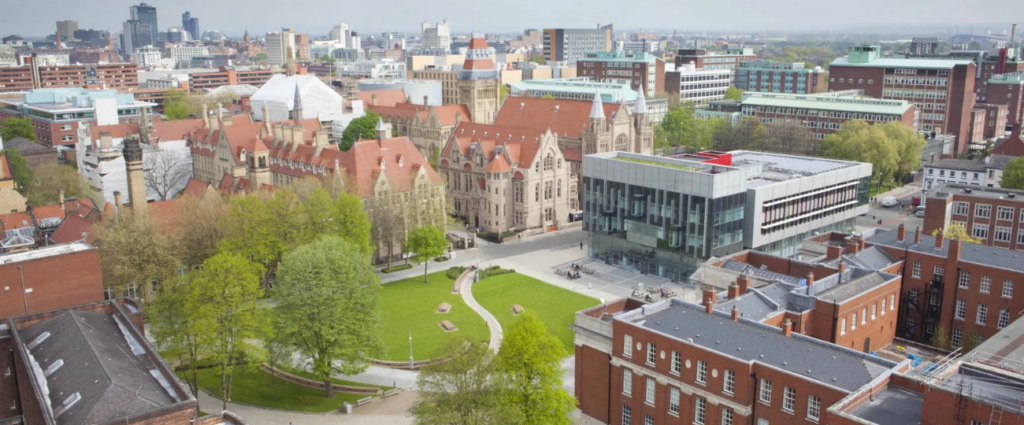
- Location: Manchester, England
- Program Type: Pathway provider (INTO Manchester)
- Popular Tracks: Business, Engineering, Computer Science, Social Sciences
- Progression: Entry into Manchester or partner universities depending on grades
- Typical Requirements: ~60–80% depending on degree competitiveness
- Why It Stands Out: Strong international reputation and flexible progression options
University of Leeds (via Leeds International Study Centre)
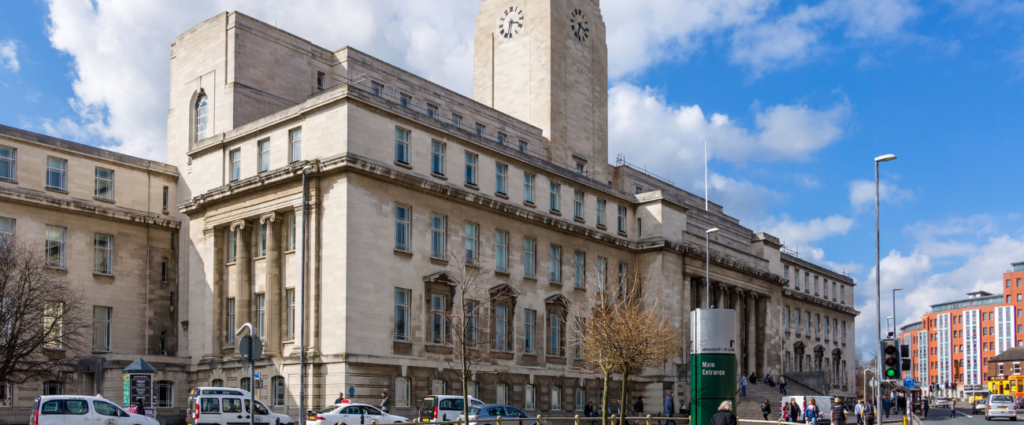
- Location: Leeds, England
- Program Type: Pathway provider (Study Group)
- Popular Tracks: Business, Engineering, Media, International Relations
- Progression: Guaranteed progression with required grades
- Typical Requirements: Around 55–70%
- Why It Stands Out: Structured student support and access to a Russell Group university
King’s College London (King’s International Foundation)
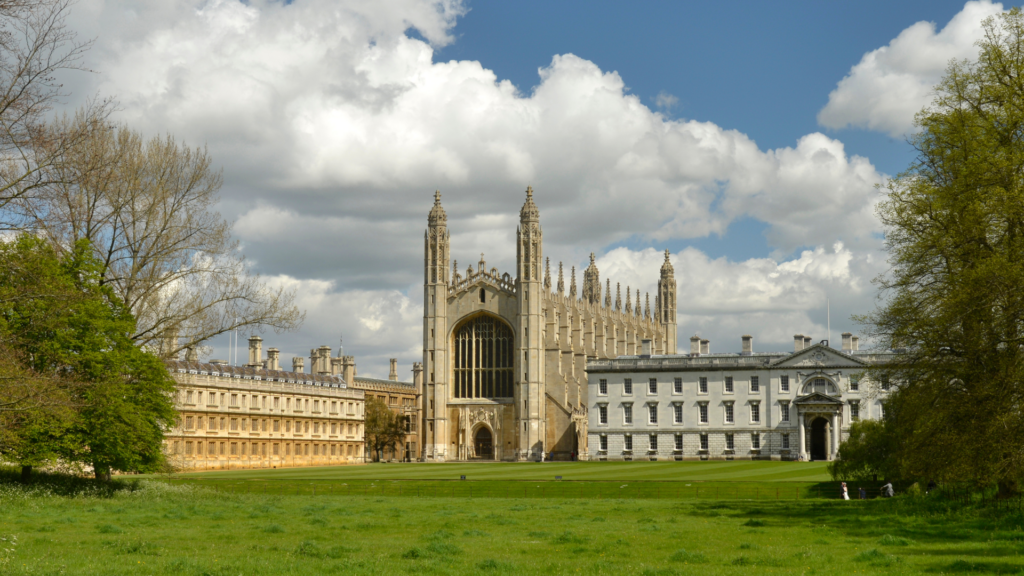
- Location: London, England
- Program Type: University-run foundation program
- Popular Tracks: Social Sciences, Business, STEM, Health-related fields
- Progression: Competitive progression into undergraduate programs (competitive)
- Typical Requirements: Around 65–75%+ depending on the course
- Why It Stands Out: One of the few elite London universities with its own in-house foundation program
University of Bristol (via Kaplan International College London)

- Location: Bristol, England (foundation often based in London)
- Program Type: Pathway provider (Kaplan)
- Popular Tracks: Business, Law, Engineering, Science
- Progression: Entry into Bristol or partner universities
- Typical Requirements: Around 60–75%
- Why It Stands Out: Multiple progression routes into a highly ranked university
Durham University (via Durham International Study Centre)

- Location: Durham, England
- Program Type: Pathway provider (Study Group)
- Popular Tracks: Business, Economics, Social Sciences
- Progression: Direct entry into Durham degrees with required grades
- Typical Requirements: Around 65–75%+
- Why It Stands Out: Strong academic reputation, especially in humanities and social sciences
University of Warwick (Warwick International Foundation Programme)

- Location: Coventry, England
- Program Type: University-run foundation program
- Popular Tracks: Business, Economics, Engineering, Social Sciences
- Progression: Competitive progression into Warwick degrees
- Typical Requirements: Around 65–80%
- Why It Stands Out: Academically rigorous program with strong outcomes
These programs are meant to lead somewhere. Choosing the right one isn’t just about getting accepted it’s about where the pathway can take you afterward.
At Beyond The States, we evaluate programs based on:
- Clear progression requirements
- Verified accreditation
- Transparent costs
- Realistic student outcomes
And this is where students gain an advantage because choosing the right foundation program isn’t just about getting in. It’s about where it leads next.

Foundation Year vs Direct Entry UK: Which Is Better?
This depends entirely on the student’s academic profile.
| Factor | Foundation Year | Direct Entry |
| Entry Requirements | More flexible | Higher GPA/test scores |
| Time to Degree | 4 years total | 3 years total |
| Preparation Level | Strong academic support | Immediate specialization |
| Admission Certainty | Higher (if criteria met) | Less predictable |
| Best For | Students needing academic bridge | Students fully qualified |
If you already meet the requirements, direct entry usually makes sense.
But if you need academic preparation or want access to stronger universities, the foundation year can actually be the smarter option.
Interestingly, many students end up at universities they wouldn’t have qualified for initially because of the foundation pathway.
Cost of Foundation Year in the UK for International Students
Let’s talk numbers.
Tuition Costs
- Foundation year: $15,000–$25,000 USD
- Bachelor’s degree (per year): $15,000–$30,000 USD
Living Costs (annual estimate)
- London: $18,000–$22,000
- Outside London: $12,000–$18,000
Total Estimated Cost
| Pathway | Total Cost Estimate |
| Foundation + Degree (4 years) | $120,000–$180,000 |
| Direct Entry (3 years) | $90,000–$140,000 |
Even with the extra year, total costs can still be comparable to or lower than many private universities in the U.S.
Some programs also offer scholarships, especially through pathway providers.
Foundation Year Success Rate in the UK
Most foundation programs report progression rates between 80% and 95%.
But that doesn’t mean students automatically move forward.
They still need to meet academic requirements to continue into the degree program. The difference is that those requirements are usually very clear from the beginning.
Why success rates tend to be high
1. Students know exactly what’s expected
Programs often outline grade requirements in detail, such as:
- 65% overall average
- Minimum scores in specific modules like math or economics
That clarity helps students stay focused.
2. There’s built-in academic support
Most programs include:
- Writing workshops
- Study skills support
- Instructor feedback
- Tutoring and office hours
The system is designed to help students transition successfully.
3. Smaller class sizes
Foundation classes are often smaller than large first-year U.S. lecture courses, which usually means:
- More instructor interaction
- More personalized feedback
- Better accountability
4. Assessment is spread out
Many programs use a mix of:
- Essays
- Group projects
- Presentations
- Midterm assessments
So students aren’t relying entirely on one final exam.
That said, students still need to take the year seriously.
A foundation year works best when students treat it as a real academic pathway, not a “practice year.”
What happens if a student doesn’t meet progression requirements?
There are often backup options, including:
- Moving into a different degree program
- Transferring to a partner university
- Repeating part of the program in some cases
So while the system is structured, there’s usually some flexibility built in.
Things to Know Before Choosing a Foundation Year
A foundation year can be a smart strategy but only if you understand how these programs actually work.
Let’s break down the key considerations.
1. Not all programs are the same
There are two main types:
University-integrated foundation years
- Taught directly by the university
- Usually closely connected to degree programs
- Often provide smoother progression
Pathway provider programs
Examples include INTO, Kaplan, and Study Group.
These programs:
- Partner with universities
- Sometimes offer progression into multiple institutions
- Often include extra student support services
So you’re not just choosing a program. You’re choosing an academic pathway network.
2. Progression is usually conditional
Most programs guarantee progression only if students meet certain requirements.
That may include:
- Overall GPA or percentage
- Minimum subject grades
- English language benchmarks
For competitive subjects like engineering, law, or business, expectations may be higher.n requirements are realistic based on their academic profile.
3. Student visa requirements still apply
International students typically apply for a UK Student Visa covering:
- The foundation year
- The bachelor’s degree if progression is confirmed
Students generally need:
- A CAS (Confirmation of Acceptance for Studies)
- Proof of financial means is required
- Consistent attendance and academic progress
The process is manageable, but universities do monitor compliance.
4. Subject choice matters early
UK education is specialized from the beginning.
Most students choose a track such as:
- Business or Economics
- Engineering
- Life Sciences
- Humanities or Social Sciences
Changing directions later can be difficult. Someone in an engineering pathway usually can’t switch into psychology or law without restarting.
That’s why choosing the right subject area early matters more than many U.S. students expect.
5. The degree is fully legitimate
This is a major concern for many families, so it’s worth being clear about it.
If you complete a foundation year and move into a UK bachelor’s program:
- Your degree is fully accredited in the UK
- U.S. employers recognize it
- U.S. graduate schools generally accept it
You are not earning a “foundation degree.”
You are earning a standard UK bachelor’s degree. The foundation year is simply the route into it.
Who Is a Foundation Year a Good Fit For?
A foundation year may make sense if you:
- Have a 2.5–3.5 GPA but want competitive universities
- Didn’t take AP/IB courses
- Want to change academic direction
- Prefer transparent admissions criteria
- Need a smoother transition to studying abroad
It’s less about being “behind” and more about choosing a structured entry point.
Common Misconceptions About Foundation Years
“It’s only for weak students”
Not true. Many strong students use foundation years strategically to access better universities or switch fields.
“It adds unnecessary time”
It adds one year, but it can significantly expand a student’s options.
“Degrees aren’t recognized”
Incorrect. UK degrees are widely respected internationally.
“It’s just an English program”
Only partly. Most foundation years are academically focused and include subject-specific coursework.
Frequently Asked Questions
We’re here to help answer your questions about Foundation Year in the UK
It’s a one-year preparatory program that helps students qualify for a UK bachelor’s degree.
Yes. Many programs are specifically designed for international students, including Americans.
No. Students still need to meet progression requirements, though those expectations are usually clearly defined.
For students who don’t meet direct entry requirements or want access to stronger universities, it often is.
Usually four years total:
• 1 foundation year
• 3-year bachelor’s degree
Yes. Programs recommended through Beyond The States are taught entirely in English.
Final Thoughts
A foundation year isn’t a backup plan. For many students, it’s simply the most practical route into a respected international degree.
What makes these pathways appealing is the clarity. Students usually know exactly what they need to do, what grades are required, and where the program can lead.
For families exploring options abroad, that structure can make the process feel a lot less overwhelming.
Next Steps
If you’re considering UK universities with foundation year programs, start by comparing pathways that match your goals, budget, and academic background.
Beyond The States can help you:
- Identify vetted foundation pathways
- Compare universities across Europe
- Understand admissions requirements clearly
You can also take our quiz or book a free strategy session to map out your options.
The goal isn’t to guess your way through the process. It’s to make informed decisions with a clear plan forward.