Buying Property in Europe as an American
A lot of Americans assume buying property in Europe is basically off the table.
They think it’s too complicated, too expensive, or there are too many restrictions to make it realistic.
But that assumption is starting to break down.
In several European countries, Americans can legally buy homes with fewer barriers than they’d face in some overheated U.S. housing markets and in many cases, the prices are noticeably lower too.
But what most people miss is that real estate is only part of the story.
Once you realize that American students can earn fully accredited bachelor’s and master’s degrees in Europe, taught entirely in English and often for a fraction of what college costs in the U.S., the whole conversation shifts.
If you’re exploring this path further, Beyond the States offers helpful guidance, including free strategy calls to help you figure out your options.
Summary
Can Americans Buy Property in Europe?

Yes. In most European countries, Americans can buy property without citizenship or permanent residency.
That includes places like:
- Portugal
- Spain
- Italy
- Greece
- France
- Germany
- Ireland
- The Netherlands
Some countries do have restrictions around agricultural land, border areas, or certain purchases by non-EU buyers. But standard residential property purchases are usually allowed.
That matters because many Americans assume buying abroad requires:
- EU citizenship
- A residency permit first
- A local spouse
- A company structure
- A huge investment
In most cases, none of those things are necessary.
That said, owning property does not automatically give you residency rights. A lot of people confuse the two.
Buying Property Does Not Equal Residency
One of the biggest misconceptions Americans have about buying property in Europe is assuming home ownership automatically leads to a visa.
Usually, it doesn’t.
The reality looks more like this:
- Some countries offer residency pathways connected to investment
- Others have scaled back or removed “golden visa” programs
- Many allow foreign ownership without offering residency rights at all
So yes, you can legally own an apartment in Spain and still be limited by Schengen tourist stay rules. You can own a home in Italy without having the legal right to work there.
Property ownership and immigration status are separate systems.
Best Countries in Europe for American Buyers
Not every country offers the same mix of affordability, bureaucracy, taxes, and lifestyle. Some are easier for foreign buyers than others.
Here’s a closer look.
Buying Property in Portugal

Portugal is still one of the most popular choices for American buyers.
There are a few reasons why:
- Mild climate
- Strong expat communities
- High-quality healthcare
- More affordable areas outside Lisbon
- Reliable transportation
- Established process for foreign buyers
Portugal’s Golden Visa program has changed in recent years. Americans can still freely buy property.
Typical costs:
- Small apartments outside Lisbon: €120,000–€250,000
- Closing costs and taxes: ~6–10%
Buying Property in Spain

Spain continues to attract Americans looking for lifestyle and affordability.
Advantages include:
- High-speed rail network
- Strong healthcare system
- Large international communities
- Lower living costs in many regions
Popular regions include:
- Valencia
- Alicante
- Malaga
- Madrid
- Barcelona
Spain allows foreign property ownership, but tax and legal rules vary by region.
Buyers should work with:
- An independent lawyer
- A local tax advisor
- A certified translator when needed
Buying Property in Greece

Greece is attractive due to relatively lower property prices compared to other Mediterranean countries.
Advantages include:
- Lower entry prices
- Mediterranean lifestyle
- Tourism-driven rental demand
Typical costs:
- Secondary city apartments often under €150,000
- Island prices vary widely
Buying Property in Italy
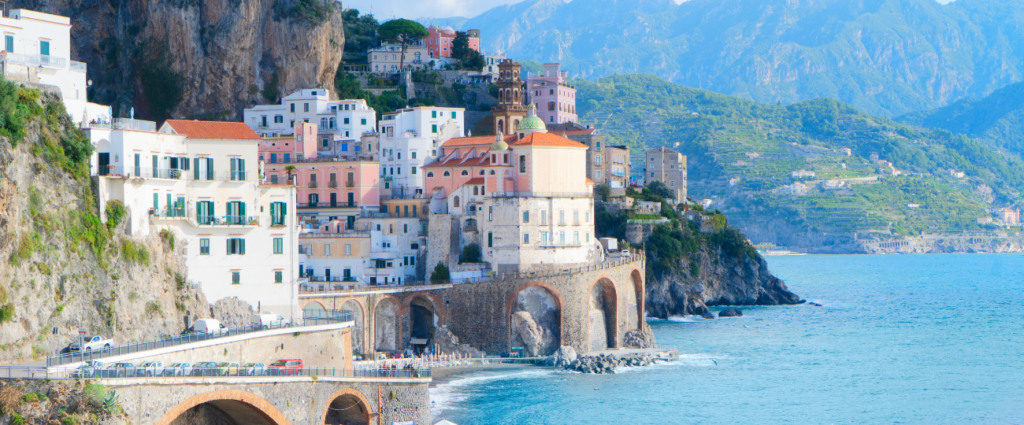
Italy has a wide range of property prices depending on region.
In some areas, buyers can still find:
- Apartments under €100,000
- Historic homes needing renovation
The €1 homes exist but often require significant renovation and bureaucracy.
For practical buyers, mid-sized cities tend to be more functional:
- Bologna
- Turin
- Perugia
These cities offer:
- Lower costs than Milan or Rome
- Strong student populations
- Good transportation
Buying Property in France
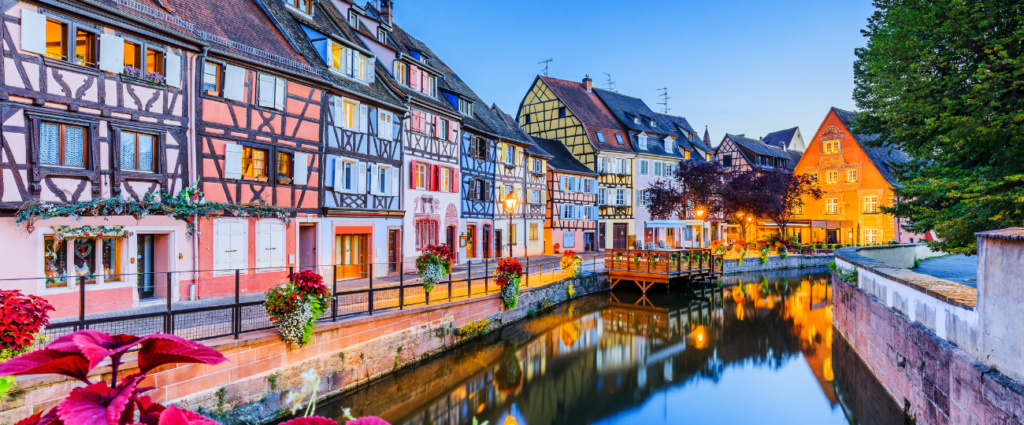
France is a stable property market but generally more expensive.
Still, prices outside Paris can be more accessible.
Popular regions include:
- Occitanie
- Brittany
- Normandy
- Alsace
France has strong buyer protections, but the process can move more slowly than in other countries.
Key considerations:
- Higher notary fees
- Strict legal structure
- More complex inheritance rules
Buying Property in Europe From the USA: How the Process Works
The exact process varies by country, but most purchases follow a similar pattern.
Step 1: Choose the Country Carefully
This isn’t just a real estate decision.
You’re also deciding on things like:
- Visa rules
- Tax exposure
- Healthcare access
- University systems
- Language environment
- Cost of living
- Long-term residency potential
Families focused on education abroad should pay especially close attention to:
- English-taught degree options
- Student visa flexibility
- Post-graduation stay-back opportunities
- International recognition of degrees
At Beyond The States, this is part of the broader planning process we help families work through.
Step 2: Get a Tax Number and Local Bank Account
Most countries require:
- A local tax identification number
- A European bank account
- Proof of funds
For example:
- Portugal: NIF number
- Spain: NIE number
- Italy: Codice Fiscale
These are standard administrative steps and usually pretty manageable.
Step 3: Understand Financing Limitations
Many Americans assume getting a European mortgage will be simple. Sometimes it is. Sometimes it definitely isn’t.
Non-resident buyers often face:
- Larger down payment requirements
- More paperwork
- Currency risk considerations
- Different lending standards
Because of that, cash purchases are fairly common among foreign buyers.
Step 4: Hire an Independent Lawyer
This part is essential.
Real estate systems vary widely across Europe, and an independent attorney should verify:
- Ownership history
- Outstanding debts
- Zoning compliance
- Building permits
- Contract terms
Don’t rely only on a real estate agent.
Step 5: Factor in Closing Costs and Taxes
The purchase price is only part of the total cost.
Additional expenses often include:
- Transfer taxes
- Legal fees
- Notary fees
- Registration costs
- Agency commissions
Depending on the country, these costs can range from roughly 5% to 15%.
Cheapest Homes in Europe for Americans
Affordable property still exists across Europe. But cheap doesn’t always mean practical.
Some lower-cost regions:
- Have shrinking populations
- Offer limited job opportunities
- Require local language fluency
- Have weaker transportation infrastructure
The best value usually comes from balancing:
- Affordability
- Infrastructure
- Visa flexibility
- University access
- Overall livability
Affordable Countries Comparison
| Country | Typical Entry-Level Apartment Prices | English-Friendly? | Residency Potential | Notes |
|---|---|---|---|---|
| Portugal | Moderate | Strong | Good | Popular with Americans |
| Spain | Moderate | Moderate | Good | Strong student cities |
| Italy | Low to Moderate | Varies | Moderate | Regional price differences are huge |
| Greece | Low | Moderate | Moderate | Lower property costs |
| Bulgaria | Very Low | Limited | EU residency pathways possible | Less international infrastructure |
| Hungary | Low | Moderate | Moderate | Budapest remains attractive |
What About the Famous €1 Homes?
Yes, some Italian towns really do offer €1 homes.
But there’s usually more to the story:
- Renovation requirements are common
- Infrastructure can be limited
- Deadlines may be strict
- Final costs often end up much higher than expected
These programs are real, but they’re rarely the easiest path for American students or families relocating for education.
Cost Breakdown: Buying Property in Europe as an American
Here’s a simplified example for a mid-sized European city.
| Expense | Approximate Cost |
|---|---|
| Apartment Purchase Price | €140,000 |
| Transfer Taxes | €7,000–€14,000 |
| Legal Fees | €1,500–€3,000 |
| Notary & Registration | €1,000–€2,000 |
| Annual Property Taxes | Often lower than U.S. equivalents |
| Utilities & HOA | Varies widely |
Compared to many U.S. metro housing markets, that can still represent a lower overall housing cost.
And when you combine it with lower university tuition, the long-term financial picture starts looking a lot more appealing.
Taxes and Legal Requirements for Americans
Americans buying property abroad have to deal with both local laws and U.S. requirements. It’s not overly complicated, but there are a few areas families should understand before moving forward.
Local Taxes
Most countries charge some combination of:
- Property transfer taxes
- Annual property taxes
- Legal registration fees
- Capital gains taxes when you sell
Depending on the country, you may also run into:
- Wealth taxes
- Inheritance taxes
- Stamp duties
U.S. Tax Reporting
Even if you live overseas, U.S. citizens still have American tax reporting obligations.
That can include:
- Reporting foreign bank accounts
- Declaring rental income
- Reporting capital gains
- Estate planning considerations
This is one area where experienced international tax advice really matters. Small mistakes can become expensive later.
Legal Protections
Don’t rely only on:
- Real estate agents
- Sellers
- Developer representatives
Instead, make sure you hire:
- An independent attorney
- A local tax advisor
- Use conservative lending ratios
American buyers also tend to encounter a few financing differences in Europe:
| Financing Factor | Typical European Expectation |
|---|---|
| Down payment | 20–40% |
| Proof of income | Extensive documentation |
| Debt-to-income tolerance | Often stricter than U.S. lenders |
| Mortgage length | Frequently shorter |
| Interest structures | Vary by country |
Some buyers use:
- Local European financing
- U.S.-based international lending programs
- Cash purchases
- Hybrid financing structures
Currency exchange risk matters too.
If your income is in U.S. dollars but your expenses are in euros, exchange-rate swings can noticeably change affordability over time.
Building a Long-Term International Plan
The families who navigate this best usually don’t make decisions one piece at a time.
They look at the bigger picture, including:
- Degree options
- Residency pathways
- Housing strategy
- Career goals
- Graduate school plans
- Long-term financial sustainability
That broader approach is becoming much more common among American families exploring Europe.
And it changes the conversation entirely.
Instead of seeing international education as a short-term experience, many families begin treating it as part of a longer-term life strategy.
For some students, that could mean:
- Earning a bachelor’s degree abroad
- Staying for a master’s degree
- Building international work experience
- Exploring residency opportunities later on
In that context, housing becomes just one part of a larger plan.
Discover all the English-taught European college programs in one place.
Beyond the States provides easy access to 12,600+ European bachelor’s and master’s programs across 870 universities, 550 cities, and 212 areas of study, plus all the resources you need to get there.
3400+
English-taught bachelor’s programs in our database.
550
Beautiful European cities to choose from.
$360,170
Typical savings against a private university in the US.
8200+
English-taught master’s programs in our database.
870
Top-tier universities accepting international students.
$65,038
Typical savings against in-state tuition in the US.
Common Myths About Buying Property in Europe
Myth 1: Americans Cannot Buy Property in Europe
False.
Americans can legally buy property in many European countries, often with relatively few restrictions.
Myth 2: Buying Property Automatically Gives Residency
Usually false.
Property ownership and immigration rights are typically separate issues.
Myth 3: European Degrees Are Not Recognized
False.
Many European universities are globally ranked and internationally accredited.
Graduates regularly go on to:
- U.S. graduate programs
- International careers
- Global employers
Myth 4: You Must Speak Fluent Local Language
Not always.
Thousands of full degree programs across Europe are taught entirely in English.
That said, daily life may still require some adjustment to the local language depending on the country and city.
Myth 5: Europe Is Always Cheaper
Not necessarily.
Cities like Amsterdam, Dublin, and Paris can be very expensive. But many regional cities across Europe are still far more affordable than comparable U.S. markets.
Who Is This a Good Fit For?
Buying property in Europe as an American can make sense for several types of families and professionals.
Families with College-Bound Students
Especially families comparing high U.S. tuition costs with more affordable European degree options.
Remote Workers
People with flexible income who want lower living costs, more mobility, or both.
Long-Term Planners
Families thinking about multiple goals at once, such as:
- Education abroad
- Potential residency pathways
- Diversifying property ownership internationally
Americans Looking for More Predictability
In some ways, European systems can feel more straightforward when it comes to:
- Admissions
- Healthcare
- Visa structures
- Tuition pricing
Frequently Asked Questions
We’re here to help answer your questions about Buying Property in Europe as an American
Yes. Americans can legally buy residential property in most European countries, though the rules vary by country.
Countries like Bulgaria, parts of Italy, Greece, and Hungary often have lower property prices than Western Europe.
Usually not automatically. Residency rules are generally separate from property ownership laws.
Sometimes. Non-residents may qualify, but lending standards and down payment requirements can vary quite a bit.
It can be manageable with the right legal guidance. Most buyers will need local tax registration, legal support, and banking setup.
Final Takeaway
Buying property in Europe as an American is no longer unusual.
What matters most is approaching it carefully and realistically.
The best outcomes usually come from:
- Realistic budgeting
- Strong legal guidance
- Careful country selection
- Long-term planning
- Understanding how education, residency, and housing connect
For families exploring accredited English-taught degrees abroad, property ownership can become part of a much larger financial discussion especially in countries where tuition and living costs are still significantly lower than comparable U.S. options.
Beyond The States helps students and families sort through the noise by identifying vetted, fully accredited degree programs across Europe, with a focus on affordability, transparency, and practical outcomes.
If you’re exploring university options abroad, you can take the Beyond The States quiz, compare countries, or schedule a free strategy session to better understand which paths may fit your goals.