Gap Year Programs for Adults
What if the quickest way to move your career forward is actually to step away from it for a bit?
At first, that sounds backwards. Most of us are raised to keep pushing school, job, promotion, and then repeat. But that path doesn’t feel as straightforward or stable as it once did.
College costs keep climbing, burnout shows up earlier than people expect, and long-term career plans feel less predictable. Because of that, more U.S. students and working professionals are choosing something different: they’re intentionally stepping off the track for a while.
A gap year for adults isn’t just “time off” anymore. It’s turning into a more intentional reset. People use it to rethink their direction, get international experience, or get ready for things like pursuing an accredited degree in Europe, often in English-taught programs.
And this isn’t limited to recent high school grads. People are taking this break after college, in the middle of their careers, and even after years in the workforce.
Summary
What is a gap year for adults?
An adult gap year is usually a planned period of about 3 to 18 months taken after college, during a job, or between career moves. Unlike the traditional student version, it’s less about general exploration and more about direction figuring things out, building skills, or preparing for what comes next.
People typically use this time for things like:
- Changing or resetting a career path
- Recovering from burnout
- Working or traveling abroad
- Learning a new language
- Preparing applications for graduate study or a full accredited degree abroad
- Trying out a new field before committing financially or professionally
In Europe, degree pathways are often more straightforward and based more on academic results. That’s one reason many adults look there when they want a clearer route into higher education without the complexity of U.S. admissions systems.
Can adults take a gap year after college or work?
Adults can take a gap year after college or during their careers, and it is increasingly common.
There’s no age limit on gap years. You’ll see them most often among:
- Recent graduates who aren’t sure what comes next
- Professionals dealing with burnout
- People switching careers
- Individuals planning to study or move abroad
The main difference with adult gap years is expectation. They’re usually not seen as “time off,” but as something intentional.
Employers and graduate programs are generally fine with them when the time is used for things like:
- Internships or international work experience
- Language study
- Structured volunteering
- Preparing for study abroad or academic re-entry
This connects to a growing trend: adults using gap years as a bridge toward affordable English-taught degree programs in Europe.
Read more and take a quick quiz to help you decide whether a gap year or going straight to college is the better fit for you: Quiz: Should You Take a Gap Year or Go Straight to College?
Gap year programs for adults
Most programs fall into a few main categories.
1. Career exploration programs
These are for people testing out new industries before making a full switch.
Common options include:
- Internships abroad
- Short-term professional placements
- Industry training programs
Organizations like InterExchange help connect people with structured placements and exchange opportunities.
2. Working and travel programs
These combine travel with paid work, which makes them more financially realistic for many adults.
Typical options:
- Working holiday visas
- Seasonal jobs abroad
- Hospitality and tourism work
Providers like Global Work & Travel organize these kinds of placements.
3. Structured cultural exchange programs
These are more immersive and often include a learning or teaching component.
Examples include:
- Teaching assistant roles
- Au pair placements
- Language immersion programs
4. Remote or location-independent gap years
These are for people who don’t want to pause their careers completely.
Common formats:
- Remote work while traveling
- Cohort-based travel groups
- Hybrid work-and-travel setups
Programs like Remote Year are built around this idea.
Gap years for adults are increasingly treated as structured transitions instead of open-ended breaks. Many people use them to gain experience, rethink direction, or prepare for further study.
Some also use them specifically to move into full accredited degree programs abroad in Europe, where English-taught options are widely available and admissions are often more transparent than in the U.S.
Gap year top providers
There isn’t one single “industry standard” for adult gap years, but there are several well-known providers and platforms worth looking at.
1. Global Work & Travel

Global Work & Travel is all about structured experiences abroad that mix travel with paid or partly paid work. It’s often used by people taking a break between life stages or trying out something new without completely losing income.
- Paid work opportunities abroad
- Internships and short placements
- Flexible durations (3–12 months)
- Often used for career breaks or transitions
2. InterExchange

InterExchange is a nonprofit that’s been around for a while and focuses on cultural exchange programs. These programs usually involve working, teaching, or gaining international experience in a more structured way.
- Teaching assistant programs
- Au pair placements
- Internships and work abroad options
- Strong presence in Europe and Asia
3. EF Education First

EF Education First is one of the biggest international education companies, and they run structured gap year programs for young adults and professionals.
- Language immersion (mostly English, Spanish, French, or German)
- Cultural exchange and travel-based learning
- Internships in certain destinations
- Multi-country “global experience” programs
4. Road Scholar

Road Scholar is more about learning than working. It’s designed for adult travelers who want educational experiences while exploring different places.
- Educational travel programs
- Expert-led learning experiences
- Less about career building, more about enrichment
5. Maximo Nivel
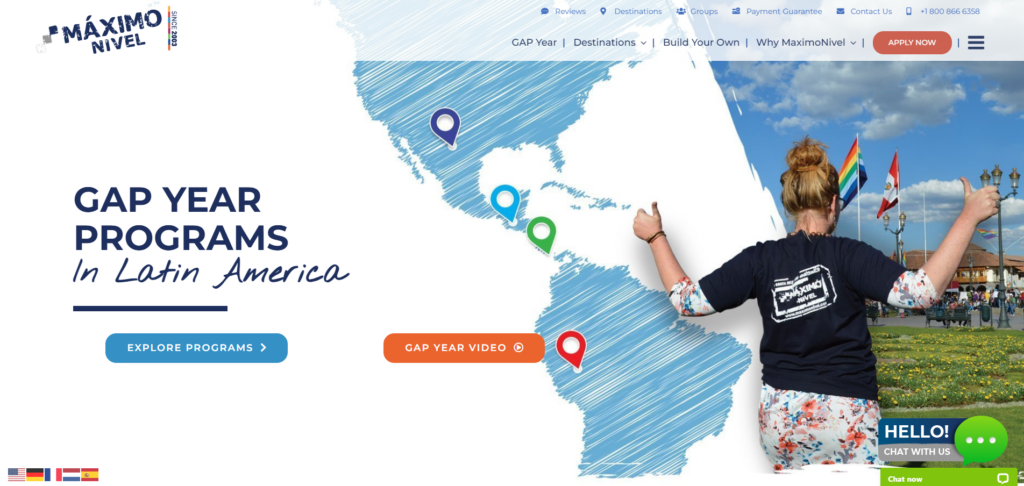
Maximo Nivel focuses on volunteer work and internships, especially in Latin America. It’s often chosen by people who want hands-on international experience in service-based fields.
- Volunteer and internship programs, especially in Latin America
- Medical, education, and conservation placements
- Spanish immersion options
6. Projects Abroad

Projects Abroad focuses more on volunteering, internships, and conservation work in different countries.
- Medical internships (usually observational or assistant roles, depending on where you go)
- Teaching and childcare placements
- TEFL Conservation and environmental projects
- Human rights and community development work
Recommended products
-
Gap Year Counseling
Original price was: $1,800.00.$897.00Current price is: $897.00.

Comparison snapshot
| Program Type | Best For | Duration | Career Value | Flexibility |
|---|---|---|---|---|
| Working Holiday & Paid Work Abroad (Global Work & Travel) | Career breaks, exploration | ~3–12 months | Medium | High |
| Cultural Exchange Programs (InterExchange) | Early career / grads | ~3–18 months | Medium | Medium |
| Language & Structured Education Programs (EF Education First) | Language learners, guided gap years | Varies (short to 12+ months depending on program) | Medium | High |
| Educational Travel & Enrichment (Road Scholar) | Mid-career enrichment, older adults | ~2 weeks–6 months | Low–Medium | Low |
| Volunteer & Internship Programs (Maximo Nivel) | Skill-building in Latin America | ~1–6 months | Medium | Medium |
| Volunteer & International Development Programs (Projects Abroad) | Service-focused gap years | ~1–12 months | Medium | Medium |
How to take a gap year as an adult without quitting everything
A common concern is whether you need to fully step away from work or life. The short answer: you usually don’t.
Many adults design gap years in smaller, flexible parts.
1. Keep remote or hybrid work
Some negotiate remote arrangements and continue working while abroad.
2. Break it into shorter blocks
Instead of a full year away, people often combine:
- 1–3 months of travel
- 2–6 month internships
- 1–3 month study programs
3. Plan the finances early
Most adult gap years are funded through:
- Savings
- Remote income
- Paid work placements
4. Connect it to future study or career steps
Some use this time specifically to prepare for admission into a full degree abroad. Countries like Germany, the Netherlands, and Ireland are common choices because many programs are taught in English and follow clearer academic requirements.
The key is simple: the gap year works best when it leads somewhere, not when it floats without direction.
How adults use gap years to restart their career or life
Adult gap years aren’t really about stepping away from responsibility. They’re more about resetting direction and figuring out what comes next.
Common ways people use them include:
Career transition
- Marketing → UX design
- Finance → sustainability
- Healthcare → public policy
Burnout recovery with structure
Unlike just taking time off and drifting, structured gap years help you keep some forward movement. That usually looks like:
- Building new skills
- Learning a language
- Getting international work experience
Graduate or degree preparation
A lot of adults also use this time to get ready for further study. For example:
- Strengthening applications
- Improving language skills
- Gaining international academic exposure
This is especially useful if you’re looking at European universities, where admissions often focus more on your overall profile than standardized test scores.
Cost breakdown of adult gap year programs
Costs really depend on where you go and how structured the program is.
Typical ranges:
- Structured internship programs: $1,500–$5,000 (not including housing or flights)
- Working holiday setup programs: $2,000–$6,000
- Remote nomad programs: $2,000–$3,500 per month (usually all included)
- Volunteer programs: $1,000–$3,000 per month
- DIY independent travel: varies a lot, usually $1,200–$3,000 per month
Additional expenses:
- Flights: $600–$1,500
- Insurance: $50–$150 per month
- Visa fees: $100–$500 depending on the country
- Living costs: varies widely across Europe and Latin America
When you compare it to U.S. tuition or rent, many people find that a well-planned gap year ends up being about the same cost, or sometimes even cheaper.
Who is this a good fit for?
Adult gap years tend to work best for people who:
- Aren’t sure about their career direction yet
- Want international experience before committing to grad school
- Are considering a full accredited degree abroad
- Need time to reset after burnout or job loss
- Want to try out different career paths before investing more in education
They’re not as useful if you’re just looking to travel without any structure or direction. In that case, it can feel a bit aimless.
Common myths about adult gap years
Myth 1: “Gap years are only for students”
That’s not true. Adults at all stages use structured gap programs.
Myth 2: “It will hurt my career”
Not really, as long as it’s intentional. Many employers actually value international and cross-cultural experience.
Myth 3: “It’s too expensive”
In many cases, it’s similar to what you’d already spend living in a major U.S. city.
Myth 4: “You fall behind”
For a lot of people, the opposite happens. It can help you avoid spending years in a career that doesn’t fit.
Frequently Asked Questions
We’re here to help answer your questions about gap year programs for adults
It’s a planned break from work or study used for travel, skill-building, exploring careers, or preparing for further education.
Yes. It’s actually pretty common during career changes or after graduation.
They can be, especially if you have a clear goal like changing careers or preparing for study abroad.
Yes. Many people use them to prepare for admission into full degree programs in Europe.
Yes. Some people go straight into degree programs abroad, especially since many European universities offer English-taught degrees, clearer admissions processes, and lower tuition compared to the U.S.
Final thoughts
A gap year for adults isn’t really a pause. It’s more of a reset that helps you move in a clearer direction. The best ones tend to have structure, a budget, and a next step in mind whether that’s a career change or studying abroad.
For many U.S. students and professionals, Europe is worth considering. You’ll find English-taught degrees, straightforward admissions, and often lower tuition than in the U.S.
If you’re weighing options, it helps to compare programs and countries before making any decisions.
You can explore structured guidance through Beyond The States, which helps Americans find degree options in Europe. You can also book a free strategy session to talk through your options, or look into our College Admissions Counseling if you want more structured application support.