How to Travel the World
College in the U.S. can easily cost anywhere from $25,000 to $80,000 per year and that’s before graduate school, travel, or even basic living expenses.
What a lot of families don’t realize is this:
Thousands of American students are earning fully accredited bachelor’s degrees in Europe for much less than they’d pay in the U.S., while living in one of the easiest places in the world to travel.
And this is where things shift.
When you study for a full degree in Europe, not just a semester abroad, you can explore dozens of countries during your college years, often for less than the cost of a quick weekend trip in the U.S.
Summary
How to Travel the World as a Student

When people picture “traveling the world,” they usually imagine taking a gap year or waiting until after graduation.
But there’s a smarter and often cheaper option:
Earn your degree somewhere that makes travel easy.
Europe offers:
- Short distances between countries
- Extensive train networks
- Budget airlines
- Student travel discounts
- Long academic breaks
Instead of putting travel off for “someday,” students can make it part of everyday college life.
For example:
A student in the Netherlands can take a train to Belgium in under two hours.
A weekend flight from Italy to Spain might cost less than $60.
A semester break can turn into a multi-country trip through Central Europe.
For many students, studying in Europe becomes the most affordable way to travel internationally.
Why Europe Makes Travel Easy for Students
Europe is built for exploration.
Countries are smaller, borders are easier to cross, and transportation is efficient. For students, that creates a huge advantage.
Distance Comparison
| Trip | Distance | Typical Travel Time |
| Boston → Washington DC | ~440 miles | 7 hours driving |
| Amsterdam → Paris | ~320 miles | 3 hours by train |
| Berlin → Prague | ~220 miles | 4 hours train |
| Milan → Zurich | ~170 miles | 3 hours train |
Students studying in Europe can visit multiple countries during a single semester without complicated planning.
That’s the real difference.
Instead of one big trip every few years, travel becomes part of normal student life.
Affordable Travel for Students in Europe
One of the biggest reasons students travel so often in Europe is simple: getting around is cheap.
Budget Airlines
Low-cost airlines regularly offer flights under $100.
Some of the most common include:
These airlines connect hundreds of cities across Europe.
Train Networks
Europe’s rail system is one of the best in the world.
Students often use trains for weekend trips to nearby countries.
Popular options include:
Eurail student passes
Regional rail tickets
Discount youth fares
Student Discounts
Students can also save on:
Museums
National parks
Public transportation
Cultural attractions
Those discounts make exploring Europe much more affordable than most families expect.
Cheap Travel Destinations for International Students
Living in Europe puts dozens of incredible destinations within easy reach.
Students often visit places like:
Central Europe
These cities offer beautiful architecture, strong student culture, and lower day-to-day costs.

Southern Europe
Think warm weather, coastlines, and amazing food.

Northern Europe
Copenhagen, Denmark
Stockholm, Sweden
Oslo, Norway
These cities are known for design, sustainability, and outdoor life.
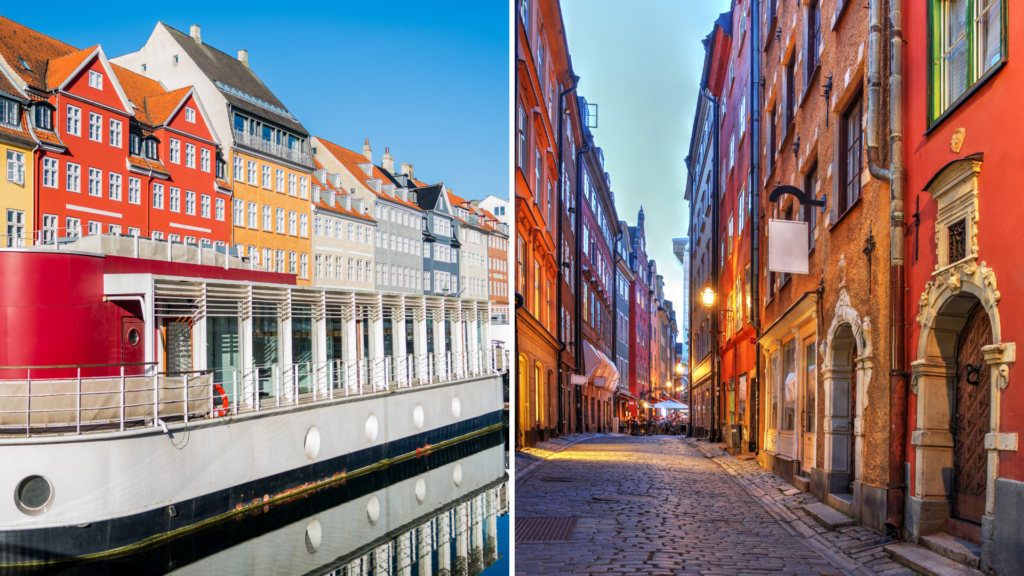
Because of budget flights and rail passes, many students visit 10–20 countries during their degree program.
Not as rushed tourists, but as students with time to actually experience places.
The Benefits of Getting a Degree in Europe
Travel is exciting, but it’s not the only reason students choose European universities.
1. Lower Tuition Costs
Many English-taught bachelor’s programs cost $3,000–$15,000 per year.
That’s far less than many U.S. private universities.
Some public universities cost even less.
2. Transparent Admissions
European universities usually publish clear academic requirements.
Instead of the uncertainty of holistic admissions, students often know exactly what they need:
GPA thresholds
Required coursework
It makes the process much more predictable.
3. Globally Recognized Degrees
Many European universities are internationally ranked and accredited.
Degrees are widely recognized by:
U.S. employers
graduate schools
professional programs
Thousands of American students return to the U.S. for careers or grad school after earning degrees abroad.
4. International Experience
Students also gain:
global perspective
independence
These are the kinds of skills employers consistently value.



A Typical Student Travel Budget in Europe
Let’s make this practical.
Travel doesn’t have to be expensive when you already living in Europe.
Example Weekend Trip Budget
| Expense | Estimated Cost |
| Budget flight | $40–$80 |
| Hostel or budget hotel | $30–$70 |
| Local transportation | $10–$20 |
| Food | $25–$50 |
| Attractions | $10–$25 |
Total: $115–$245 for a weekend trip
Students often spend even less by:
traveling with friends
staying in hostels
using rail passes
booking early
Compare that to domestic U.S. travel, where airfare alone can easily be over $300.
Exploring Europe While Studying Abroad

Students aren’t skipping class to travel.
European academic calendars actually make travel easier.
Long Weekends
Many universities have lighter Friday schedules or Friday–Monday breaks.
Perfect for nearby trips.
Semester Breaks
Students often get 2–4 week breaks between terms.
That’s ideal for longer travel.
Summer
Summer travel across Europe is incredibly common after the academic year ends.
Who Is This a Good Fit For?
Getting a degree in Europe and using it as a base for travel is a great fit for students who:
Want international experience during college
Are open to living abroad
Care about affordability and clearer admissions requirements
Enjoy independent travel and cultural exploration
Are interested in globally focused careers
The students who thrive most tend to be curious, adaptable, and motivated.
Families also often notice that students mature quickly when studying internationally.
Common Misconceptions About Studying in Europe
Let’s clear up a few common myths.
Myth 1: The degrees aren’t recognized in the U.S.
Most universities recommended by Beyond The States are fully accredited and internationally recognized.
Graduates regularly go on to:
U.S. graduate school
international careers
multinational companies
Myth 2: You must speak another language
You don’t.
Thousands of bachelor’s programs across Europe are taught entirely in English.
Countries like the Netherlands, Ireland, Italy, Spain, Germany, and Sweden offer a wide range of English-taught options.
Myth 3: It’s only for wealthy students
Actually, in many cases,, studying in Europe is more affordable than attending college in the U.S.
Even after factoring in travel, tuition plus living costs can sometimes be lower than in-state tuition at a public university.
Myth 4: It’s just study abroad
This one matters.
Beyond The States focuses on full undergraduate degrees, not one-semester study abroad programs.
Students enroll as full university students from day one.
How Beyond The States Helps Students Find the Right Program
Choosing the right international degree program takes real research.
Admissions requirements vary by country, university, and program.
That’s where guidance helps.
Beyond The States helps families:
Identify English-taught bachelor’s programs across Europe
Compare tuition and admissions requirements
Understand visa and residency rules
Narrow down programs that fit academic goals
Every university and program we recommend has been carefully vetted for quality, accreditation, and affordability.
Students can also schedule a strategy session to talk through their goals and explore options.
For families who want more structured guidance, our Platinum Admissions program helps students build a clear application strategy with expert guidance.
Our goal is simple:
Help students access excellent, affordable international education opportunities.

Frequently Asked Questions
We’re here to help answer your questions about studying in Europe and traveling as a Student
Yes. Europe’s short distances, train systems, and budget airlines make weekend travel very realistic for students.
Often, yes.
Flights between European cities can cost as little as $30–$100, especially when booked early.
Yes, most travel happens during long weekends and academic breaks, not during classes.
Not at all.
Many employers value international experience, and European degrees are widely recognized around the world.
Most major student destinations in Europe have strong safety records and large international student communities.
The Big Picture
Traveling the world doesn’t have to wait until after college.
For many students, earning a degree in Europe makes that possible right now.
You gain:
an accredited international degree
a multicultural education
access to dozens of countries
affordable travel opportunities throughout your college years
And when you graduate, you leave with more than a diploma.
You leave with perspective.
Explore Your Options
If you’re curious about studying in Europe, start by exploring what’s possible.
Beyond The States helps students find affordable, English-taught bachelor’s degrees across Europe and create a clear application plan.
You can:
Take the Beyond The States college matching quiz
Explore universities by country
Or schedule a strategy session with our team
Studying in Europe might not just change where you go to college.
It may completely change how you experience the world.