How to Avoid Student Loan Debt
Student loan debt in the U.S. has crossed $1.7 trillion. Most graduates leave school owing tens of thousands of dollars, sometimes more.
But here’s the thing: that outcome isn’t inevitable.
There are real, practical ways to earn a solid, respected degree without taking on that kind of debt. One option, in particular, tends to fly under the radar, earning your full bachelor’s degree in Europe, where tuition can be much lower.
A lot of families don’t realize this.
You don’t have to stick to the traditional U.S. path to get a high-quality, accredited education.
Summary
If your goal is to graduate with little (or no) debt, a few strategies make a big difference:
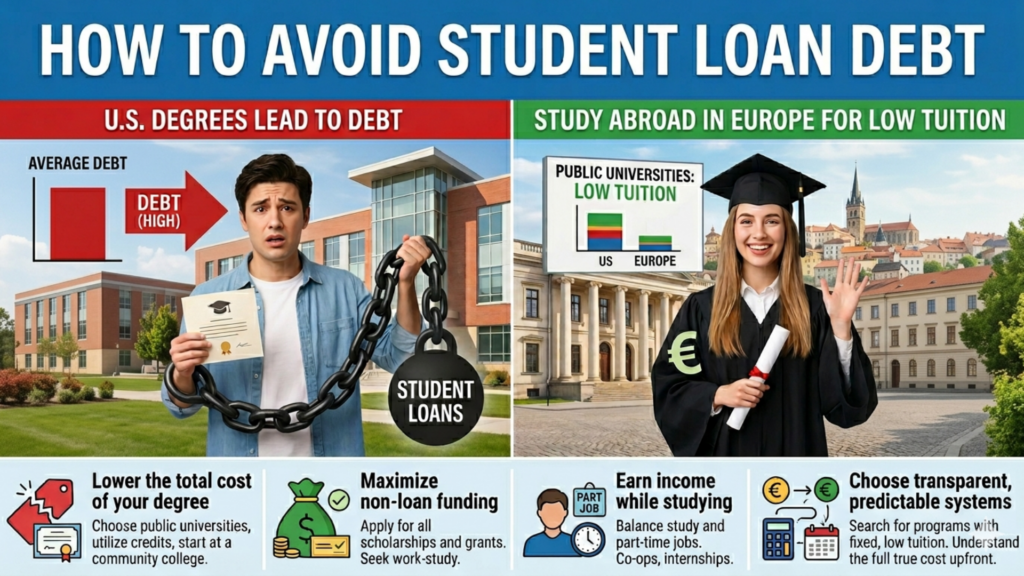
- Lower the total cost of your degree
- Use scholarships and grants instead of loans
- Work while study
- Choose systems with clear, predictable costs
And here’s where things really shift.
For many students, the biggest impact doesn’t come from trimming costs here and there it comes from choosing a more affordable system from the start.
Why U.S. Degrees Lead to Debt
Even public universities can be expensive:
- $25,000–$35,000 per year (in-state total cost)
- $45,000+ per year (out-of-state or private)
Over four years, that adds up fast.



Study Abroad in Europe for Low Tuition
Here’s the twist.
You can earn a fully accredited bachelor’s degree in Europe, taught entirely in English, often for a fraction of the cost of U.S. schools.
This isn’t a semester abroad. This is your entire degree from start to finish.
Why Europe Is More Affordable
Many European countries subsidize higher education even for international students. That leads to:
- Tuition as low as $0–$5,000 per year in some places
- Clear, upfront pricing
- Three-year bachelor’s programs in many countries
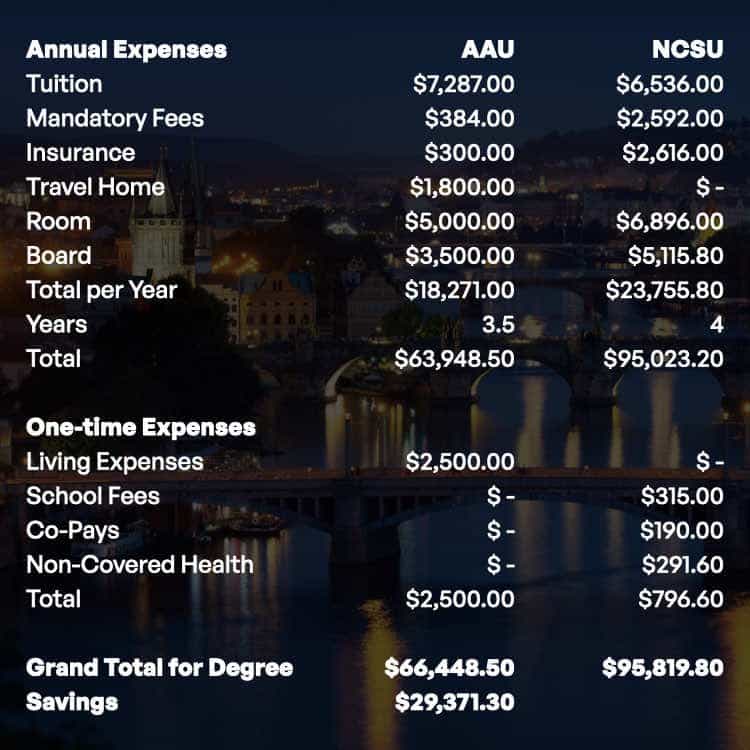
When you compare total costs, the difference is hard to ignore even after factoring in travel.
Cost Comparison: U.S. vs. Europe
| Expense Category | U.S. Public University (Out-of-State) | Europe (Typical Range) |
| Tuition (per year) | $20,000 – $40,000 | $0 – $5,000 |
| Housing & Living | $12,000 – $18,000 | $8,000 – $14,000 |
| Total Annual Cost | $32,000 – $58,000 | $8,000 – $19,000 |
| 4-Year Total | $128,000 – $232,000 | $32,000 – $76,000 |
Even with travel costs included, the difference is substantial.
Ways to Pay for College Without Loans

Avoiding debt isn’t about one single move. It’s about combining a few smart ones.
1. Choose More Affordable Universities
This is the biggest lever.
Countries like Germany, the Netherlands, Italy, and France strong programs at much lower costs. Look for:
- Accredited universities with global recognition
- Programs taught in English
- Clear admission requirements
At Beyond The States, we focus specifically on vetted programs that meet these standards.
2. Apply for Scholarships and Grants
Scholarships exist both in the U.S. and abroad.
In Europe, you’ll find:
- Government-funded scholarships
- University-specific awards
- Merit-based and need-based options
One advantage? Fewer Americans apply, so competition can be lower.
3. Work While You Study
Many student visas in Europe allow part-time work:
- Around 10–20 hours per week during the school year
- Full-time during breaks
That income can help cover:
- Rent
- Food
- Daily expenses
Instead of borrowing for living costs, you can offset them with income.
4. Finish Your Degree Faster
In many countries, bachelor’s degrees take 3 years instead of four.
That’s:
- One fewer year of tuition
- One less year of living costs
- One extra year to start earning
5. Plan Ahead
Good planning goes a long way.
Focus on:
- Setting a realistic budget early
- Comparing total cost not just tuition
- Understanding housing, visa, and living expenses upfront
Clarity early on helps avoid surprises later.
Admissions: More Straightforward Than You Might Expect
U.S. admissions can feel unpredictable:
- Essays
- Extracurriculars
- Subjective decisions
Many European universities take a simpler approach. They often focus on:
- GPA
- Specific course requirements
- Standardized qualifications (if needed)
That usually means clearer expectations and less guesswork.
Do European Degrees “Count”?
This comes up a lot.
The short answer: yes.
- Many European universities are globally ranked
- Degrees are accredited and widely recognized
- Graduates go on to U.S. grad schools and international careers
In fact, international experience can be a plus with employers. Some programs even include internships or industry connections.
Find the Perfect Degree Program in Europe
Explore accredited bachelor’s and master’s programs with clear admissions and lower costs. Join thousands of students already studying across Europe.

Practical Steps to Get Started
If you’re serious about avoiding student loans, here’s where to begin:
- Research countries with low tuition
- Look for English-taught programs
- Compare total costs carefully
- Apply for scholarships early
- Understand visa rules and work options
The tricky part? Figuring out which programs are legitimate, affordable, and actually a good fit.
That’s where having some guidance can really help.
If you want support figuring this out, you can book a free strategy session with Beyond The States or explore their Platinum Admissions program they walk you through the process step by step.

Who Is This a Good Fit For?
This approach is a great fit if you:
- Want to avoid or minimize student debt
- Are open to living abroad
- Prefer structured, academic-focused programs
- Care about affordability and transparency
- Are comfortable being independent
It might not be the best fit if you’re set on a traditional U.S. campus experience, especially things like big sports programs or Greek life.
Common Misconceptions About Studying in Europe
“Degrees from Europe aren’t recognized in the U.S.”
Not true. Graduates regularly go on to U.S. grad schools and global careers.
“You need to speak another language”
Also not true. There are thousands of programs taught entirely in English.
“It’s harder to get in”
Often the opposite. Admissions tend to be more straightforward and criteria-based.
“It’s only for wealthy students”
This one comes up a lot, and it’s misleading. Lower tuition often makes Europe more accessible, not less.
Frequently Asked Questions
We’re here to help answer your questions on How to Avoid Student Loan Debt
Lower your total cost from the start. That means choosing affordable schools, using scholarships, working part-time, and considering options like studying in Europe.
Yes. Many students do by combining low-cost programs, scholarships, savings, and part-time work.
Absolutely. Many universities offer low or no tuition, even for international students.
In most countries, yes. Student visas typically allow part-time work.
Final Thoughts
Avoiding student loan debt isn’t about cutting corners. It’s about making smarter choices early on.
For a lot of students, that means looking beyond the U.S. and considering options that offer the same degree, without the same price tag.
If you’re exploring this path, start by reviewing vetted programs and understanding your options clearly.
You can explore degree options, compare countries, and take the Beyond The States quiz to find programs that fit your goals and budget.