How to Teach English Abroad
Student loan debt in the United States has climbed past $1.7 trillion. At the same time, more Americans are looking overseas for affordable education, international work experience, and clearer career opportunities.
What a lot of families don’t realize is this:
Teaching English abroad isn’t just a short-term travel adventure anymore. For many students and graduates, it’s become a practical way to live overseas, build international experience, and sometimes transition into a fully accredited degree program abroad taught entirely in English.
Summary
How to Teach English Abroad

The process is usually simpler than people expect.
In most countries, it looks something like this:
- Earn a bachelor’s degree
- Complete a TEFL or TESOL certification
- Apply for teaching jobs or programs abroad
- Secure a work visa
- Move overseas and start teaching
That’s the general path. But the details matter.
Some countries accept any bachelor’s degree. Others care more about teaching experience. A few even allow students to teach while finishing a degree. Salaries, visa rules, and long-term career options can vary a lot depending on where you go.
Let’s break it down.

Join the conversation.
Get real answers.
Beyond the States is a student community for those building their future in Europe.
What Do You Need to Teach English Abroad?
One of the most common questions students ask is:
“What do you actually need to teach English abroad?”
The answer depends on the country and the type of school, but a few requirements show up almost everywhere.
Bachelor’s Degree
In most countries, a bachelor’s degree is the minimum requirement to legally qualify for a work visa.
The good news? Your degree usually doesn’t need to be in education or English.
People with degrees in:
- Business
- Psychology
- Communications
- Engineering
- Marketing
- History
…teach abroad successfully all the time.
In many cases, the degree requirement comes from immigration laws, not the schools themselves.
Discover all the English-taught European college programs in one place.
Beyond the States provides easy access to 12,600+ European bachelor’s and master’s programs across 870 universities, 550 cities, and 212 areas of study, plus all the resources you need to get there.
3400+
English-taught bachelor’s programs in our database.
550
Beautiful European cities to choose from.
$360,170
Typical savings against a private university in the US.
8200+
English-taught master’s programs in our database.
870
Top-tier universities accepting international students.
$65,038
Typical savings against in-state tuition in the US.
TEFL, TESOL, and CELTA Certifications Explained
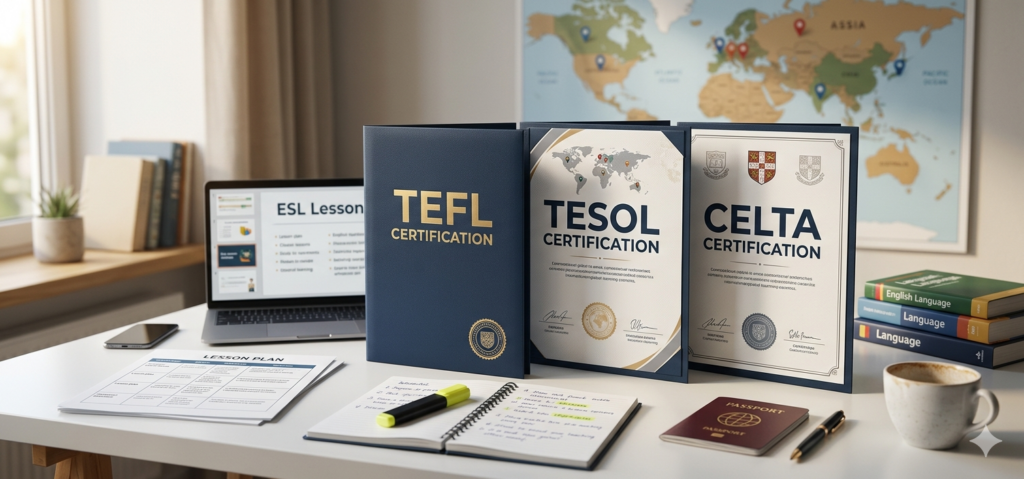
After earning a degree, the next big step is getting certified.
Most first-time teachers complete a teaching certification course before applying for jobs overseas.
Here are the three most common options:
| Certification | Typical Length | Best For |
|---|---|---|
| TEFL | 120+ hours | Entry-level teaching abroad |
| TESOL | 120+ hours | Broad international recognition |
| CELTA | Intensive in-person training | Competitive language schools |
TEFL
TEFL stands for “Teaching English as a Foreign Language.”
It’s the most common certification for new teachers, especially beginners heading abroad for the first time.
A standard 120-hour TEFL course is enough for many schools in:
- Asia
- Latin America
- Eastern Europe
Online TEFL programs are also widely accepted in many countries.
TESOL
TESOL stands for “Teaching English to Speakers of Other Languages.”
In practice, employers often view TEFL and TESOL certifications very similarly.
Some TESOL programs position themselves as slightly broader because they cover both foreign-language and second-language learning environments. But for most entry-level teaching jobs abroad, the difference usually isn’t huge.
CELTA
CELTA is administered by Cambridge University and is considered one of the more rigorous certification options.
It includes:
- Live teaching practice
- Intensive instruction
- Real classroom evaluations
CELTA certifications are often preferred by:
- Competitive language academies in Europe
- Higher-end employers
- Schools that offer stronger salaries
That said, CELTA programs are also more expensive and more demanding time-wise. For many students, a standard accredited TEFL certification is enough to get started.
Background Checks and Visa Documents
Many countries also require:
- FBI background checks
- Degree verification
- Passport copies
- Health documentation
- Visa paperwork
Some destinations also require apostille authentication for official documents.
And timelines can vary quite a bit depending on the country, so planning ahead helps.
Best Countries to Teach English Abroad
Different regions offer very different experiences, both financially and professionally.
Here’s a general comparison:
| Region | Popular Countries | Typical Salary Range | Housing Included | Best For |
|---|---|---|---|---|
| Asia | South Korea, Japan, Vietnam | $1,500–$2,800/month | Often | Saving money |
| Europe | Spain, Portugal, Czech Republic | $800–$1,500/month | Rarely | Lifestyle and travel |
| Latin America | Mexico, Costa Rica, Colombia | $700–$1,400/month | Sometimes | Easier entry points |
| Middle East | UAE, Qatar, Saudi Arabia | $3,000–$5,000/month | Often | Licensed teachers |
Europe
Europe is one of the most competitive regions for English teachers.
The lifestyle is a huge draw, of course. But salaries are often lower compared to living costs.
Most employers prefer applicants who have:
- A bachelor’s degree
- A TEFL certification
- A visa pathway or EU work authorization
Popular Countries for Americans
Some of the most common starting points are:
- Spain
- Portugal
- Czech Republic
- Poland
- France
Spain’s language assistant programs are especially popular because they offer structured placements and visa sponsorship options.
The Reality About Europe
This is something many applicants underestimate:
Western Europe can be tough for first-time teachers who don’t have EU citizenship.
Some schools avoid sponsoring visas because the process can be complicated and expensive.
That’s one reason studying abroad for a full degree can be such a smart long-term move.
Students who earn degrees in Europe may gain:
- Longer-term residency options
- Local professional networks
- Stronger visa pathways
- International experience before entering the job market
Over time, that can open a lot more doors.
Asia
Asia remains one of the biggest and most accessible teaching markets in the world.
For many Americans, it offers the best mix of:
- Salary
- Benefits
- Job availability
- Structured hiring systems
Popular destinations include:
- South Korea
- Japan
- Taiwan
- Vietnam
- Thailand
South Korea
South Korea is especially known for:
- Competitive salaries
- Free housing benefits
- Strong public school programs
Most jobs require:
- A bachelor’s degree
- A clean FBI background check
- Citizenship from an English-speaking country
TEFL certification is becoming more common as a requirement, although some schools still don’t require it.
Japan
Japan’s JET Programme is still one of the best-known government-sponsored teaching programs abroad.
Private language schools also hire heavily.
Typical requirements include:
- A bachelor’s degree
- Native-level English fluency
- Visa sponsorship through an employer
Vietnam and Thailand
Vietnam and Thailand often have lower barriers to entry and lower living costs.
Vietnam in particular has seen growing demand for English teachers over the past several years.
Some schools hire newer teachers without much experience, though certifications still make a big difference when it comes to job quality and pay.
Latin America
Latin America tends to offer:
- Lower barriers to entry
- Lower salaries
- More flexibility overall
Popular countries include:
- Mexico
- Colombia
- Costa Rica
- Chile
Teachers there may work:
- In language academies
- As private tutors
- Online
- Through student visa arrangements
Formal certifications are still helpful, but requirements are often less strict than in parts of Asia or Europe.
The tradeoff is usually financial.
Many jobs cover local living expenses comfortably, but they may not leave much room for savings.
Middle East
The Middle East generally offers the highest salaries, but also the strictest hiring requirements.
Countries like:
- United Arab Emirates
- Saudi Arabia
- Qatar
…often expect applicants to have:
- Teaching licenses
- Education degrees
- Several years of classroom experience
- Sometimes a master’s degree
These positions are usually a better fit for experienced educators rather than first-time teachers abroad.
How Much Does It Cost to Teach English Abroad?
One thing many students underestimate is the upfront cost of teaching abroad.
Typical Startup Costs
| Expense | Estimated Cost |
|---|---|
| Passport | $130–$200 |
| TEFL Certification | $300–$2,000 |
| Background Checks | $50–$150 |
| Visa Fees | $100–$500 |
| Flight | $500–$1,500 |
| Initial Housing Deposit | $500–$2,000 |
| Emergency Savings | $2,000–$5,000 |
Estimated Startup Range:
$3,500–$10,000
Some programs help cover costs like:
- Housing
- Insurance
- Visa assistance
- Flight reimbursement
Others expect teachers to arrive fully prepared financially.
That’s why planning ahead matters just as much as choosing where you want to teach.
Common Types of Teaching Jobs Abroad
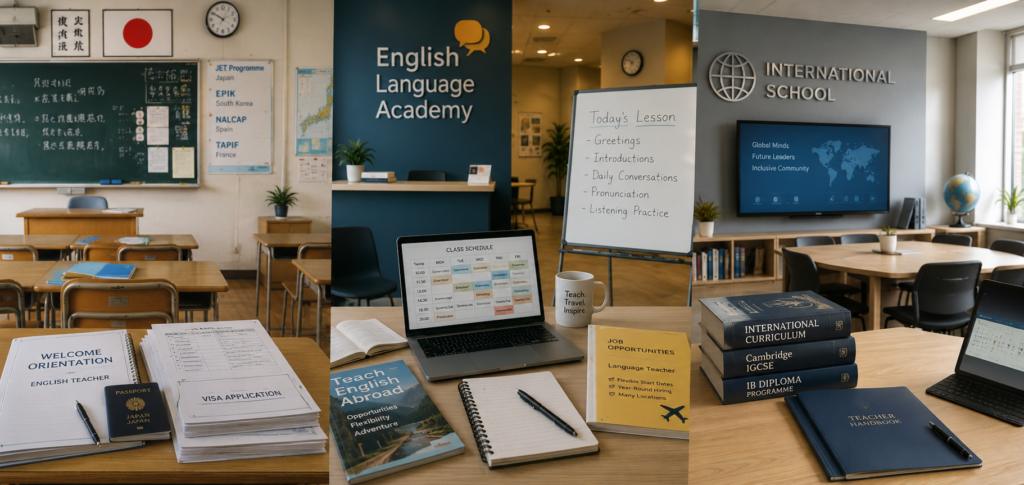
Not every teaching job abroad works the same way. The experience can vary a lot depending on the school, country, and program.
Public School Programs
Government-backed programs are often the easiest entry point for first-time teachers.
Popular examples include:
- JET Programme (Japan)
- EPIK (South Korea)
- NALCAP (Spain)
- TAPIF (France)
These programs usually offer:
- Visa assistance
- Orientation support
- Structured placements
For many people, that added structure makes the transition abroad much less stressful.
Language Academies
Private language schools are one of the biggest employers of English teachers worldwide.
They often provide:
- Faster hiring timelines
- Flexible start dates
- Opportunities for first-time teachers
That said, working conditions can vary quite a bit from one school to another. Some are excellent. Others… not so much. Research matters here.
International Schools
International schools typically offer:
- Higher salaries
- Better benefits
- Long-term career opportunities
But the requirements are usually higher too. Most schools prefer candidates with:
- State teaching licenses
- Classroom experience
- Education credentials
For students thinking long term, earning an internationally recognized degree early on can open more doors later.
Common Misconceptions About Teaching English Abroad
Myth #1: You Need an Education Degree
False. Many entry-level positions only require a bachelor’s degree and a TEFL certification.
Myth #2: You’ll Automatically Save Huge Amounts of Money
Not necessarily. Your ability to save depends on things like:
- Salary
- Housing benefits
- Country
- Lifestyle choices
For example, South Korea often offers better savings potential than Spain, even though both are popular teaching destinations.
Myth #3: It’s Only for Recent Graduates
Definitely not. People who teach abroad include:
- Career changers
- Licensed teachers
- Retirees
- Families
- Graduate students
There’s no single “type” of person doing this.
Myth #4: Every Program Handles Everything for You
Some programs provide strong support. Others expect teachers to figure out a lot on their own, including:
- Housing
- Banking
- Visa paperwork
- Transportation
- Legal documentation
A little preparation upfront can save you a lot of stress later.
How Beyond The States Supports Students Interested in Teaching Abroad
A lot of students interested in teaching abroad are also thinking bigger-picture about international education and careers.
That might include:
- Affordable English-taught degrees
- International master’s programs
- Long-term career opportunities overseas
Beyond The States focuses on vetted, accredited degree programs taught fully in English across Europe and beyond.
For students exploring teaching abroad, BTS also offers practical guidance and support along the way.
How To Teach Abroad Course
This step-by-step course covers topics like:
- Contracts and salaries
- Visa and legal paperwork
- Relocation budgeting
- Housing and banking setup
- Preparing for your first week abroad
It’s designed for students who want a clearer, more structured path through the process.
Teach Abroad Match™
Teach Abroad Match™ includes:
- Personalized advising
- A custom Best Fit List
- Resume and interview support
- Program recommendations based on your goals and qualifications
Recommendations are tailored around factors like:
- Preferred countries
- Teaching credentials
- Salary expectations
- Lifestyle preferences
- Visa considerations
Recommended products
-
How To Teach Abroad Course
Original price was: $500.00.$250.00Current price is: $250.00. -
Teach Abroad Match™
Original price was: $1,999.00.$497.00Current price is: $497.00.


Who Is Teaching English Abroad a Good Fit For?
Teaching abroad can work well for different kinds of people at different stages of life.
Recent Graduates
Students looking for:
- International experience
- Career direction
- A structured gap year
Future International Degree Students
Many Americans use teaching abroad as a stepping stone into:
- European master’s programs
- Language immersion
- Long-term international careers
Licensed Teachers
Experienced educators may qualify for:
- International schools
- Higher salaries
- Leadership opportunities abroad
Career Changers
Professionals looking for:
- Global mobility
- International experience
- A career transition
Frequently Asked Questions
We’re here to help answer your questions about Teaching English Abroad
Most countries require a bachelor’s degree and a TEFL certification. Some also require background checks and work visa documentation.
Sometimes, yes. But having a TEFL certification usually improves your job options and makes you a more competitive applicant.
That depends on what matters most to you. South Korea is often stronger for saving money, while Spain tends to attract people looking for lifestyle and easier access to Europe.
Usually, yes. Most international schools prefer licensed teachers with classroom experience.
Yes. Many programs are government-supported or connected to established schools and institutions. Still, it’s smart to research employers carefully before signing a contract.
Absolutely. A lot of Americans discover affordable, accredited universities abroad while teaching overseas and later decide to pursue full English-taught degrees internationally.
Final Thoughts
Teaching English abroad can become much more than a short-term experience.
For many people, it turns into part of a larger international education or career plan.
The key is understanding things like:
- Visa requirements
- Accreditation
- Financial planning
- Long-term opportunities
- The realities of specific countries
Beyond The States helps students and families explore accredited English-taught degree programs abroad with a focus on affordability, transparency, and practical outcomes.
If you’re considering teaching or studying abroad, you can compare country options, explore programs, or take the Beyond The States quiz to get a better sense of your next steps.