Study in France for Free
American students are now graduating with student loan balances that can take decades to pay off. At the same time, students in France can earn respected international degrees for a fraction of the cost sometimes even less than what one semester at a U.S. community college might cost.
Here’s something a lot of families miss.
You don’t need a “study abroad semester” program to make this work. U.S. students can actually earn full bachelor’s or master’s degrees in France, in English, often at public universities with very low tuition.
And that changes the picture quite a bit.
France brings together well-known universities, affordable public tuition, solid public transportation, access to student healthcare, and options to work after graduation. When you compare it to many U.S. private colleges, the total cost can be significantly lower.
Summary
Why France Can Offer Such Low Tuition
Let’s break this down.
In the U.S., universities are mainly funded through a mix of tuition, private donations, and endowments. A big chunk comes directly from students.
France works differently. Public universities are mostly funded by the national government.
And that one difference really changes the whole picture.
Instead of setting tuition based on what students can realistically pay, France treats higher education more like a public service. International students are part of that system too, though they usually pay a bit more than EU students.
So the outcome looks like this:
U.S.: around $30,000–$80,000 per year
France: roughly €2,770–€3,770 per year at public universities
It’s not free, but the structure behind it is completely different.
And that distinction matters. You’re not sacrificing quality for lower cost. You’re just looking at a system that funds education in a different way.

Why Study in France as an International Student?
Cost is part of the story, but not the whole thing.
Here are a few reasons U.S. students often look at France:
Recognized degrees worldwide
French universities are well respected internationally. Schools like Sorbonne University and Université Paris-Saclay are known across Europe and beyond.
These are full academic degrees, not watered-down versions or certificates.
Lower overall costs
Even when you include housing and daily expenses, many students spend less in France than they would at an in-state university in the U.S.
Straightforward admissions process
Admissions in France tend to focus more on academics than subjective factors.
Most universities look at things like:
- Grades
- Academic background
- Language ability
- Fit for the program
There’s usually less emphasis on essays or extracurricular storytelling than in the U.S.
Strong public transport and healthcare
Students generally benefit from:
- Reliable public transportation
- Affordable healthcare coverage
- Lower everyday costs than many U.S. cities
- Easy travel across Europe
More English-taught programs
France has expanded English-language degrees, especially in:
- Business
- Engineering
- International relations
- Computer science
- Data science
- Sustainability

Join the conversation.
Get real answers.
Beyond the States is a student community for those building their future in Europe.
Top Low-Tuition Universities in France
It helps to think of these as public universities with government-subsidized tuition rather than “free schools.”
Sorbonne University
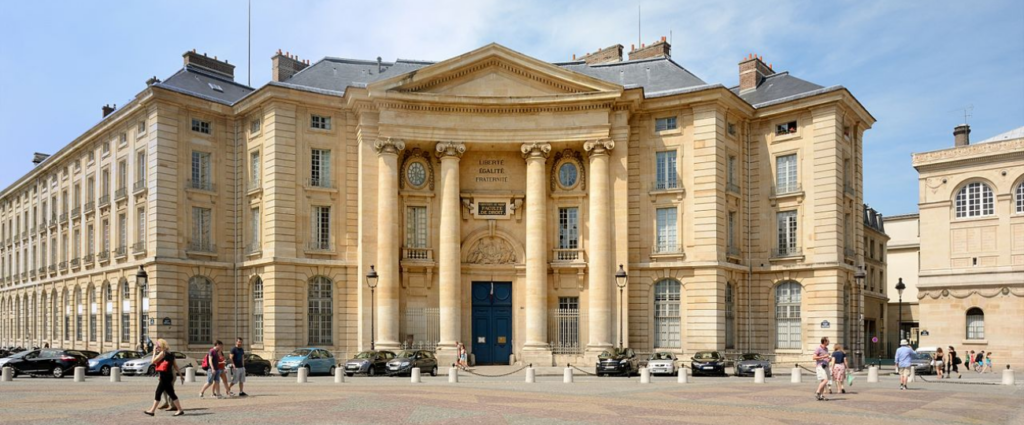
Location: Paris
Well-known across Europe, especially in humanities and sciences.
Tuition: about €2,770–€3,770 per year
Known for:
- Humanities and philosophy
- Math and physical sciences
- History and social sciences
- Research-heavy programs
Why students pick it:
- Strong global reputation
- Central Paris location
- Low tuition compared to similar-ranked U.S. schools
- Good pathways to graduate study
Université Paris-Saclay
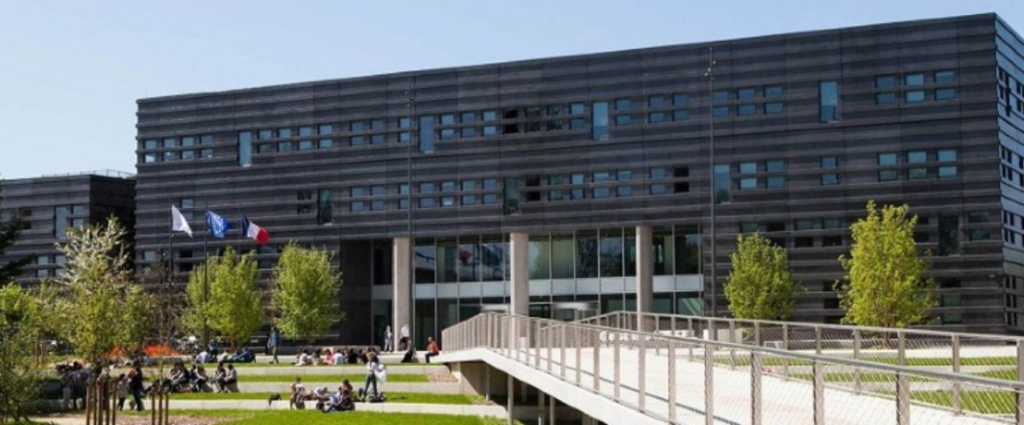
Location: Paris region
Strong focus on STEM and research
Tuition: about €2,770–€3,770 per year
Known for:
- Math and physics
- Computer science and AI
- Engineering
- Research-driven programs
Why students pick it:
- High-level STEM education at low cost
- Strong research network
- Close ties to French science institutions
- Good graduate school pathways
University of Strasbourg

Location: Strasbourg
Tuition: about €2,770–€3,770 per year
Known for:
- Chemistry and life sciences
- European law and politics
- Medicine and biomedical research
Why students pick it:
- Very international environment
- Strong links to EU institutions
- Lower living costs than Paris
- Balanced academic offerings
Aix-Marseille University
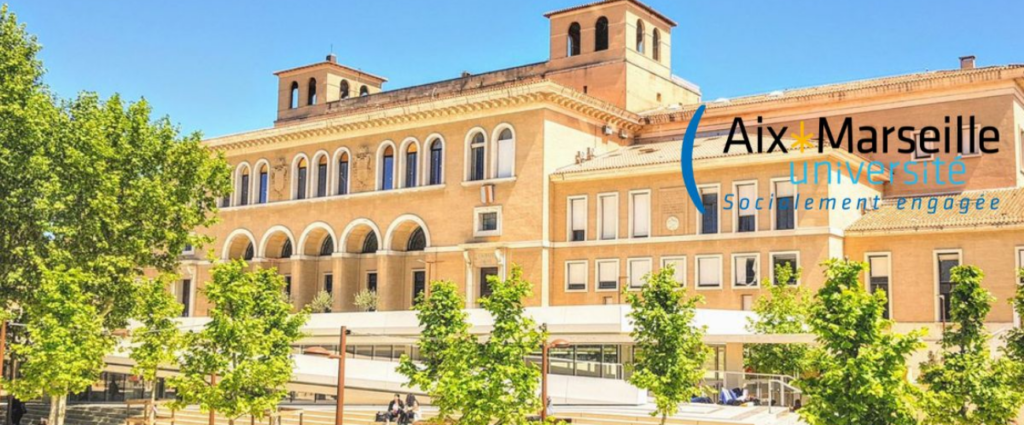
Location: Marseille
Tuition: about €2,770–€3,770 per year
Known for:
- Medicine
- Law and political science
- Economics and business
- Environmental sciences
Why students pick it:
- Huge range of programs
- Lower living costs
- Large international student body
- Strong applied academic tracks
Université de Montpellier
Location: Montpellier
Tuition: about €2,770–€3,770 per year
Known for:
- Biology and life sciences
- Agriculture and environmental studies
- Health-related fields
- Chemistry and biotech
Why students pick it:
- One of the most affordable student cities
- Strong science programs
- Large student population
- Mediterranean lifestyle
University of Bordeaux
Location: Bordeaux
Tuition: about €2,770–€3,770 per year
Known for:
- Business and management
- Neuroscience
- Law and public health
- Engineering
Why students pick it:
- Strong balance of academics and city life
- Good research output
- Access to internships and industries
- High quality of life
Université de Lille
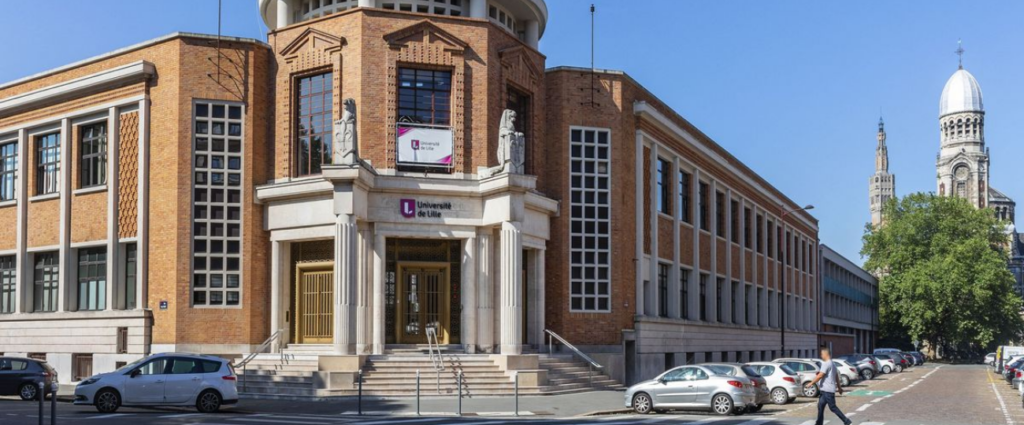
Location: Lille
Tuition: about €2,770–€3,770 per year
Known for:
- Business and economics
- Computer science
- Social sciences
- Law and policy
Why students pick it:
- Lower cost of living than Paris
- Close to Belgium and other EU countries
- Broad academic options
- Good value overall
A few things to keep in mind:
- Less international prestige than Paris universities
- Colder weather
- Some programs are more locally focused
Cost of Living in France for Students
Tuition is only part of the picture.
Students also need to plan for daily expenses.
Monthly costs (typical ranges)
- Housing: €400–€1,200
- Food: €200–€400
- Transportation: €20–€75
- Health insurance and misc.: €50–€150
- Personal expenses: €100–€300
Total monthly budget
- Paris: about €1,200–€2,000
- Smaller cities: about €700–€1,200
Here’s the key point.
Cities outside Paris can dramatically lower your total cost. That often makes a bigger difference than people expect.
Scholarships for International Students in France
There are several ways to reduce costs further.
Eiffel Excellence Scholarship
A French government scholarship for high-achieving international students.
Erasmus+ funding
Available for certain European study pathways and exchanges.
University scholarships
Many schools offer:
- Merit-based aid
- Tuition reductions
- Housing support
- Research funding
Regional support
Some regions in France also offer additional financial help.
It’s also worth checking external scholarships available to U.S. students studying abroad.
Admission Requirements
Admissions in France are usually more straightforward than in the U.S.
Undergraduate requirements
- High school diploma
- Transcripts
- Language proof
- Passport
- Motivation letter
Master’s requirements
- Bachelor’s degree
- Transcripts
- CV or resume
- Statement of purpose
- Sometimes recommendation letters
Language requirements
For English-taught programs:
- IELTS or TOEFL
- Sometimes Duolingo accepted
For French-taught programs:
- DELF or DALF
- Or TCF
One important point:
You don’t always need to speak French fluently to study in France. Many full degree programs are taught entirely in English.
Student Visa Requirements for France
If you’re an American planning to study in France for more than 90 days, you’ll usually need a student visa.
Common Requirements
- University acceptance letter
- Proof of financial support
- Passport
- Proof of housing
- Health insurance documents
Most students apply through Campus France and the French consulate.
Timing really matters here. The process can take a while, so it’s better to start a few months before your departure. Waiting too long just makes everything harder than it needs to be.
Can International Students Work in France?
Yes.
International students in France are generally allowed to work part-time while studying.
Typical limits include:
- Up to 964 working hours per year
- Around 20 hours per week during the academic year
Common student jobs include:
- Hospitality
- Retail
- Tutoring
- On-campus roles
- Internships
That said, it’s not realistic to rely on part-time work to cover all your costs. It can help, but it’s usually just extra support.
Career Opportunities After Studying in France
France does offer pathways after graduation for international students.
Depending on your degree and field, you may be able to pursue:
- Temporary post-study work permits
- Employer sponsorship
- Graduate programs
- Opportunities elsewhere in the EU
Fields with strong demand include:
- Engineering
- Tech
- Data science
- Business
- Sustainability
- Healthcare research
A French degree can do more than open doors in France. It can also lead to opportunities across Europe, depending on your career path.
Tips for Studying in France on a Budget
With some planning, costs can be kept much more manageable than many people expect.
Choose Smaller Cities
Paris is by far the most expensive option.
More affordable student cities include:
- Lille
- Montpellier
- Strasbourg
- Toulouse
- Grenoble
These cities still offer strong universities, just with lower living costs.
Apply Early for Housing
Student housing fills up quickly. Government-supported residences are usually the cheapest, but they go fast.
Use Student Discounts
France has solid student discounts on everyday life, including:
- Public transport
- Museums
- Cafés
- Entertainment
Learn Basic French
Even if your program is in English, basic French helps a lot with:
- Housing searches
- Daily errands
- Part-time jobs
Prioritize Public Universities
Public universities tend to offer the best value overall, with lower tuition and strong academic reputation.



Common Myths About Studying in France
“Degrees from France won’t be recognized in the U.S.”
That’s not true.
French universities are internationally recognized, and students regularly move on to:
- Graduate school in the U.S.
- Global companies
- International careers
“You must speak fluent French.”
Not necessarily.
Many programs, especially at the master’s level, are fully taught in English.
“Studying abroad is only for wealthy students.”
Often, it’s the opposite.
For many students, studying in France especially at public universities can cost less than staying in the U.S.
Who Is This a Good Fit For?
Studying in France tends to work well for students who:
- Want lower tuition costs
- Are open to living abroad
- Like more structured admissions systems
- Want internationally recognized degrees
- Are interested in working in Europe
- Care about affordability without giving up academic quality
It can be especially appealing for:
- Independent students
- Budget-conscious families
- Students frustrated with U.S. admissions unpredictability
- Students looking for English-taught degrees abroad
Frequently Asked Questions
We’re here to help answer your questions about studying in France
Not usually, but public universities are heavily subsidized, so tuition is much lower than in the U.S. Scholarships can reduce costs further.
In many cases, yes. Even with living expenses, total costs are often lower than in the U.S.
Yes. They are widely recognized and respected worldwide.
Yes. There are many English-taught programs, especially at the graduate level.
Yes. If you’re staying longer than 90 days, a student visa is generally required.
Yes, usually part-time during the academic year.
Final Thoughts
France offers something many students are looking for: strong academic quality without the high price tag of U.S. universities.
And more students are realizing there isn’t just one “right” path after high school.
At Beyond The States, the focus is on full degree programs in Europe taught in English. They research universities and help families understand options in a clearer, more practical way.
If you’re exploring affordable degrees abroad, France is a solid place to start.
You can explore programs on Beyond The States, compare countries, or book a free strategy session.