Masters in Netherlands
The average master’s degree in the United States can easily cost anywhere from $60,000 to $120,000 in tuition alone.
For many families, that price comes with confusing admissions processes and very little transparency about what comes next.
But here’s what a lot of people don’t realize.
You can earn a fully accredited master’s degree abroad, taught entirely in English, often for far less than a U.S. graduate program.
One of the most popular destinations for American students? The Netherlands.
And that’s where things get interesting.
A Masters in Netherlands offers globally respected universities, clear admissions requirements, and tuition that’s often much more affordable. Students aren’t just doing a short study abroad semester, they’re earning a full graduate degree at an English-taught university in Europe.
Let’s look at how it works.
Summary
Why American Students Are Choosing a Masters in Netherlands

The Netherlands has quietly become one of Europe’s top destinations for English-taught graduate degrees.
There are more than 2,000 programs offered fully in English, and many are designed specifically for international students.
Here’s why more U.S. students considering graduate school there.
1. English-Taught Programs Are Standard
Unlike many other European countries, the Netherlands has built much of its higher education system around international education.
Most master’s programs in fields like:
Business
Engineering
Data science
Economics
International relations
Environmental science
Psychology
are taught entirely in English.
That means students can complete their entire degree without needing to speak Dutch.
2. Globally Respected Universities
Dutch universities consistently rank among the top in Europe and perform well internationally.
Some of the best-known include:
These schools are research-focused, internationally recognized, and well respected by employers and graduate programs around the world.
For U.S. students, accreditation matters.
Here’s the important part: Dutch universities are fully accredited within the European Higher Education Area (EHEA). Their degrees are internationally recognized, including by U.S. employers and graduate schools.
3. Shorter Program Length
Many U.S. master’s degrees take 2–3 years.
In the Netherlands, most programs are:
- 1 year (60 ECTS credits)
- 2 years (120 ECTS credits) for research or technical fields
That changes the math.
A shorter degree often means:
- Lower total tuition
- Less time away from work
- Faster return on investment
Cost of a Masters in Netherlands
Affordability is one of the biggest reasons American students look at graduate school abroad.
Tuition in the Netherlands is higher for non-EU students than for European students, but it’s still often far lower than many U.S. graduate programs.
Typical Tuition Costs
| Program Type | Average Tuition Per Year |
| Humanities / Social Sciences | $10,000 – $18,000 |
| Business / Economics | $14,000 – $22,000 |
| Engineering / STEM | $15,000 – $25,000 |
Some specialized business programs cost more, but most still stay well below U.S. graduate tuition.
Estimated Total Cost Breakdown
| Expense | Estimated Annual Cost |
| Tuition | $10,000 – $25,000 |
| Housing | $7,000 – $12,000 |
| Food | $3,000 – $4,500 |
| Transportation | $800 – $1,200 |
| Health insurance | $700 – $1,000 |
| Miscellaneous | $2,000 – $3,000 |
Estimated total cost per year:
$24,000 – $45,000
And that often includes everything, not just tuition.
For comparison, many U.S. master’s programs cost that much per semester.
Admission Requirements for a Masters in Netherlands
One of the biggest differences between U.S. and European admissions is clarity.
European universities usually publish exact academic requirements for each program. European universities usually publish exact
Most programs require:
Typical Requirements
Bachelor’s degree in a relevant field
Minimum GPA equivalent (often around 3.0)
English proficiency test (TOEFL or IELTS if required)
Statement of motivation
Academic transcripts
CV or resume
Some programs may also ask for:
GRE or GMAT
Portfolio (for design or architecture)
Research proposal (for research degrees)
Here’s the key difference.
Admissions decisions are usually based on whether you’re academically prepared for the subject, not extracurricular activities or long essays about leadership.
For many students, that kind of transparency feels like a relief.
Top Fields for English-Taught Masters in Netherlands
Dutch universities are especially strong in several areas.
Business and Economics
Programs often focus on international markets, sustainability, and data-driven strategy.
Popular degrees include:
International Business
Finance
Economics
Supply Chain Management
Engineering and Technology
The Netherlands is known for strong technical universities.
Common programs include:
Mechanical engineering
Civil engineering
Data science
Artificial intelligence
Robotics
Environmental and Sustainability Studies
The country is a global leader in water management and climate adaptation.
Students interested in:
Environmental policy
Sustainability science
Water engineering
Urban planning
will find particularly strong options.
Social Sciences and International Relations
Because of the Netherlands’ role in international organizations, programs in:
Political science
Human rights
International relations
Public policy
are widely available.
Discover all the English-taught European college programs in one place.
Beyond the States provides easy access to 12,600+ European bachelor’s and master’s programs across 870 universities, 550 cities, and 212 areas of study, plus all the resources you need to get there.
3400+
English-taught bachelor’s programs in our database.
550
Beautiful European cities to choose from.
$360,170
Typical savings against a private university in the US.
8200+
English-taught master’s programs in our database.
870
Top-tier universities accepting international students.
$65,038
Typical savings against in-state tuition in the US.
Student Life in the Netherlands
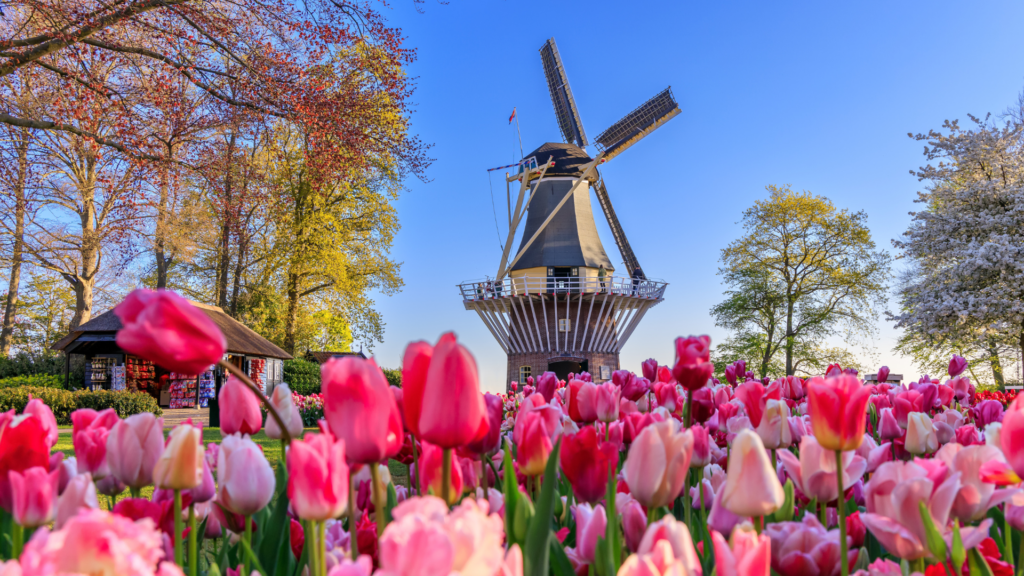
The Netherlands consistently ranks as one of the most international student-friendly countries in Europe.
English-Friendly Society
More than 90% of Dutch residents speak English, which makes daily life much easier for international students.
Compact and Accessible Cities
Most universities are located in highly livable cities like:
Amsterdam
Rotterdam
Utrecht
Leiden
Groningen
Delft
Students usually get around by bike or train, and the country is easy to navigate.
International Student Communities
Dutch universities actively recruit international students, so graduate classrooms often include classmates from:
Europe
Asia
Latin America
North America
That creates a truly global learning environment.
Post-Graduation Opportunities
The Netherlands offers a “search year” visa for international graduates.
This allows students to stay for up to one year after graduation to look for work.
If they secure employment, they can then transition to a work visa.
For students interested in international careers, studying in Europe can offer:
Global work experience
International professional networks
Access to multinational companies
Common Misconceptions About Studying in the Netherlands
Let’s clear up a few common concerns U.S. families often have.
Myth 1: “Degrees from Europe aren’t recognized.”
Dutch universities are fully accredited public institutions within the European Higher Education Area.
Their degrees are widely recognized by:
U.S. employers
International organizations
Graduate schools worldwide
Myth 2: “You need to speak Dutch.”
Most master’s programs for international students are fully taught in English..
Daily life is also very manageable in English.
Learning some basic Dutch can help socially, but it’s not required for most programs.
Myth 3: “Admissions must be harder overseas.”
In many ways, they’re actually more straightforward.
European admissions usually focus on:
Academic preparation
Subject readiness
Relevant coursework
The process is often less subjective than U.S. graduate admissions.



Who Is a Masters in Netherlands a Good Fit For?

This path works especially well for students who want:
A high-quality master’s degree at a lower cost
Clear, transparent admissions requirements
A shorter graduate program
International academic experience
Access to globally respected universities
It can be especially appealing for students in:
STEM fields
Business
Environmental sciences
International policy
Students who prefer small liberal arts environments or very flexible majors may find the European model more structured than what they’re used to.
Timeline: Applying for Graduate School in the Netherlands
Application timelines are often earlier than many U.S. graduate schools.
Typical Timeline
September – December (1 year before start)
Research programs and begin applications.
January – March
Many priority deadlines happen during this period.
April – June
Final admissions decisions and visa preparation.
August – September
Programs begin.
Some universities use rolling admissions, but applying early makes housing and visa planning much easier.
How Beyond The States Helps Students Navigate European Degrees
Finding the right program in Europe can be overwhelming.
There are thousands of English-taught degrees across dozens of countries, and every admissions system works a little differently.
Beyond The States focuses specifically on:
Full accredited degrees abroad, not short-term study abroad programs
Carefully researched English-taught universities
Transparent admissions requirements
affordable international options
Students can compare programs, explore countries, and get guidance on their academic goals.

Frequently Asked Questions
We’re here to help answer your questions about studying masters in Netherlands
Yes. The Netherlands offers one of the largest selections of English-taught master’s programs in Europe, with more than 2,000 options across many disciplines.
Most programs take 1 year (60 ECTS credits). Technical or research-focused degrees may take 2 years (120 ECTS).
Yes. International students can usually work part-time, although some jobs require a work permit arranged by the employer.
Costs vary by city, but most students spend around $24,000–$45,000 per year including tuition, which is often still lower than many U.S. graduate programs.
Some programs require them, especially in business or economics, but many do not require standardized tests.
Final Thoughts
For U.S. students looking for an affordable, respected, and internationally recognized graduate education, a Masters in Netherlands is one of the strongest options in Europe.
The mix of top universities, English-taught programs, clear admissions, and shorter degrees makes the Netherlands especially attractive.
But choosing the right program, and navigating international admissions, still takes careful research.
Students exploring graduate school abroad can start by comparing vetted programs, reviewing countries, and understanding how the application process works.
Beyond The States provides tools, resources, and guidance to help families decide whether a European degree is the right fit. You can explore programs, take the Beyond The States program match quiz, or schedule a strategy session to talk through your options.