Study in London
College in the U.S. can easily cost more than $80,000 a year. And the admissions process? For a lot of families, it feels confusing, unpredictable, and stressful.
But here’s what many people don’t realize: you don’t have to stay in that system to earn a high-quality, fully accredited degree.
You can study in London and earn a full bachelor’s or master’s degree taught entirely in English. In many cases, admissions are more straightforward, and total costs can be lower too.
Summary
Why Study in London?

London is one of the most connected cities in the world. It’s more than a place to study. It’s a major center for academics, business, media, finance, and politics all at once.
And honestly, rankings only tell part of the story.
What really makes London stand out is how closely education connects to real-world opportunities.
Why London is One of the Best Cities for International Students
London consistently ranks as one of the top student cities globally. But rankings don’t really help you picture daily life as a student there.
So here’s what actually matters.
Academic Concentration
London has an unusually high number of globally recognized universities in one city, including University College London, King’s College London, the London School of Economics, and Queen Mary University of London.
You’re not studying on an isolated campus miles away from everything else. Universities in London overlap constantly, which creates a shared academic environment.
What students gain:
- Cross-university lectures and events
- Larger academic and professional networks
- Exposure to different teaching styles
That overlap creates opportunities you simply don’t get in many traditional college towns.
Career Access
This is probably one of London’s biggest advantages.
Because the city is a global center for finance, tech, media, law, and policy, students often gain access to internships and professional experience much earlier.
Many students find:
- Part-time internships during the school year
- Summer opportunities through university partnerships
- Direct pathways into graduate jobs
The gap between “student” and “working professional” tends to feel much smaller in London.
Cultural Diversity
London is one of the most diverse cities in the world, with more than 300 languages spoken.
You notice that diversity everywhere:
- In classrooms
- In group projects
- In social circles
- In professional networks
Students graduate with real cross-cultural experienc something employers increasingly expect.
Learning Inside Global Industries
One thing London does especially well is connect academics directly to industry.
You’re studying:
- Finance in a global financial center
- Media in one of the world’s major content hubs
- Politics near international institutions and policy organizations
This leads to:
- Guest lectures from working professionals
- Coursework tied to current industry trends
- Natural networking opportunities
You’re not just preparing for the industry. In many ways, you’re already surrounded by it.
Transportation & Accessibility
London’s public transportation system makes student life much easier.
Students benefit from:
- Extensive public transit
- Student travel discounts
- Easy access to internships and events across the city
Most students don’t need a car at all. The city itself becomes part of the campus experience.
Gateway to Europe
While earning a full degree in London, students can also travel throughout Europe fairly easily.
This adds:
- Cultural exposure
- Academic opportunities
- Personal growth and independence
And this is important: you’re earning a fully accredited degree, not just doing a short-term study abroad experience.
Structure and Support
UK universities are generally more structured than many U.S. schools.
Students often benefit from:
- 3-year degree timelines
- Clear academic expectations
- Dedicated support for international students
London is also well set up for independent student living, which makes the transition easier for many international students.
Best English-Taught Universities in London for International Students
Every university in London teaches in English. That part is straightforward.
What really matters is how each university approaches academics, admissions, and career preparation.
Choosing the right university isn’t just about prestige or rankings. Fit matters too.
University College London (UCL)

UCL is one of the UK’s most academically demanding universities. It’s consistently ranks among the best globally, and the expectations reflect that.
What stands out:
- Strong across STEM, social sciences, and humanities
- Research-driven teaching model
- A central London location close to major institutions
Admissions reality:
- Highly selective
- Clear academic requirements, including specific AP expectations for many U.S. students
- Less flexibility if you fall below stated criteria
Best fit for:
Students with strong academic records who want a research-intensive environment.
King’s College London
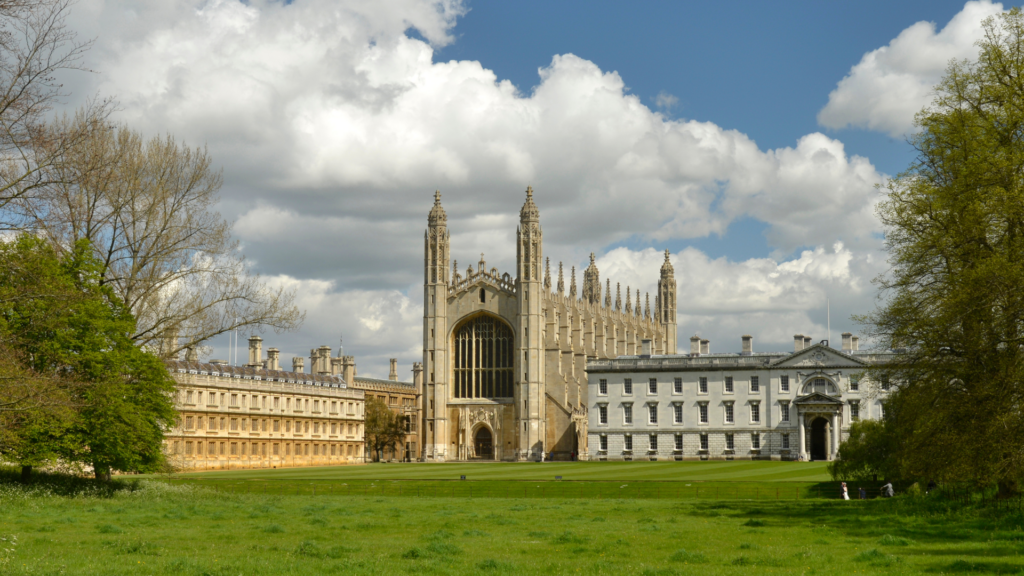
King’s has a slightly different feel. It’s still academically rigorous, but it’s especially strong in applied and professional fields.
What stands out:
- Excellent programs in health sciences, law, and international relations
- Strong ties to hospitals, legal organizations, and policy institutions
- A central location along the Thames
Admissions reality:
- Competitive, though somewhat more flexible than UCL
- Strong emphasis on academic fit for your chosen subject
Best fit for:
Students pursuing structured career paths like medicine, law, or public policy.
London School of Economics and Political Science (LSE)

LSE is highly specialized and almost entirely focused on the social sciences.
That focus is part of what makes it so respected. But it also means there’s less room to explore outside your subject area.
What stands out:
- World-renowned programs in economics, finance, and political science
- Strong employer connections, especially in consulting and finance
- A highly international student body
Admissions reality:
- Extremely selective
- Heavy focus on grades and subject alignment
- Personal statements need to clearly show subject interest
Best fit for:
Students who are fully committed to economics, politics, finance, or related fields.
Queen Mary University of London

Queen Mary offers a balance between strong academics and more accessible admissions.
What stands out:
- Well-regarded programs in law, business, and medicine
- A diverse student community
- A less intense atmosphere compared to some higher-pressure institutions
Admissions reality:
- Moderately selective
- Clear and often more attainable entry requirements for U.S. students
Best fit for:
Students looking for a respected degree with more realistic admissions criteria.
University of Westminster

Westminster takes a more practical, career-focused approach.
And honestly, that’s a better fit for some students than a heavily research-driven university.
What stands out:
- Strong programs in media, communications, and business
- Hands-on, skills-based learning
- Industry connections in creative fields
Admissions reality:
- More flexible admissions process
- More holistic evaluation alongside academic performance
Best fit for:
Students who value practical experience and career readiness.
Discover all the English-taught European college programs in one place.
Beyond the States provides easy access to 12,600+ European bachelor’s and master’s programs across 870 universities, 550 cities, and 212 areas of study, plus all the resources you need to get there.
3400+
English-taught bachelor’s programs in our database.
550
Beautiful European cities to choose from.
$360,170
Typical savings against a private university in the US.
8200+
English-taught master’s programs in our database.
870
Top-tier universities accepting international students.
$65,038
Typical savings against in-state tuition in the US.
Recommended products
-

Choosing a University
$199.00 -
How to Choose a Major
$199.00 -
Visa & Relocation Concierge
Original price was: $2,999.00.$2,497.00Current price is: $2,497.00.



What U.S. Students Often Miss
This is where the UK system feels very different from the U.S.
In the UK:
- You apply directly to a specific subject or major
- You begin studying that subject immediately
- There’s very little switching later on
That’s a major shift for many U.S. students.



Example
If you apply to:
- Economics at LSE → you study economics from day one
- Law at King’s → your entire degree centers on law
There’s no general education system and usually no “undeclared” option.
Top Courses to Study in London
London’s strongest academic programs closely match the industries that already thrive there.
Business & Finance
London remains one of the world’s leading financial centers.
Why it matters:
- Access to internships at banks, consulting firms, and startups
- Strong graduate hiring pipelines
Best universities: LSE, UCL, King’s
International Relations & Politics
London is especially strong in global politics and international affairs.
Why it matters:
- Close access to embassies, NGOs, and international organizations
- Frequent guest lectures from policymakers and practitioners
Best universities: King’s, LSE
Media, Communications, and Journalism
London is one of the world’s major media hubs.
Why it matters:
- Direct access to major media organizations
- Internship opportunities during studies
Best universities: Westminster, UCL
Law
In the UK, law is typically an undergraduate degree (LLB), unlike the U.S. system.
What this means:
- Students can begin studying law directly after high school
- The path to legal careers can be faster, though practicing in the U.S. usually requires additional steps
Best universities: King’s, Queen Mary
Creative Industries
Fashion, film, and design thrive in London.
Why it matters:
- Many courses include hands-on industry experience
- Networking often starts early, sometimes even in your first year
Best universities: Westminster, UCL
Computer Science & Data Analytics
London’s tech sector is growing rapidly.
Why it matters:
- Graduates are in high demand
- Students can connect with both startups and major global tech companies
Best universities: UCL, Queen Mary
Global Recognition of London University Degrees
For many families, this is one of the biggest questions.
Are UK Degrees Valid in the U.S.?
Yes. As long as the university is accredited which major London universities are the degree is generally recognized in the U.S.
Here’s why:
- UK universities follow national quality assurance standards
- Degrees align with international academic frameworks
- U.S. employers regularly hire graduates from UK universities
Graduate School Pathways
Students who earn degrees in London often continue on to:
- U.S. master’s and PhD programs
- Law school, with some additional requirements depending on the path
- Medical or other professional programs, depending on the field
For a lot of students, this actually opens more For a lot of students, this actually opens more doors rather than limiting them.rather than limiting them.
How to Apply to Universities in London
The UK application system is fairly straightforward, but it’s also more structured than the U.S. system.
Step 1: Choose Your Course Carefully
In the UK, you apply to a specific subject, not just to a university in general.
That part matters more than many students expect.
Step 2: Apply Through UCAS
You can apply to up to five programs total through UCAS.
Required Materials:
- Academic transcripts
- Standardized test scores (AP, SAT, or ACT depending on the university)
- One personal statement
- A reference letter, usually from a teacher or counselor
Step 3: Write a Focused Personal Statement
This is different from a typical U.S. college essay.
UK universities usually want you to focus on:
- Why you chose the subject
- Your academic interests and preparation
- Relevant experience connected to the field
Random extracurriculars usually carry less weight unless they connect directly to the course.
Step 4: Meet Academic Requirements
UK universities often publish exact score requirements.
For example:
- “3 AP exams with scores of 4 or 5”
That level of transparency makes the process feel more predictable for a lot of students.
Step 5: Track Timeline
- September: Applications open
- January: Main deadline
- Spring: Offers released
Cost of Studying in London for International Students
London is expensive. There’s no point pretending otherwise.
Still, when you compare total costs especially with shorter degree programs it can be closer to U.S. costs than many families expect.
Tuition Overview (Annual)
- £15,000–£30,000 (~$19,000–$38,000 USD) for most programs
- Higher for specialized fields like medicine or business
One thing worth remembering: most undergraduate degrees in the UK take three years instead of four.
Living Expenses in London for Students
London has a reputation for high living costs, and honestly, that reputation is fair. But with planning, many students manage it well.
Monthly Cost Breakdown
| Expense | Estimated Cost |
| Housing | £700–£1,200 |
| Food | £200–£400 |
| Transportation | £100–£150 |
| Personal expenses | £150–£300 |
| Total | £1,150–£2,000/month |
Annual Living Costs
- Around £14,000–£24,000 ($18,000–$30,000 USD)
Many universities also help reduce costs through:
- Student housing options
- Discounted transportation
- Part-time work opportunities

Job Opportunities After Studying in London
The UK has made it easier for international students to stay and work after graduation.
Post-Study Work Visa
- Graduate Route Visa allows:
- 2 years of work after a bachelor’s or master’s
- 3 years for PhD graduates
Career Advantages
- Access to international employers
- Strong internship pipelines
- Networking opportunities across major industries
For many students, studying in London is about more than earning a degree. It also puts them closer to industries, employers, and career opportunities that can be harder to access elsewhere.
Who Is This a Good Fit For?
Studying in London is not the right choice for everyone. But for some students, it fits extremely well.
Strong Fit If You:
- Want a clearer admissions process
- Prefer focused academic study over broad general education requirements
- Feel comfortable living in a large city
- Want international career exposure
- Value global networks and mobility
Common Misconceptions About Studying in London
“It’s only for wealthy students”
Not always. Once you factor in shorter degree lengths, some programs can cost about the same or even less than certain U.S. options.
“Degrees won’t be recognized in the U.S.”
They generally are. Degrees from accredited UK universities are widely accepted.
“Admissions are harder than the U.S.”
Different is probably the better word. UK admissions tend to be more academically focused and often more transparent.
“You need perfect grades”
Not necessarily. Many universities offer different entry requirements and a range of academic requirements.
Frequently Asked Questions
We’re here to help answer your questions about Study in London
For many students, yes. It can be a good option for those looking for international exposure, structured academics, and strong career pathways.
Usually yes. International students can typically work up to 20 hours per week during term time.
Sometimes. Requirements vary by university, and many schools also accept AP scores or other qualifications.
Some universities do offer scholarships, though they’re often limited. That’s why it helps to compare the full cost, not just tuition alone.
Ideally, start researching 12–18 months ahead of time. Most applications close in January.
Final Thoughts
Studying in London offers a different path from the traditional U.S. college experience. For many students, the appeal comes down to clearer admissions, focused academics, and global opportunities.
It’s not about leaving the U.S. system behind. It’s about having more options.
At Beyond The States, we focus exclusively on full degrees abroad, not short-term study programs. We research and vet English-taught programs across Europe including London mto help students find the right academic and financial fit.
If you’re considering London or another European destination, you don’t have to sort through everything on your own.
You can:
- Browse curated programs
- Compare costs and admissions requirements
- Or schedule a free strategy session to map out your options
Start with clear information. Then choose the path that makes the most sense for your future.