Summer Language Immersion Programs
Most students picture studying abroad as a semester in Florence or Barcelona that doesn’t really count toward their degree. Families usually don’t question that idea.
But they probably should.
Because outside the U.S. system, there are fully accredited bachelor’s degrees taught entirely in English across Europe. And they often come with simpler admissions and much lower tuition.
Here’s something a lot of families miss: the first real step isn’t the application or the visa. It’s exposure.
For many students, that’s where summer language immersion programs come in. They’re short experiences that quietly help you figure out whether studying abroad long-term actually makes sense.
Summary
What Are Summer Language Immersion Programs?
Summer language immersion programs are short-term study experiences built to improve language skills fast. You’re learning every day, but you’re also using the language in real life, not just in class. Most programs run between 2 and 8 weeks and are offered by universities, language schools, or private providers abroad.
Students typically study languages like:
- Spanish
- French
- German
- Italian
- Dutch
- Portuguese
The big difference from classroom learning in the U.S. is that you’re surrounded by the language all the time. Housing, transportation, meals, and daily interactions all happen in the target language.
So it’s not just instruction in a classroom. It’s constant, practical use of the language in real situations.
And that’s where things start to change.
For students thinking about full degree programs abroad, these summer experiences are often their first real test. They help you get a feel for:
- What it’s like living in another country
- How different the academic style feels
- How quickly you pick up the language
- How well you adjust culturally
Top Summer Language Immersion Programs
Not all immersion programs are the same. Some are closely tied to universities and feel more academic. Others are more flexible and better for students who are just getting started with international study.
The right option depends on your goals, how independent you are, and whether you’re just testing the waters or seriously thinking about a degree abroad.
Here are some well-known programs U.S. students often look at.
Beyond The States Language Immersion Program Counseling
Location: Personalized recommendations across Europe and other regions
Program length: 2–12 weeks (based on what fits you)
Starting price: $497 USD (was $1,800)
What’s included:
- Personalized goals review
- Country and program matching
- A shortlist of 3 recommended programs
- Cultural readiness checklist
- Scholarship and funding guidance
- Packing and prep resources
- Travel safety tips
- Basic language learning starter materials
- Cultural etiquette guidance
- Access to the BTS community
This is basically a matching service that helps students find immersion programs that actually fit their goals, budget, and language level. It’s especially useful if you’re also thinking ahead to full degree study in Europe.
Learn more about this program: Beyond The States Language Immersion Program Counseling
Recommended products
-
Language Immersion Program Counseling
Original price was: $1,800.00.$497.00Current price is: $497.00. -

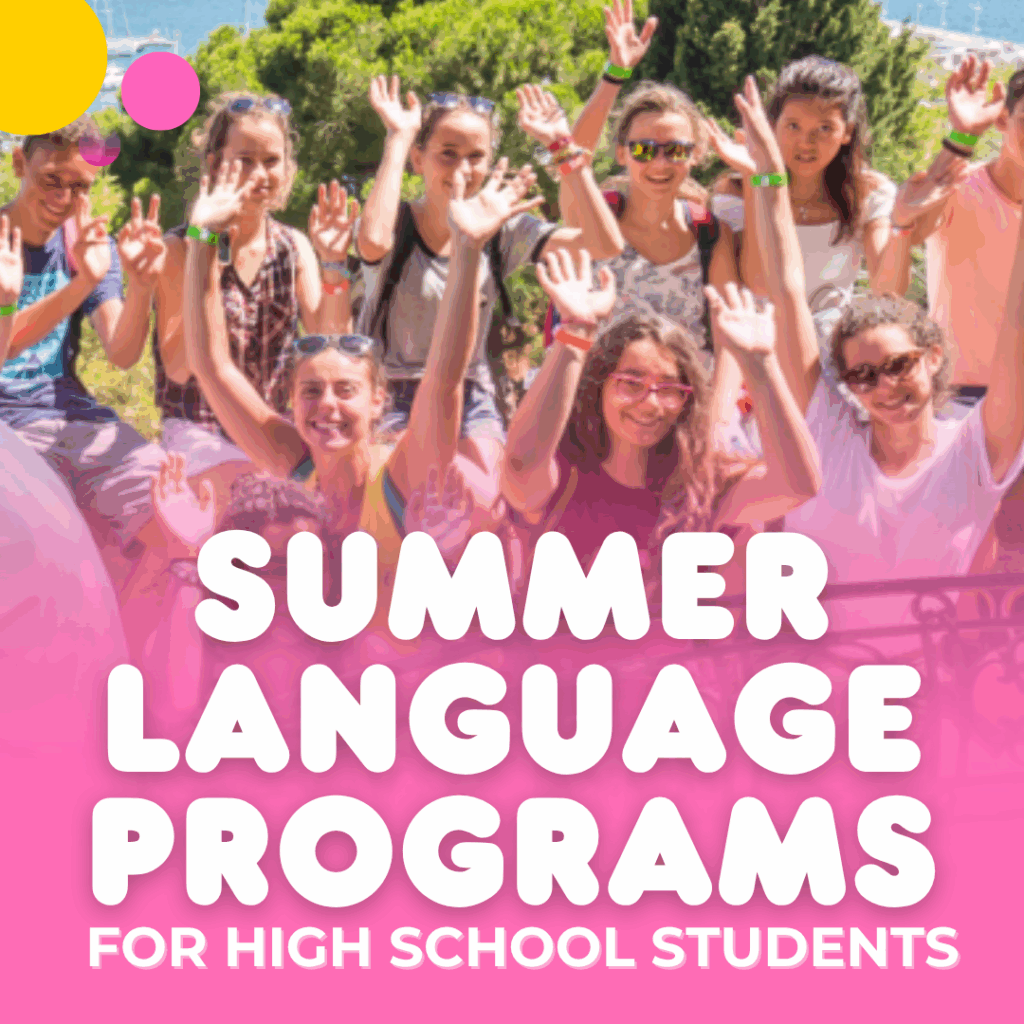
Summer Language Program for High School Students
$297.00

CIEE Language & Culture Programs
Location: Spain, France, Germany, and more
Program length: 3–8 weeks
Starting price: $4,000–$7,000+
What’s included:
- Tuition
- Housing
- Cultural activities
- Excursions
- On-site support
- Pre-departure advising
- Optional academic credit
These are structured programs run through university partnerships. Everything is fairly organized and predictable, which helps if you want a smoother experience with solid support.
Learn more about this program: CIEE Language & Culture Programs
EF Education First Language Campuses
Location: Major cities across Europe
Program length: 2–52 weeks
Starting price: $3,500–$10,000+
What’s included:
- Language classes
- Housing options
- Placement testing
- Cultural activities
- Excursions
- Student support
- Optional add-ons
EF runs large, structured language campuses in different countries. It’s designed to be straightforward and easy to navigate, especially for first-time international students.
Learn more about this program: EF Education First Language Campuses
Goethe-Institut Summer German Programs
Location: Germany
Program length: 2–8 weeks
Starting price: $1,500–$4,000+
What’s included:
- German language instruction
- Cultural activities
- Placement testing
- Learning materials
- Housing support (varies)
This is Germany’s official language institute. The programs tend to be more academic and are often aligned with university pathways.
Learn more about this program: Goethe-Institut Summer German Programs
Institut Français Language Programs
Location: France
Program length: 2–8 weeks
Starting price: $1,200–$4,500+
What’s included:
- French instruction
- Cultural activities
- Placement testing
- DELF/DALF exam prep
- Housing options
These programs are nationally recognized and often focused on academic French and certification exams.
Learn more about this program: Institut Français Language Programs
Instituto Cervantes Accredited Spanish Schools
Location: Spain
Program length: 1–12 weeks
Starting price: $1,000–$5,000+
What’s included:
- Spanish instruction
- Placement testing
- Cultural activities
- Homestay or residence options
- DELE exam preparation
This is a network of accredited Spanish schools across Spain, with fairly consistent standards across locations.
Learn more about this program: Instituto Cervantes Accredited Spanish Schools
University of Barcelona Language Programs
Location: Barcelona, Spain
Program length: 2–6 weeks
Starting price: $1,200–$3,500+
What’s included:
- University-based instruction
- Placement testing
- Cultural activities
- Campus access
- Housing support
These are run through a major university, so the academic environment feels closer to what you’d experience in a degree program abroad.
Learn more about this program: University of Barcelona Language Programs
Join the conversation.
Get real answers.
Beyond the States is a student community for those building their future in Europe.
How Summer Language Immersion Programs Work and How to Apply

Most immersion programs in Europe follow a pretty similar structure, even if the details vary.
Here’s what you can usually expect.
Academic Structure
- 15–25 hours of classes per week
- Small group instruction
- Placement testing when you arrive
- Level-based progression (A1–C1 in Europe)
Cultural Integration
- Guided cultural trips and activities
- Homestays or student residences
- Language partners or conversation exchanges
- Optional weekend travel
Application Process
The steps are usually pretty straightforward:
- Pick your country and language level
- Fill out an online application
- Submit basic academic information
- Pay a deposit or full tuition
- Apply for a visa if needed
- Arrange housing (often included or supported)
Here’s the key difference from U.S. college admissions: there’s usually no long essay process or competitive review. Most programs accept students on a rolling basis and place more emphasis on language level than academic profile.
That said, timing matters. Housing and visas can take time, and summer sessions fill up quickly, so planning ahead makes a big difference.

Cost, Requirements, and Program Options
The cost of summer language immersion programs can vary a lot. It really depends on where you go, how long you stay, and the kind of housing you choose.
Typical Cost Breakdown
Here’s a simple comparison:
Europe (average):
- Tuition: $800 – $3,500 per month
- Housing: $400 – $1,200 per month
- Meals: $200 – $600 per month
- Total for 4 weeks: about $1,500 – $5,000
U.S.-based programs abroad (through colleges):
- Tuition: $3,000 – $7,000 per month
- Housing: often bundled, so total cost is higher
- Meals: sometimes included
- Total for 4 weeks: about $4,000 – $9,000
The big takeaway is pretty straightforward: Europe is usually cheaper, especially when programs are tied to public universities.



Requirements
Most programs are fairly accessible. You’ll usually see:
- Age 16+ (some accept younger students)
- Basic academic standing (most don’t require a specific GPA)
- Placement for all levels, from beginner to advanced
- A valid passport (and a visa in some cases for longer stays)
Program Types
Students usually choose between a few main formats:
University-based immersion programs
- More structured and academic
- Often run through public universities in Europe
Private language schools
- More flexible schedules
- Focus more on speaking and everyday communication
Homestay immersion
- Living with a local family
- Strong cultural exposure
- Often leads to faster speaking improvement
One thing worth keeping in mind: Europe generally has more affordable, publicly funded university programs compared to private U.S.-based study abroad options.
Important Things to Know Before Joining a Program
Before committing to a summer language immersion program, there are a few things students sometimes don’t expect.
1. It can feel mentally intense at first
Using a new language all day is tiring. The first few days are usually the hardest, but progress tends to come quickly after that.
2. Programs are not all the same
Some are more like travel experiences with light instruction. Others are genuinely academic and structured through universities.
3. Housing makes a big difference
Homestays usually speed up language learning more than dorm-style housing because you’re practicing constantly in real situations.
4. Visa rules can be tricky
Even short programs in Europe may require a visa depending on your nationality and how long you stay.
5. It can shape longer plans
A lot of students use these programs as a way to figure out what comes next, like:
- A gap year abroad
- A full bachelor’s degree in Europe
- Or longer-term study plans
What starts as a short summer experience can sometimes turn into a more structured academic path.
Who Is This a Good Fit For?
These programs tend to work well for students who:
- Want to improve language skills quickly before college
- Are thinking about studying a degree abroad later
- Learn better through experience than just classroom study
- Aren’t fully sure yet which country or language they want long-term
- Want a more affordable way to get international experience
They’re usually not a great fit for students who:
- Expect fluency in a couple of weeks
- Prefer fully independent travel with no structure
- Aren’t interested in cultural immersion
Common Myths About Summer Language Immersion Programs
Myth 1: You need to already be fluent
Most programs accept beginners and place students by level.
Myth 2: It’s basically an expensive vacation
Good programs are structured and have clear learning goals.
Myth 3: You won’t learn much in a short time
You actually can improve quickly, especially speaking skills, because you’re using the language constantly.
Myth 4: Only language majors benefit
Students from all kinds of fields use these programs as preparation for studying or working internationally.
Myth 5: They don’t connect to real degrees
Many students move from immersion programs into full degree programs abroad, especially in Europe where English-taught degrees are common.
Frequently Asked Questions
We’re here to help answer your questions about summer language immersion programs
Most are 2–8 weeks, with 4 weeks being the most common.
No. Beginners are usually welcome, and placement tests are standard.
Yes, especially if your goal is faster language learning, cultural exposure, or preparing for study abroad.
Some university programs offer credit, but not all do. It depends on the school.
Around $1,500 to $5,000 for a 4-week program, depending on location and housing.
Yes. Many students later move into full bachelor’s programs in Europe, especially English-taught ones.
Final Thoughts
Summer language immersion programs aren’t just short trips. For many students, they’re an early step into how international education actually works—especially in Europe, where tuition is often lower and degree pathways can be more direct.
The main decision isn’t just “which program should I pick,” but “how does this fit into what I want long-term?”
If you’re trying to figure out whether this kind of program connects to studying a full degree abroad, Beyond The States can help you map out options across Europe and see what actually fits your goals.
You can explore broader planning support, including country options and degree pathways, through a free strategy session.
If you want more structured support, there’s also a College Admissions Counseling option for students who want a clearer, guided path into European universities.