Best Places to Live in France
Many Americans assume living in France is too expensive. While Paris is one of Europe’s pricier cities, plenty of French cities offer an excellent quality of life for much less than what you’d typically spend in major U.S. metro areas.
Here’s what many families don’t realize.
If you’re thinking about earning a fully accredited degree abroad not just spending a semester overseas where you live matters just as much as where you study. France offers internationally recognized universities, affordable tuition at many public institutions, reliable public services, and cities that suit a wide range of budgets and lifestyles.
Whether you’re planning to move permanently, attend university, or simply explore your options, this guide covers the best places to live in France. We’ll compare living costs, lifestyle, healthcare, transportation, and family-friendliness so you can make a more informed decision.
Summary
What Are the Best Places to Live in France?
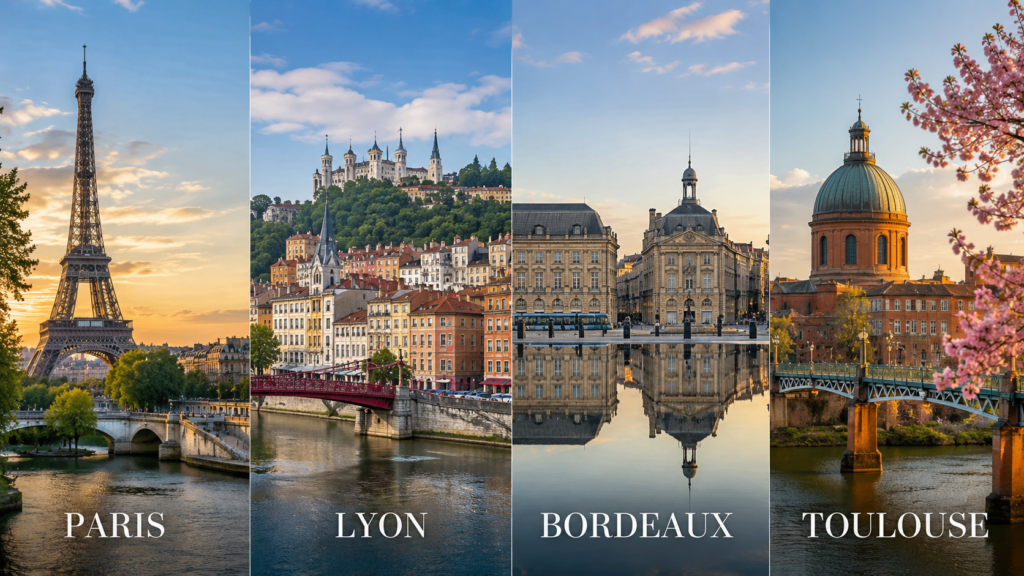
There isn’t one city that’s perfect for everyone. The best place to live depends on what matters most to you.
Some cities are better for career growth. Others stand out because of lower living costs, family-friendly neighborhoods, or a more relaxed pace of life.
Here’s a comparison of four of France’s most popular cities.
| City | Best For | Population | Average Rent (1-bedroom city center) | Strengths |
|---|---|---|---|---|
| Paris | Careers, international students | 2.1 million | $1,400–$2,000/month | Global job market, world-class universities, extensive transit |
| Lyon | Students, professionals | 530,000 | $900–$1,200/month | Strong economy, gastronomy, excellent transportation |
| Bordeaux | Lifestyle, wine industry, digital professionals | 265,000 | $850–$1,150/month | Mild climate, growing startup scene |
| Toulouse | Aerospace, engineering, students | 510,000 | $700–$950/month | Lower costs, large student population, aerospace industry |
Paris
Paris is still France’s economic and cultural hub, making it a top choice for students and professionals alike.
Pros:
- Largest concentration of universities
- Outstanding public transportation
- Diverse international community
- Extensive job opportunities
- Museums, arts, and cultural attractions
Cons:
- Highest housing costs in France
- Competitive rental market
- Smaller apartments
- Higher everyday expenses
If your priorities are career opportunities or attending one of France’s most prestigious universities, Paris may be worth the higher cost of living.
Lyon
Lyon is often ranked as one of the most livable cities in France, and it’s easy to see why. It offers a great balance between affordability and opportunity.
Residents benefit from:
- Efficient metro, tram, and bus systems
- Lower housing costs than Paris
- Strong healthcare services
- A large student population
- Thriving biotechnology and finance industries
For many Americans, Lyon offers one of the best overall combinations of value and quality of life.
Bordeaux
Bordeaux has grown rapidly over the past several years and has become one of France’s most desirable cities.
Some of its biggest draws include:
- Close proximity to the Atlantic coast
- Excellent food culture
- An expanding technology sector
- High-speed rail access to Paris
- Walkable neighborhoods
Housing prices have increased over the past decade, but Bordeaux is still generally more affordable than Paris.
Toulouse
Toulouse continues to attract international students from around the world.
Known as France’s aerospace capital, it’s home to Airbus and many engineering companies, making it especially appealing for students in technical fields.
Some of the advantages include:
- Lower rent
- Large university community
- Sunny climate
- Strong job opportunities in engineering and research
Why Do People Choose to Live in France?
France continues to attract people from around the world for several reasons. From healthcare to public transportation, many aspects of daily life make it an appealing place to settle long term.
Quality of Life
France consistently ranks well for life expectancy, healthcare access, public services, and overall well-being.
Residents typically enjoy:
- Generous vacation time
- Walkable cities
- Strong public infrastructure
- A rich cultural scene
- Fresh local food markets
Healthcare System
France’s healthcare system is widely considered one of the strongest in the world.
Residents benefit from:
- Universal healthcare coverage
- High physician availability
- Lower out-of-pocket healthcare costs than many Americans experience
- Excellent hospitals in major cities
Students enrolled in degree programs may also qualify for access to the French healthcare system, depending on residency requirements.
Public Transportation
In many parts of France, owning a car isn’t necessary.
Major cities offer:
- Metro systems
- Trams
- Regional trains
- High-speed TGV rail connections
- Extensive bike-sharing programs
For many residents, transportation costs are much lower than the cost of owning and maintaining a vehicle in many U.S. cities.
Work-Life Balance
French labor laws place a strong emphasis on personal time.
Compared with many Americans, residents often enjoy:
- More vacation days
- Strong employee protections
- Shorter average workweeks
- Greater focus on family life
For many people, this healthier work-life balance is one of France’s biggest advantages
What Are the Best Places to Live in France for Americans?
Americans moving to France often look for cities that offer:
- International communities
- Easy access to English speakers
- Reliable public transportation
- Good healthcare
- Employment opportunities
- Strong university options
Some of the best choices include:
Paris
A great fit for professionals, graduate students, and anyone who wants the widest range of international connections.
Lyon
Offers an excellent balance between affordability and career opportunities.
Toulouse
Especially well suited for engineering students and aerospace professionals.
Bordeaux
A popular option for remote workers and families looking for a slower pace of life.
Americans pursuing a full bachelor’s or master’s degree can also benefit from France’s internationally recognized higher education system. Degrees from accredited French universities are widely accepted around the world, making them valuable for graduate study or careers in both the United States and other countries.

Join the conversation.
Get real answers.
Beyond the States is a student community for those building their future in Europe.
Which French Cities Are Best for Expats?
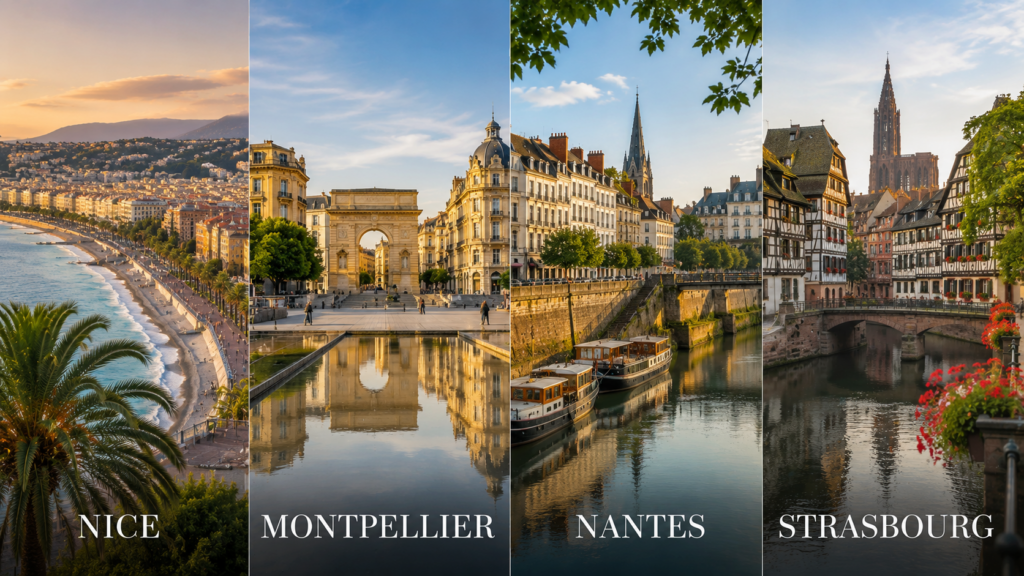
Beyond France’s biggest cities, several other destinations are especially popular with international residents.
Nice
Best for:
- Mediterranean climate
- Retirees
- International professionals
- Coastal lifestyle
Trade-off:
Housing costs are generally higher than in many inland cities.
Montpellier
Popular with students thanks to its:
- Young population
- Universities
- Lower living costs
- Warm weather
- Vibrant cultural scene
Nantes
Known for its:
- Growing technology sector
- Green spaces
- Family-friendly neighborhoods
- Efficient public transportation
Strasbourg
Some of Strasbourg’s biggest advantages include:
- European institutions
- A unique blend of French and German culture
- Excellent cycling infrastructure
- Strong international community
Its location near Germany also creates additional career opportunities for people interested in cross-border work.
What Are the Most Affordable Places to Live in France?
Not everyone needs to live in Paris.
Several French cities offer much lower living costs while still providing excellent public transportation, healthcare, and other essential services.
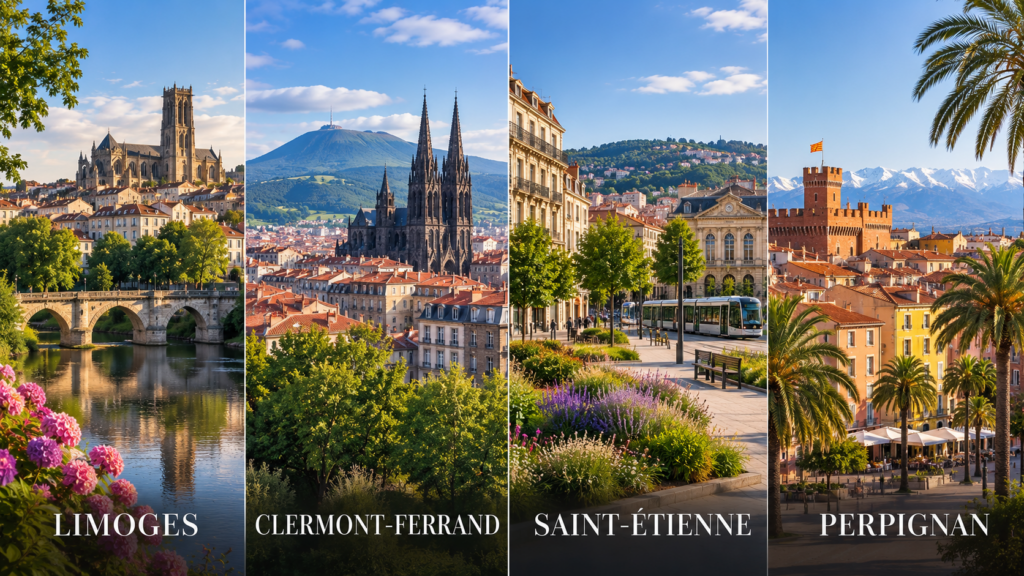
| City | Average Rent (1-bedroom city center) | Cost Advantage |
|---|---|---|
| Limoges | $450–$650 | Very affordable housing |
| Clermont-Ferrand | $500–$700 | Strong student city |
| Saint-Étienne | $400–$650 | One of France’s lowest housing costs |
| Perpignan | $500–$700 | Mediterranean lifestyle at lower prices |
These cities are especially popular with:
- Budget-conscious students
- Families
- Remote workers
- Retirees
Lower housing costs can make a noticeable difference in your overall budget without giving up access to quality healthcare or reliable public transportation.
Which Cities in France Are Best for Families?
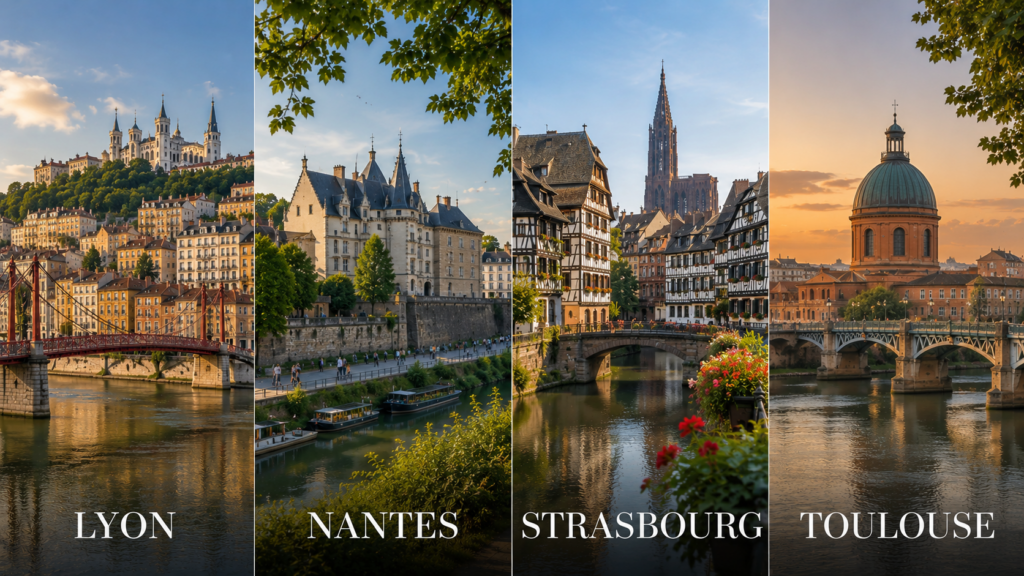
Families often have different priorities than young professionals.
Some of the biggest factors to consider include:
- School quality
- Safety
- Parks
- Healthcare
- Transportation
- Housing space
Cities that are frequently recommended for families include:
Lyon
Offers:
- Highly rated schools
- Plenty of parks and green spaces
- Family-friendly neighborhoods
- Reliable public transportation
Nantes
Known for:
- Beautiful green spaces
- Great amenities for families
- Strong environmental initiatives
- Less traffic and congestion than many larger cities
Strasbourg
Highlights include:
- Safe, welcoming neighborhoods
- Excellent cycling infrastructure
- International schools
- High-quality public services
Toulouse
Families appreciate:
- More affordable housing
- Large parks and outdoor spaces
- A growing economy
- Excellent schools and universities
What Is the Cost of Living in Different French Cities?
The cost of living varies quite a bit depending on where you choose to live in France.
Here’s a practical comparison.
| Expense | Paris | Lyon | Toulouse | Limoges |
|---|---|---|---|---|
| Rent (1-bedroom city center) | $1,400–$2,000 | $900–$1,200 | $700–$950 | $450–$650 |
| Utilities | $120–$220 | $120–$200 | $110–$190 | $100–$180 |
| Monthly Transit Pass | $35–$100 | $50–$75 | $45–$60 | $30–$40 |
| Groceries (single adult) | $300–$450 | $275–$400 | $250–$375 | $225–$350 |
Housing is typically the biggest monthly expense. Transportation and healthcare, however, are generally more affordable than in many major U.S. cities.
Students can often save even more by living in university housing, using subsidized dining options, and taking advantage of discounted public transportation passes.
Studying for a Full Degree in France
For Americans, France offers much more than a great place to live. It’s also home to internationally respected universities with bachelor’s and master’s degree programs taught entirely in English.
You can find programs in fields such as:
- Business
- Engineering
- Computer science
- International relations
- Hospitality
- Sustainability
- Public health
Many public universities charge much lower tuition than comparable schools in the United States. Even private institutions are often competitively priced.
The admissions process is also typically more straightforward. Instead of placing heavy emphasis on extracurricular activities, many European universities focus primarily on your academic background and whether you’re a good fit for the program.

At Beyond The States, we help students find accredited, English-taught degree programs
not semester study abroad opportunities. We research universities, compare costs, and provide clear, practical information so families can make informed decisions.
Who Is This a Good Fit For?
Living and studying in France can be a great option for:
- Students looking for lower tuition costs
- Families exploring international education
- Americans interested in building careers in Europe
- Graduates planning to earn a master’s degree abroad
- Remote workers seeking a high quality of life
- Anyone who values walkable cities and strong public services
It’s an especially good choice for students who want an internationally recognized degree while keeping education costs under control.
Common Misconceptions About Living in France
Myth: You must speak fluent French before moving.
Reality: There are many English-taught degree programs, and international communities are common in larger cities. That said, learning French can make everyday life easier and open up more career opportunities.
Myth: France is only affordable outside major cities.
Reality: Paris is expensive, but cities like Toulouse and Lyon offer a great balance of affordability, job opportunities, and quality of life.
Myth: Degrees earned in France aren’t recognized in the United States.
Reality: Degrees from accredited French universities are internationally recognized. Many graduates continue on to graduate school or build careers around the world.
Myth: France is only a good place for retirees.
Reality: France attracts students, researchers, entrepreneurs, professionals, and families alike. Its universities, healthcare system, transportation network, and overall quality of life appeal to people at many different stages of life.
Frequently Asked Questions
We’re here to help answer your questions about best places to live in France.
Lyon is often considered one of the best all-around choices because it offers a strong mix of affordability, job opportunities, excellent public transportation, healthcare, and quality of life. Paris is still a top pick for those focused on international careers or attending prestigious universities.
Saint-Étienne, Limoges, Clermont-Ferrand, and Perpignan are among the most affordable cities in France, especially when it comes to housing costs.
Yes. France offers excellent healthcare, efficient public transportation, internationally recognized universities, and a high quality of life. Americans should plan for visa requirements and expect to learn some French, but many successfully relocate for work or education.
Yes. Many accredited French universities offer bachelor’s and master’s degree programs taught entirely in English. These are full degree programs
not study abroad semesters and many cost significantly less than similar programs in the United States.
Outside Paris, a single person can often live comfortably on about $1,600–$2,500 per month, depending on housing and lifestyle. Living in Paris usually requires a larger budget, often more than $2,800 per month.
Final Thoughts
The best places to live in France really come down to your priorities. If international career opportunities are at the top of your list, Paris is tough to beat. Lyon is a great choice if you want a mix of affordability, a high quality of life, and solid job prospects. Toulouse continues to attract students and engineers, while cities like Limoges and Saint-Étienne offer a lower cost of living without giving up access to France’s excellent public services.
If you’re thinking about earning a full degree in Europe, France is well worth considering. Many universities offer accredited, English-taught programs with straightforward admissions and tuition that can be much lower than comparable U.S. schools.
If you’re exploring universities in France or anywhere else in Europe, we can help. At Beyond The States, we provide carefully researched information on accredited English-taught programs so you can compare your options and choose the path that best fits your academic and long-term goals.