How to Move to Ireland From the US
American families are paying record prices for college, housing, and healthcare. Still, a lot of people assume living abroad is out of reach. Ireland is starting to change that idea.
Here’s what many families don’t realize.
For U.S. students, graduates, and young professionals, Ireland offers a real path to studying, working, and eventually building a life in Europe. Not just a semester abroad, either. We’re talking about earning a full accredited degree or starting an actual career overseas.
Ireland also checks a few boxes that make the transition easier for Americans. It’s English-speaking, internationally connected, and home to major global employers. That combination makes it one of the more approachable European countries for Americans thinking about relocating.
Summary
Why Move to Ireland From the US?

Ireland appeals to Americans for a few simple reasons:
- English is the primary language
- U.S. degrees are widely recognized
- Irish universities have strong international reputations
- The country has deep ties to tech, finance, and pharmaceutical industries
- Living in Ireland also opens the door to broader travel and opportunities across Europe
But convenience isn’t the only reason people consider the move.
A lot of Americans are also looking for:
- Lower tuition compared to many private U.S. colleges
- A different pace of life
- Better work-life balance
- International career opportunities
- A way into Europe without immediately needing another language
One important reality check, though: Ireland isn’t necessarily cheap. Dublin, in particular, has become expensive. Even so, many Americans find the overall cost equation easier to manage than major U.S. cities once they factor in healthcare, transportation, and university costs.
How to Move to Ireland From the US
There are a few realistic ways for Americans to relocate to Ireland. The best path depends on your age, career stage, and long-term plans.
Best Ways to Move to Ireland
1. Moving to Ireland Through College
For many Americans, studying in Ireland is the most accessible option.
Irish universities actively recruit international students, and the admissions process is often more straightforward than the unpredictable U.S. system.
Students can pursue:
- Bachelor’s degrees
- Master’s degrees
- PhDs
- Specialized professional programs
And yes, these are full accredited degrees, not temporary study abroad programs.
Irish degrees are internationally recognized, including in the United States.
Why this pathway works well
- Student visas are relatively straightforward
- Programs are often shorter than U.S. equivalents
- Graduates may qualify for post-study work permission
- Students can build local networks before entering the job market
Popular fields include:
- Business
- Computer science
- Engineering
- Healthcare
- Pharmaceutical sciences
- International relations
2. Moving to Ireland for Work
Ireland is a major European hub for multinational companies.
Large employers include:
- Meta
- Apple
- Pfizer
- Intel
That creates opportunities for Americans with in-demand skills.
Common industries hiring internationals
| Industry | Strong Demand? | Notes |
|---|---|---|
| Technology | Yes | Software, cybersecurity, AI |
| Pharmaceuticals | Yes | Ireland is a major pharma hub |
| Finance | Yes | Especially in Dublin |
| Healthcare | Moderate to High | Licensing may apply |
| Education | Moderate | International schools and universities |
| Hospitality | Variable | Lower salaries overall |
3. Family or Citizenship Routes
Some Americans may qualify for Irish citizenship through ancestry.
If you have:
- An Irish-born parent
- An Irish-born grandparent
- Certain family connections
…you could be eligible for citizenship or residency rights.
That can make the relocation process much simpler.

Join the conversation.
Get real answers.
Beyond the States is a student community for those building their future in Europe.
Ireland Work Visa Requirements
Americans can’t move to Ireland indefinitely without legal permission. Most people need an employment permit connected to a job offer.
Common visa types
Critical Skills Employment Permit
This permit is designed for high-demand professions, including:
- Tech roles
- Engineering
- Healthcare
- Scientific research
- Finance
Potential benefits include:
- Faster residency pathways
- Easier family reunification
- More long-term stability
General Employment Permit
This covers a broader range of jobs.
Requirements usually include:
- A valid job offer
- Meeting salary thresholds
- Employer sponsorship
Typical requirements
- Valid passport
- Job contract
- Proof of qualifications
- Visa documentation
- Financial evidence in some cases
For most Americans, securing a job before moving is the safest and simplest route.
Ireland Student Visa Requirements
Students attending approved Irish universities can apply for a long-stay student visa.
Typical requirements include:
- Acceptance letter from a recognized institution
- Proof of tuition payment
- Evidence of financial support
- Health insurance
- Passport documentation
Students are generally allowed limited part-time work while studying.
And this is where Ireland stands out a bit. The country also offers post-study work opportunities that can help graduates transition into long-term employment.
Post-Study Work Opportunities in Ireland
Ireland’s graduate pathways are one of the main reasons international students choose to study there.
Unlike some countries where students have to leave almost immediately after graduating, Ireland allows many graduates to stay temporarily while they work and look for longer-term employment.
After graduation, students may qualify to stay and work:
| Degree Level | Typical Post-Study Stay |
|---|---|
| Bachelor’s | Up to 1 year |
| Master’s/PhD | Up to 2 years |
This is usually granted through Ireland’s Third Level Graduate Programme.
In practical terms, it means graduates can stay in Ireland legally after finishing their degree, work full-time, and look for employers willing to sponsor longer-term work permits.
For many students, that becomes the bridge between university and a long-term career in Europe.
Transitioning from student status to work permits
Graduates who secure qualifying jobs may transition into:
Critical Skills Employment Permit
This is one of the strongest long-term options and is generally aimed at:
- High-demand occupations
- Higher salary thresholds
- Specialized professional roles
Benefits can include:
- Faster residency eligibility
- Greater employment stability
- Easier family reunification
General Employment Permit
Graduates who don’t qualify under critical skills categories may still be eligible for broader employment permits depending on their field and employer.
Cost of Living in Ireland
Affordability in Ireland depends heavily on where you live.
Dublin is expensive by European standards. Smaller cities are usually much more manageable.
Estimated Monthly Costs
| Expense | Dublin | Smaller Cities |
|---|---|---|
| Rent (1-bedroom) | $1,800–$2,700 | $1,100–$1,700 |
| Groceries | $300–$500 | $300–$450 |
| Transportation | $100–$180 | $60–$120 |
| Utilities | $120–$220 | Similar |
| Student Expenses | Lower with housing | Lower overall |
Additional relocation costs
- Visa fees
- Flights
- Initial housing deposits
- Health insurance
- Emergency savings
One thing people often underestimate is housing. Tuition gets most of the attention, but finding a place to live in Ireland especially in Dublin deserves just as much planning.
Best Cities to Live in Ireland
Different cities offer very different experiences.
Dublin
Best for:
- Corporate jobs
- International networking
- Tech and finance careers
Challenges:
- High rent
- Competitive housing market
Cork
Best for:
- Smaller-city lifestyle
- Pharmaceuticals
- Students looking for lower costs than Dublin
Galway
Best for:
- Arts and culture
- Student communities
- Scenic lifestyle
Limerick
Best for:
- Affordability
- Growing tech and education sectors
Healthcare and Banking in Ireland
Healthcare in Ireland combines public and private systems.
Many international students and workers use private insurance, especially during their first months after relocating.
Important differences from the U.S.
- Healthcare is usually cheaper than in the U.S.
- Private insurance is still widely used
- Emergency care doesn’t work exactly the same way as in the U.S.
Opening a bank account usually requires:
- Passport
- Proof of address
- Immigration documents
This process can take a while after you arrive. Because of that, many Americans use international banking apps at first while they get set up locally.



Can Americans Buy Property in Ireland?

Yes, Americans can legally buy property in Ireland.
But buying a home doesn’t give you residency rights. That’s a common misunderstanding.
A few things to keep in mind:
- Getting a mortgage can be tougher if you’re not a resident
- Dublin property prices are very high
- You’ll need to account for legal fees and taxes
- Renting first is often the safer move while you settle in
For most people, it makes more sense to secure a visa, stable income, and residency first before thinking about buying property.
Career Opportunities in Ireland
Ireland has a very international job market, with strong demand in several areas:
- Tech
- Pharmaceuticals
- Financial services
- Medical devices
- Education
- Logistics
Average salaries in Ireland
- Software Engineer: $60,000–$100,000+
- Data Analyst: $50,000–$80,000
- Registered Nurse: $45,000–$70,000
- Marketing Professional: $45,000–$75,000
- Teacher: $40,000–$65,000
Salaries depend a lot on experience and location.
One thing to keep in mind: even higher Dublin salaries don’t always feel “higher” in practice because housing costs are so expensive.
Pathway to Permanent Residency in Ireland
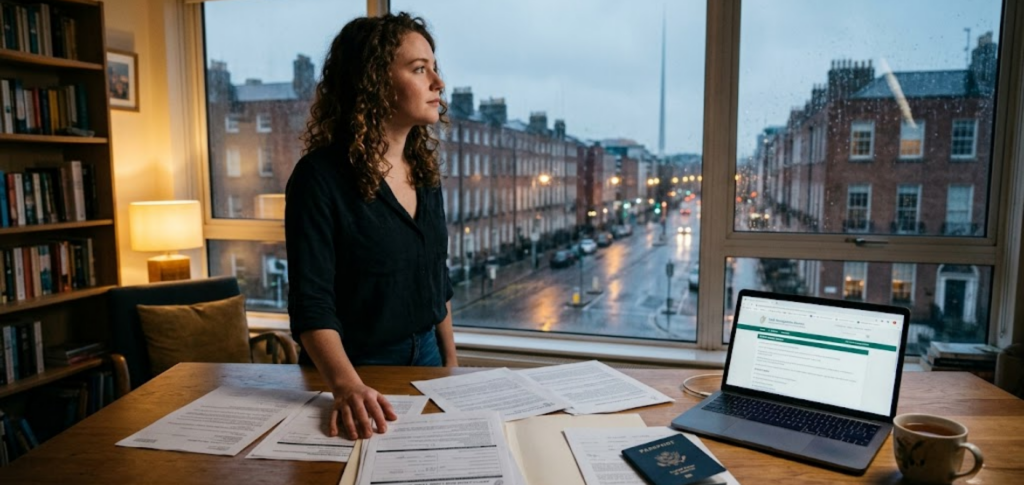
A lot of Americans who move to Ireland eventually look for long-term residency.
Typical path looks like this:
- Enter Ireland through study or work
- Stay legally and maintain continuous residence
- Move into a qualifying job or role
- Apply for long-term residency after enough years
Citizenship can be possible later on for some people.
That said, immigration rules do change, so it’s worth checking the latest requirements before making big plans.
Who Is This a Good Fit For?
Students who want:
- English-speaking universities in Europe
- International career exposure
- Lower degree costs compared to the U.S.
- A more straightforward admissions process
Professionals who want:
- Work experience in Europe
- Access to global companies
- A different pace of work-life balance
Families who value:
- International mobility
- Recognized global education systems
- Long-term relocation options

Common Misconceptions About Moving to Ireland
“Ireland is cheap.”
Not really. Especially in Dublin, rent and housing costs are high and availability is limited.
“A study abroad semester is the same thing.”
It’s not. Full degree programs abroad are completely different from short-term exchange programs. Organizations like Beyond The States focus specifically on helping students earn full accredited degrees overseas.
“You can move without a visa.”
Americans still need the proper legal pathway to live in Ireland long-term.
“Any U.S. degree transfers automatically.”
Not always. Some fields, especially licensed professions, require extra checks or certification.
Frequently Asked Questions
We’re here to help answer your questions about Moving to Ireland from the U.S.
Yes, but you’ll need a legal pathway such as work, study, family ties, or eventually citizenship eligibility.
For many students, yes. You get English-taught degrees, solid international recognition, and post-study work options.
Expect costs for flights, visas, deposits, living expenses, and a safety buffer. Most people need several thousand dollars upfront.
Yes, but usually through a work permit tied to a job offer.
Not fully. Ireland has both public and private healthcare, and many international residents use private insurance.
Conclusion
Ireland can be a great option, but it’s not an “easy move” or a shortcut to living abroad. It’s a real pathway that requires planning.
For students, it offers accredited degrees in English with strong international value. For professionals, it opens doors to multinational employers. And for families, it can be a long-term entry point into Europe.
The key is planning carefully, understanding visa requirements, and choosing the right pathway from the beginning.
Beyond The States helps students and families explore vetted degree programs across Europe including Ireland with a focus on affordability, transparency, and long-term opportunity.
If you are considering earning a full degree abroad, exploring career pathways in Europe, or comparing countries, take the Beyond The States quiz to identify programs that fit your goals.