Top German Language Immersion Programs in Germany
College tuition in the U.S. now often lands somewhere between $40,000 and $80,000 a year at many private universities. At the same time, employers are placing more value on things like international experience, multilingual ability, and the ability to adapt across cultures.
Here’s something a lot of families don’t really hear early on.
You don’t have to wait until college to start building those advantages. And a short study abroad semester isn’t the only option either. Many students are now using German language immersion programs as a stepping stone toward earning a full accredited degree in Europe often at a much lower total cost than a comparable U.S. degree.
For students looking at Germany, Austria, Switzerland, or even broader international career paths in Europe, learning German abroad can be more than just a language experience. It can be the starting point for a full academic path overseas.
Summary
Why German Language Immersion Matters More Than Most Families Expect
If your goal is actual fluency not just memorizing enough to pass an exam immersion is probably the fastest way to get there.
Germany has one of the strongest language learning systems in Europe. Students can attend German language schools designed for international students, join short intensive programs, or use language study as a stepping stone into a future degree program.
But here’s what many students don’t expect.
The biggest benefit is not just learning German faster.
Students who spend time immersed in Germany often:
- Reach conversational fluency within 3–6 months of intensive study
- Adjust more easily to European universities and teaching styles
- Meet language requirements for degree programs that require B2 or C1 German
- Develop cultural awareness that is hard to gain in a classroom back home
And this is where things shift.
Language immersion is not only for students who love languages. For many Americans, it becomes the first step toward earning a full accredited degree in Europe often at a much lower cost than a comparable university in the U.S.
What Are the Top German Language Immersion Programs?
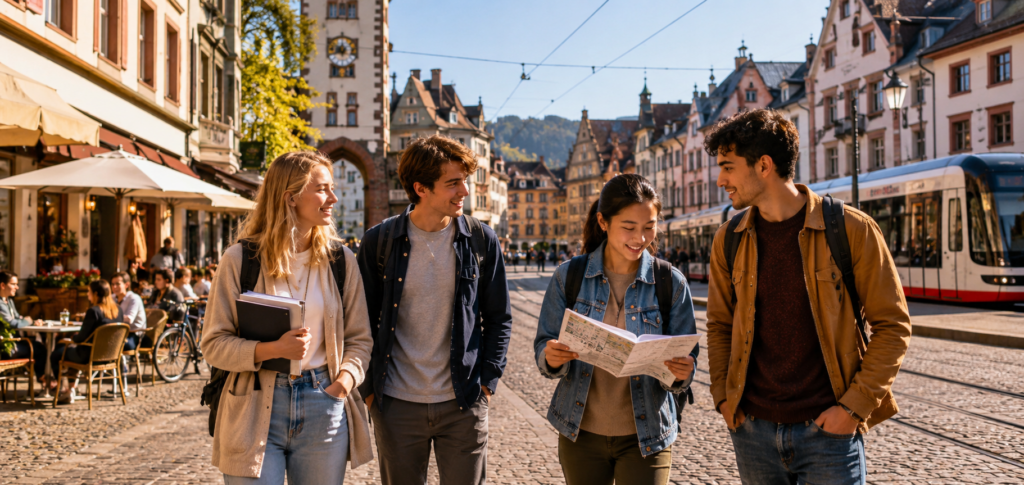
There isn’t one “best” program for everyone. The right fit depends on goals, budget, how long you want to go, and how independent you want the experience to be.
Here are some of the most well-known options for American students.
EF International Language Campuses
Location: Munich, Germany
Program length: 2–52 weeks
Starting price: Around $3,500+ depending on length and housing
Includes: German classes, housing options, placement testing, cultural activities, excursions, student support, and optional internship pathways
EF tends to appeal to students who want a structured experience with a lot of support built in. The logistics are pretty straightforward, which can be a relief for first-time international students.
Munich is also a strong location if a student is thinking ahead to a future degree in Germany. It has strong universities, is generally very safe, and has a large international student community.
Learn more here: EF Munich German Program
IES Abroad
Location: Berlin, Germany
Program length: Summer, semester, or academic year
Starting price: Roughly $7,000–$18,000 depending on duration
Includes: Tuition, housing, cultural activities, orientation, advising, student support, and insurance options
IES Abroad tends to work well for students who want something closer to a university-style experience and a more academically structured setup abroad.
Learn more here: IES Abroad Berlin Program
AIFS Abroad
Location: Berlin, Germany
Program length: Usually 3–12 weeks
Starting price: Around $4,000+
Includes: Housing, tuition, cultural activities, on-site support, excursions, and pre-departure advising
AIFS Abroad is often a good fit for shorter immersion experiences. It’s fairly structured, and costs are relatively predictable compared to some other options.
Learn more here: AIFS Berlin Program
The Excellence Center
Location: Multiple locations in Germany
Program length: 1–13 weeks
Starting price: Around $1,500+ depending on housing and duration
Includes: Intensive language classes, cultural immersion, accommodation, local activities, and personalized support
This option tends to attract students who want a smaller, more hands-on immersion experience. It’s less “packaged” and often feels more locally grounded.
Learn more here: The Excellence Center Programs
Beyond The States Language Immersion Counseling
Location: Customized across Europe
Program length: Flexible
Starting price: Varies based on support level
Includes: Program matching, admissions guidance, degree pathway planning, affordability analysis, visa guidance, and curated immersion recommendations
This service focuses less on “just picking a program” and more on how immersion fits into a longer academic plan especially for students considering full degree programs in Europe.
You can learn more here: Beyond The States Immersion Counseling
Recommended products
-
Language Immersion Program Counseling
Original price was: $1,800.00.$497.00Current price is: $497.00.

Best Places to Learn German Abroad
Not every German-speaking city feels the same. The experience can vary a lot depending on where you go.
Here’s a quick breakdown:
- Munich – Best for business, engineering, and a more structured environment. Clean, professional, and highly international.
- Berlin – More creative, flexible, and often more affordable. Popular with students in media, startups, and the arts.
- Heidelberg – Classic university town with a traditional academic feel.
- Freiburg – Smaller, relaxed, and very student-friendly with a sustainability focus.
- Vienna – Cultural, elegant, and very international.
- Leipzig – More budget-friendly and growing fast as a student city.

Join the conversation.
Get real answers.
Beyond the States is a student community for those building their future in Europe.
Cost of Learning German Abroad
Costs vary depending on the program, city, housing, and intensity. Here’s a general idea of what students typically spend:
- Tuition: $1,500–$8,000+
- Housing: $700–$1,200/month (sometimes included)
- Flights: $700–$1,500
- Food & transport: $400–$800/month
- Insurance: $50–$150/month
One thing to keep in mind: even when you factor in immersion costs, students can still end up spending less overall if they later move into a European bachelor’s program with low or no tuition.
That’s a path that doesn’t really exist in the same way in the U.S.
How to Choose a German Language Program
A lot of families run into trouble here because they pick based on rankings or branding alone. That doesn’t always lead to the right fit.
A few questions help narrow it down:
1. What’s the long-term goal?
Are you trying to:
- Prepare for a full degree abroad
- Build fluency
- Explore international study
- Improve career opportunities
- Meet language requirements for university
The answer really changes what makes sense.
2. How intensive is the program?
Some programs are light a few classes a week plus activities. Others are closer to a full academic schedule with daily instruction and structured assessments. Those are very different experiences.
3. What’s the city like?
Living costs can vary a lot. Munich and Zurich are on the expensive side. Cities like Leipzig are much more budget-friendly.
4. Is housing included?
This matters more than people expect. Host families often help students improve faster because there’s more day-to-day German use, compared to international dorms where English is common.
5. Is it connected to degree pathways?
Some programs are built with university-bound students in mind. Others are more travel-focused. That difference can shape the entire experience.
Common Misconceptions About German Immersion Programs
“I need to be fluent before studying in Germany.”
Not really. Many bachelor’s programs in Germany are taught in English. That said, learning German still makes everyday life and internships much easier.
“German universities aren’t recognized in the U.S.”
That’s not true. German public universities are widely respected internationally, and graduates regularly go on to work or study in the U.S. and elsewhere.
“Learning German abroad is only for gap year students.”
That’s not really true.
People join immersion programs at all kinds of stages, like:
- High school
- Summer breaks
- Gap years
- Right before university
- During university
- Career changes
It’s much more flexible than people think.
“Language immersion is only useful for language majors.”
Also not true.
German can actually support a wide range of careers, including:
- Engineering
- International business
- Data science
- Research
- Healthcare
- International relations
- Sustainability
- Manufacturing
So it’s not just for people studying languages. It often connects directly to technical and global careers.
Who Is This a Good Fit For?
German immersion programs tend to work well for students who:
- Want more affordable international study options
- Are thinking about earning a full degree abroad later
- Do well in structured, organized environments
- Want stronger global career opportunities
- Are interested in STEM or business fields
- Prefer clearer admissions processes
- Want international experience without taking on a lot of debt
A lot of parents also like that European universities usually have more straightforward admission requirements compared to the more unpredictable holistic process in the U.S.

Application Timeline for German Language Programs
9–12 Months Before Departure
- Look into different cities and program types
- Think through long-term academic goals
- Build out a realistic budget
- Apply for or renew passports if needed
6–8 Months Before Departure
- Submit applications
- Start sorting out housing
- Check visa requirements
- Plan out your academic schedule
3–5 Months Before Departure
- Book flights
- Confirm health insurance
- Prepare financial documents
- Start learning basic German
1–2 Months Before Departure
- Wrap up logistics
- Set up banking and phone plans
- Get familiar with cultural expectations
Frequently Asked Questions
We’re here to help answer your questions about German Language Immersion Programs
Some well-known options include EF International Language Campuses, IES Abroad, AIFS Abroad, and other smaller intensive programs. The “best” choice really depends on your budget, how much support you want, and what your goals are.
Most students spend somewhere between $3,000 and $10,000+, depending on the city, housing, and program structure. Germany is still often more affordable than many major U.S. cities, especially when you factor in living costs.
Yes. A lot of students use these programs as a stepping stone to full degree programs abroad. Strong German skills can open up more university options, internship opportunities, and make settling in easier long term.
No. Many programs are built for beginners and place students into the right level once they arrive.
Generally, yes. Germany is widely considered a safe place for international students, especially in well-established university cities.
Final Thoughts
German immersion programs can do more than just teach you a language.
For many students, they’re the starting point for studying abroad more seriously, finding lower-cost degree options in Europe, and opening up international career paths.
That said, choosing the right program isn’t just about picking something off a list. The details really matter.
This is where getting guidance can make a difference.
Beyond The States helps students and families compare accredited European degree options, understand realistic costs, and figure out how language immersion fits into a broader study abroad plan.
You can also explore our Language Immersion Program Counseling service or book a free strategy session if you want to talk through next steps.
If you’re also considering long-term study abroad options, our College Admissions Counseling is another route worth looking at.