Moving to Switzerland from USA
Private U.S. college tuition now regularly climbs past $40,000 a year,. and that is before housing, fees, and daily living costs. For many families, the numbers no longer feel realistic.
Here’s what most people miss.
You do not have to choose between massive student debt and the dream of international education.
Many American students are completing full, accredited degrees abroad not just semester exchanges and turning those degrees into real opportunities to live and work in Europe after graduation.
And Switzerland stands out.
With respected universities, lower tuition options, and strong post-study career pathways, it offers something many students are really looking for: a practical route to both education and long-term mobility.
Summary
Why Move to Switzerland from the United States?

Switzerland is often associated with banking, mountains, and high living costs. That part is true.
But it is also home to some of Europe’s most respected universities, a strong international job market, and one of the highest standards of living in the world.
For U.S. students, the appeal usually comes down to five things:
- Globally recognized degrees
- Lower tuition than many U.S. private universities
- Strong career outcomes
- Multilingual, international work environments
- A realistic path to staying in Europe after graduation
And this is where things shift.
Instead of paying premium U.S. tuition for uncertainty, students can earn a respected degree abroad with clearer admissions processes and stronger cost transparency.
That matters.

Join the conversation.
Get real answers.
Beyond the States is a student community for those building their future in Europe.
College as a Pathway to Move to Switzerland
This is not about taking a semester abroad.
At Beyond The States, we focus on full bachelor’s and master’s degrees taught entirely in English. That means students graduate with a complete accredited degree from a European university not just transfer credits.
This creates a very different immigration path.
A full degree gives you:
- Legal student residency
- Time to build local professional networks
- Internship opportunities
- Post-study work options
- A stronger long-term residency pathway
For many Americans, college is the cleanest and most realistic route for moving to Switzerland from USA.
Best Universities in Switzerland for International Students
Switzerland is home to some of the world’s most respected universities, especially in engineering, business, hospitality, life sciences, and international relations. For American students, the biggest surprise is often this: some of the best universities in Europe come with tuition fees far below many U.S. colleges.
Here’s what that means.
You can earn a globally recognized degree from a top-ranked institution without automatically taking on six figures of student debt.
Below are some of the strongest options for international students.
Top Universities in Switzerland for American Students
| University | Approx. Annual Tuition | Best Known For | Why Students Choose It |
|---|---|---|---|
| ETH Zurich | CHF 1,500–1,700 | Engineering, Computer Science, Mathematics, Physics | World-class STEM reputation and elite global employer recognition |
| EPFL (École Polytechnique Fédérale de Lausanne) | CHF 1,200–1,500 | Engineering, Robotics, AI, Data Science | Innovation-driven campus with strong international research opportunities |
| University of Zurich | CHF 1,500–2,000 | Business, Economics, Law, Medicine | Strong academics with access to Switzerland’s financial center |
| University of Geneva | CHF 1,000–1,500 | International Relations, Political Science, Economics | Ideal for careers connected to diplomacy and global organizations |
| University of St. Gallen (HSG) | CHF 3,000–7,000 | Business, Finance, Economics, Management | One of Europe’s top business schools with excellent employer outcomes |
Tuition varies by degree level, nationality, and program. Specialized private schools are significantly more expensive than public universities.
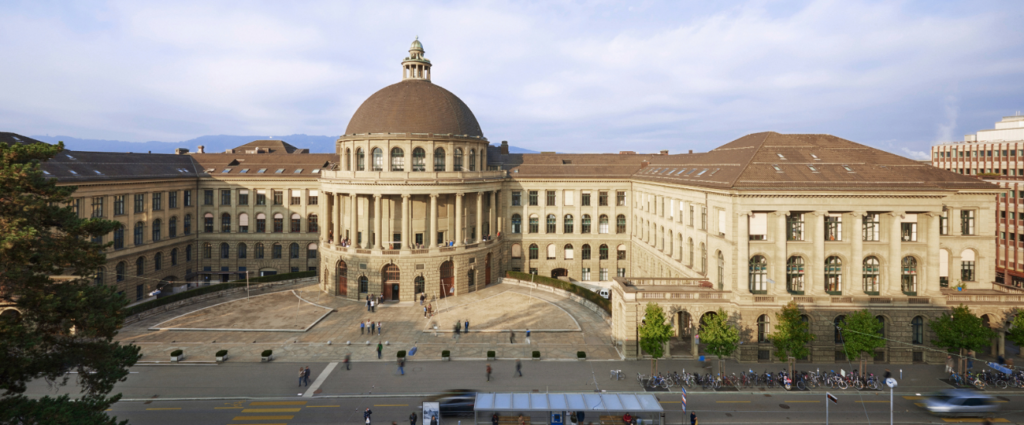
ETH Zurich
Global Ranking and Reputation
ETH Zurich is consistently ranked among the top universities in Europe and often among the top 10 universities worldwide for engineering and technology.
It is frequently compared to institutions like MIT, Stanford, and Imperial College London for STEM fields.
Best Known For
ETH is strongest in:
- Computer Science
- Mechanical Engineering
- Civil Engineering
- Mathematics
- Physics
- Data Science
- Architecture
- Natural Sciences
Approximate Tuition
Public tuition is remarkably low:
Around CHF 730–850 per semester
(roughly CHF 1,500–1,700 per year)
That is often less than one semester of fees at many U.S. universities.
Why Study Here
Students choose ETH because of:
- Exceptional academic reputation
- Strong research funding
- Global employer recognition
- Access to major international companies
- Strong graduate school placement worldwide
This is especially attractive for students planning careers in engineering, research, or tech.
Admission is highly competitive, and academic preparation matters.
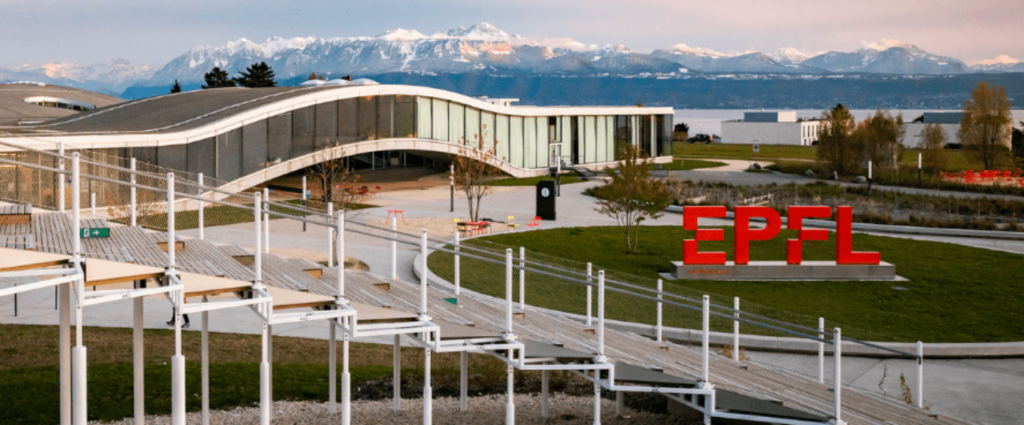
EPFL (École Polytechnique Fédérale de Lausanne)
Global Ranking and Reputation
EPFL is one of Europe’s top science and engineering universities and is especially strong in innovation-driven fields.
It consistently ranks among the best technical universities in the world.
Best Known For
EPFL stands out in:
- Artificial Intelligence
- Robotics
- Computer Engineering
- Biotechnology
- Environmental Science
- Data Science
- Software Engineering
Approximate Tuition
Typical tuition is:
Around CHF 780 per semester
(about CHF 1,200–1,500 annually)
Why Study Here
Students are drawn to EPFL for:
- Cutting-edge research opportunities
- International student community
- Strong startup and innovation ecosystem
- Close industry partnerships
- Beautiful campus on Lake Geneva
For students interested in future-focused industries, EPFL is one of the strongest choices in Europe.
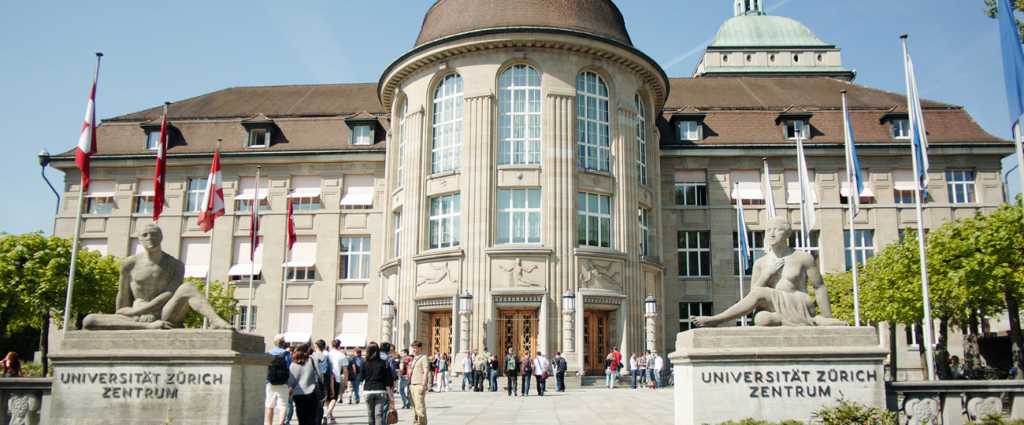
University of Zurich
Global Ranking and Reputation
The University of Zurich is Switzerland’s largest university and highly respected across multiple disciplines.
It is especially well known in business, economics, medicine, and law.
Best Known For
Popular programs include:
- Economics
- Finance
- Business Administration
- Medicine
- Psychology
- Law
- Social Sciences
Approximate Tuition
Estimated tuition:
Around CHF 1,500–2,000 per year
Why Study Here
Students choose Zurich for:
- Strong academic flexibility
- Access to one of Europe’s top financial hubs
- Internship and networking opportunities
- Excellent international reputation
- Large English-taught graduate offerings
For students interested in finance, consulting, or business careers, location matters and Zurich delivers.
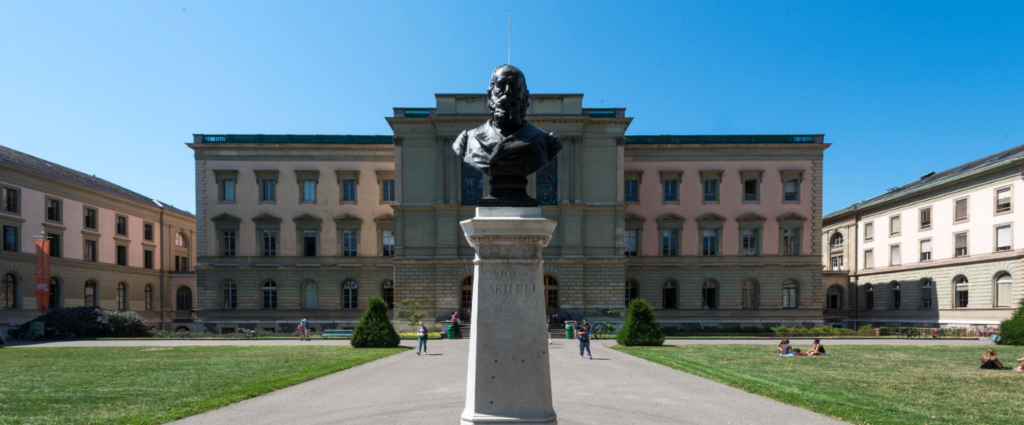
University of Geneva
Global Ranking and Reputation
The University of Geneva is one of the best-known universities for international affairs and political science in Europe.
Its location creates major advantages.
Best Known For
Top fields include:
- International Relations
- Political Science
- Economics
- Global Health
- Law
- Public Policy
Approximate Tuition
Public tuition is often:
Around CHF 1,000–1,500 annually
Why Study Here
Students benefit from:
- Direct access to the United Nations and NGOs
- Strong internship opportunities
- International and multilingual environment
- Excellent academic reputation in diplomacy-related fields
For students interested in global policy, diplomacy, or international careers, Geneva is difficult to beat.
University of St. Gallen (HSG)

Global Ranking and Reputation
St. Gallen is one of Europe’s top business schools and is especially respected by employers in finance and consulting.
Its reputation is strong across Europe and increasingly recognized globally.
Best Known For
HSG is strongest in:
- Finance
- Economics
- Management
- International Affairs
- Business Strategy
Approximate Tuition
Tuition typically ranges from:
CHF 3,000–7,000 per year
depending on the program level.
Why Study Here
Students choose HSG because of:
- Exceptional employer outcomes
- Strong consulting and finance recruitment
- Elite business school reputation
- High graduate salary outcomes
- International academic network
For students comparing expensive U.S. business schools, this can be a very strong value proposition.
Discover all the English-taught European college programs in one place.
Beyond the States provides easy access to 12,600+ European bachelor’s and master’s programs across 870 universities, 550 cities, and 212 areas of study, plus all the resources you need to get there.
3400+
English-taught bachelor’s programs in our database.
550
Beautiful European cities to choose from.
$360,170
Typical savings against a private university in the US.
8200+
English-taught master’s programs in our database.
870
Top-tier universities accepting international students.
$65,038
Typical savings against in-state tuition in the US.
Living Costs for Students in Switzerland
Yes, Switzerland is expensive.
Housing, food, transportation, and health insurance add up quickly.
A realistic monthly student budget often looks like this:
Cost Breakdown for Students
| Expense | Estimated Monthly Cost |
|---|---|
| Housing | $700–$1,500 |
| Food | $400–$700 |
| Transportation | $70–$150 |
| Health Insurance | $250–$450 |
| Personal Expenses | $200–$400 |
| Total | $1,600–$3,200+ |
Cities like Zurich and Geneva are more expensive than smaller university towns like Lausanne or Bern.
Planning matters.
Admission Requirements for US Students
One of the biggest differences between Europe and the U.S. is admissions clarity.
Many Swiss universities are more criteria-based and less dependent on unpredictable holistic admissions.
Here’s what that means:
Students are usually evaluated based on academic qualifications first.
Not personality essays. Not legacy status. Not “demonstrated interest.”
Typical admission requirements for U.S. students may include:
For Bachelor’s Programs
- High school diploma
- GPA requirements
- Specific prerequisite coursework
- AP exams or equivalent academic qualifications (sometimes required)
- English proficiency proof if needed
For Master’s Programs
- Accredited bachelor’s degree
- Relevant academic background
- GPA expectations
- CV or resume
- Motivation letter
- Recommendation letters (varies by program)
This changes the equation.
Students often know much earlier whether they are a strong fit.
Student Visa for Switzerland
Non-EU students need a student visa to study in Switzerland.
The process usually includes:
- University admission letter
- Proof of financial means
- Valid passport
- Housing confirmation
- Health insurance coverage
- Visa application through the Swiss consulate
Financial proof requirements matter.
Students must show they can support themselves during their studies, and families should prepare for that documentation early.
Visa timelines can also be slower than expected, so applications should begin well in advance.
Can You Work While Studying in Switzerland?
Yes, but with restrictions.
International students are generally allowed to work part-time after an initial waiting period, depending on permit rules and canton regulations.
Typical limits include:
- Up to 15 hours per week during the semester
- Full-time work during official breaks
But wait.
Students should not rely on part-time work to fully fund living costs in Switzerland.
It helps. It usually does not cover everything.
Financial planning should assume primary support comes from savings, family contribution, or scholarships.
Staying in Switzerland After Graduation
This is often the biggest long-term question.
Can you stay after graduation?
Often, yes.
Top Jobs in Switzerland and Salary Ranges
Software Engineer / Tech Roles
Switzerland has strong demand for tech talent, especially in Zurich and Lausanne.
- Entry-level: CHF 85,000–110,000
- Mid-level: CHF 110,000–140,000
- Senior: CHF 140,000–180,000+
Strong employers include global tech firms and Swiss startups.
Finance / Investment Banking
Zurich is a major European finance hub.
- Entry-level: CHF 90,000–120,000
- Mid-level: CHF 120,000–160,000
- Senior: CHF 160,000–250,000+
Very competitive; internships are essential.
Data Science / AI
One of the fastest-growing fields.
- Entry-level: CHF 95,000–120,000
- Mid-level: CHF 120,000–150,000
- Senior: CHF 150,000–190,000+
High demand across tech, pharma, and finance.
Engineering (Mechanical, Electrical, Robotics)
A core Swiss industry, especially for ETH Zurich and EPFL graduates.
- Entry-level: CHF 75,000–95,000
- Mid-level: CHF 95,000–120,000
- Senior: CHF 120,000–150,000+
Pharmaceuticals / Biotech
Centered in Basel (Roche, Novartis).
- Entry-level: CHF 80,000–100,000
- Mid-level: CHF 100,000–130,000
- Senior: CHF 130,000–170,000+
Consulting
Highly selective but strong pay.
- Entry-level: CHF 90,000–110,000
- Mid-level: CHF 110,000–150,000
- Senior: CHF 150,000–250,000+
Hospitality & Luxury Management
Strong industry, but lower starting salaries.
- Entry-level: CHF 55,000–75,000
- Mid-level: CHF 75,000–100,000
- Senior: CHF 100,000–140,000+
International Organizations (Geneva)
UN, WHO, NGOs.
- Entry-level: CHF 60,000–85,000
- Mid-level: CHF 85,000–120,000
- Senior: CHF 120,000–160,000+
Permanent Residency Pathways
Permanent residency in Switzerland is not fast, but it is possible.
Common long-term paths include:
- Student visa
- Graduate job search period
- Employer-sponsored work permit
- Long-term residence permits
- Permanent residency eligibility over time
This is not an instant immigration shortcut.
It is a strategic long-term plan.
And for many students, it works.

Tips for Moving Successfully
Now here’s the part that matters.
A successful move usually depends less on excitement and more on preparation.
Practical Tips
- Start researching programs 12–18 months early
- Confirm accreditation before applying
- Understand visa timelines early
- Budget for real living costs, not idealized estimates
- Learn basic local language skills when possible
- Prepare for independent living and administrative paperwork
- Build a realistic post-graduation career strategy
This is where guidance helps.
Families often save time and money by understanding the right-fit countries and programs before applying.
Who Is This a Good Fit For?
Moving to Switzerland from USA through college may be a strong fit if you:
- Want a full accredited degree abroad
- Prefer transparent admissions over unpredictable holistic review
- Are focused on affordability and long-term ROI
- Want international career options
- Are open to multilingual environments
- Value quality of life and stability
It may be less ideal if you want a low-cost destination for living expenses alone Switzerland is expensive day to day.
Common Myths About Studying in Switzerland
Myth 1: Only wealthy students can do this
Not necessarily.
Public university tuition can be surprisingly affordable, even if living costs require careful planning.
Myth 2: U.S. employers will not recognize the degree
False.
Accredited Swiss universities are globally respected.
Graduate school applications and employers generally recognize strong international institutions.
Myth 3: This is just study abroad
No.
We focus on full degrees, not semester exchange programs.
That distinction matters for career outcomes and long-term relocation.
Frequently Asked Questions
We’re here to help answer your questions about Moving to Switzerland from USA
Not casually. But through education, it becomes much more realistic. A student pathway offers structure, legal residency, and stronger long-term career options.
Not usually free, but public university tuition can be much lower than U.S. tuition, sometimes dramatically lower.
Sometimes. Many master’s programs are taught in English, but bachelor’s degrees are often offered in local languages.
Possibly, yes. Graduates may have opportunities to remain for job searching and transition into work permits.
It depends on your goals. If affordability, transparency, and international career pathways matter most, Switzerland can be a strong alternative.
Final Thoughts
Moving to Switzerland from USA is not a shortcut. It is a strategy.
For many students, the smartest path is not trying to move after college, it is choosing the right college first.
A full degree abroad can create affordability, career access, and long-term international options that many families never realize are possible.
Beyond The States helps students explore vetted, accredited programs across Europe, not just semester abroad options, but real degree pathways.
Start by exploring programs, comparing country options, or taking the Beyond The States quiz to see which path fits best.