Study Abroad in Spain
The average cost of attending a private university in the U.S. is now over $60,000 a year. And even public universities can still leave families with six-figure totals by the time graduation rolls around.
At the same time, students in Spain are earning fully accredited bachelor’s degrees in English for a much lower cost.
Most families don’t realize this at first.
Studying abroad in Spain isn’t just about a semester in Barcelona. American students can actually complete an entire degree there. In many cases, tuition is lower, admissions are more straightforward, and the degrees are recognized internationally.
And that changes the conversation quite a bit.
Spain has become one of the easier places in Europe for international students who want affordable, English-taught degrees. You get lower costs, respected universities, and a lifestyle that many students find more balanced than a typical U.S. college experience.
Summary
Why More Americans Are Choosing to Study Abroad in Spain

Spain has always been a popular spot for semester abroad programs. But what’s really shifting now is that more students are enrolling for full degrees.
American students are looking at Spain because of things like:
- Lower tuition
- Programs taught in English
- Simpler admissions
- International career paths
- Better work-life balance
- Lower overall living costs
This matters more than it might seem at first.
For a lot of families, the question is no longer just “Should we do a semester abroad?” It’s more like, “Why are we paying so much at home for something that isn’t necessarily more flexible or better?”
Spain isn’t the right fit for everyone. But for some students, it really does change the financial and academic picture in a big way.
How to Study Abroad in Spain as an American Student
Step 1: Decide Between a Semester Abroad and a Full Degree
Most Americans first come across Spain through study abroad or exchange programs.
But there are two very different paths:
Semester Abroad / Exchange
- 1 semester to 1 year
- Degree comes from the U.S. university
- Often costs the same as regular U.S. tuition
- 3–4 years
- Degree from a Spanish or European university
- Usually much lower total cost
At Beyond The States, the main focus is on full accredited degrees abroad.
Why? Because in many cases, students find they can earn an entire degree internationally for less than what one year at some U.S. universities costs.
Step 2: Choose an English-Taught Program
One common misconception is that you need to be fluent in Spanish before applying.
That’s not always the case.
Spain now offers a growing number of bachelor’s and master’s programs fully taught in English, especially in fields like:
- Business
- International relations
- Hospitality
- Computer science
- Engineering
- Economics
- Marketing
- Psychology
Some programs still include Spanish language classes. Others are entirely in English.
What this really means is students can adjust to life in Spain gradually, without struggling academically from day one.
Discover all the English-taught European college programs in one place.
Beyond the States provides easy access to 12,600+ European bachelor’s and master’s programs across 870 universities, 550 cities, and 212 areas of study, plus all the resources you need to get there.
3400+
English-taught bachelor’s programs in our database.
550
Beautiful European cities to choose from.
$360,170
Typical savings against a private university in the US.
8200+
English-taught master’s programs in our database.
870
Top-tier universities accepting international students.
$65,038
Typical savings against in-state tuition in the US.
Step 3: Understand Admissions Requirements
Admissions in Spain are often more straightforward than in the U.S.
Instead of focusing heavily on extracurriculars, universities usually care more about academics.
Depending on the school, you may need:
- High school diploma
- Transcripts (GPA)
- Passport copy
- Proof of English proficiency
- Motivation letter
- SAT or ACT scores (sometimes)
- Required prerequisite courses
Some universities are very direct about entry requirements based on grades and coursework.
And that can feel like a relief for students who find U.S. admissions overly complex or subjective.

Best Universities in Spain for International Students
Spain has both public and private universities that welcome international students. Here are some of the better-known options offering English-taught or globally oriented programs.
University of Navarra
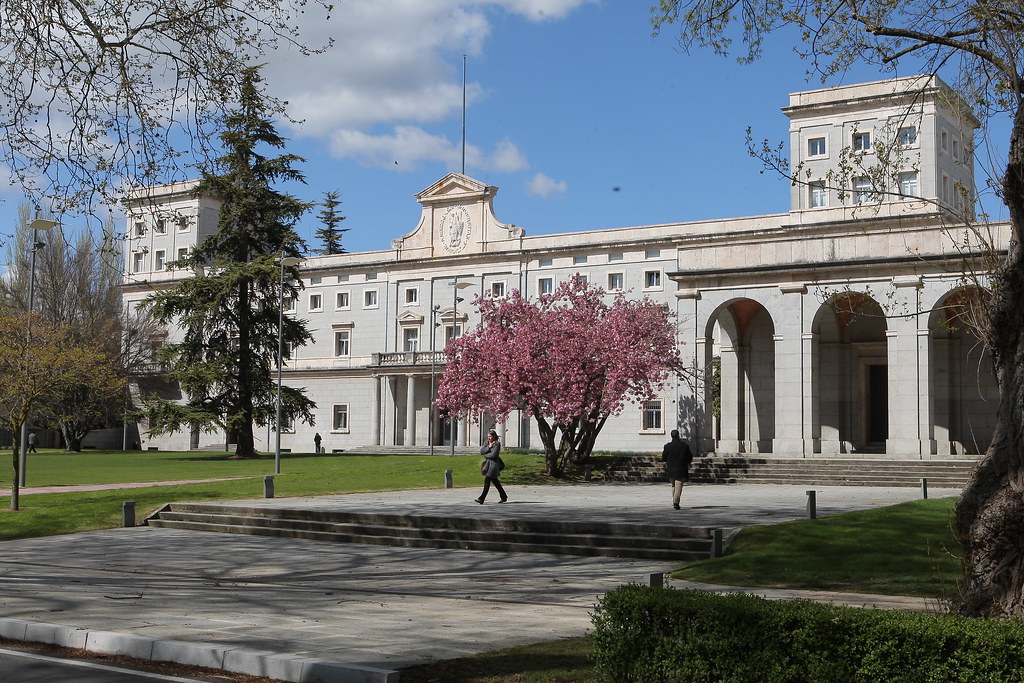
A well-respected private university with strong academics, smaller classes, and solid international programs. It’s especially known for business, communication, and health sciences.
What stands out:
- Strong support for international students
- Good internship connections
- Modern campus environment
- More structured experience than many European universities
Best fit: students who want a more traditional campus feel with close academic support.
IE University

A very international university with a global, entrepreneurial focus. Most programs are taught in English.
What stands out:
- Highly international student body
- Strong business, tech, and entrepreneurship focus
- Flexible and modern curriculum
- Strong industry connections
One thing to know: it’s among the more expensive options in Spain, but many students choose it for its global reputation and networking.
Best fit: students interested in business, startups, international careers, or globally mobile roles.
ESADE
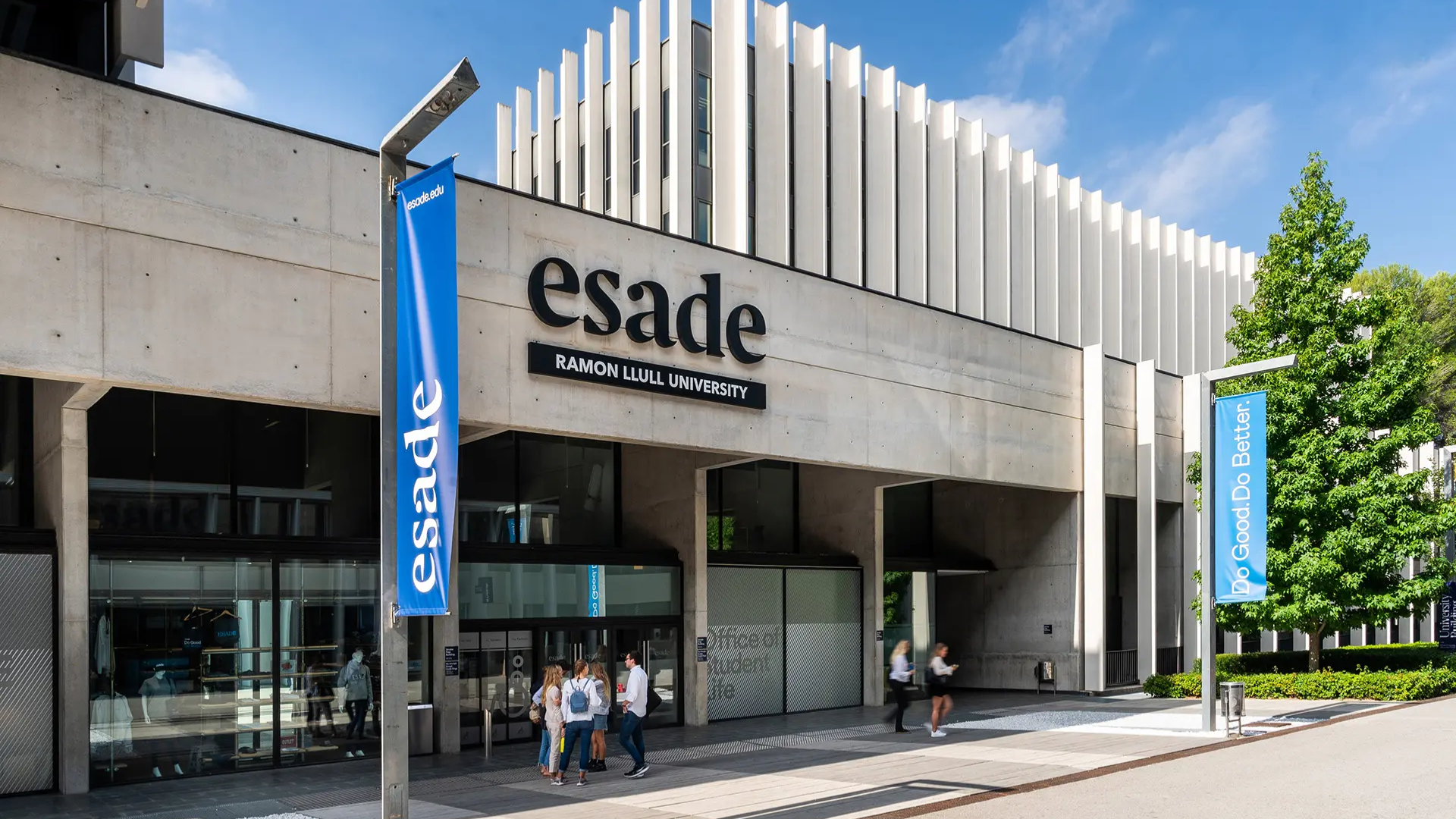
Well known for business and law, especially in Europe. It has a strong reputation for leadership and management education.
What stands out:
- Strong business school reputation
- Good corporate partnerships and internships
- Barcelona location with strong business access
- Collaborative academic environment
Best fit: students focused on business, consulting, finance, or international management.
Universitat Autònoma de Barcelona

A large public university with a strong academic reputation and increasing English-taught options.
What stands out:
- Lower tuition
- Strong research environment
- Diverse student body
- Large campus community
Things to know: administration can feel less personal, and some programs include Catalan or Spanish.
Best fit: students who want strong academics at a lower cost.
University of Barcelona

One of the oldest and most recognized universities in Spain.
What stands out:
- Long academic history
- Lower tuition than private schools
- Strong programs across many fields
- Central Barcelona location
Things to know: many undergraduate programs are still taught in Spanish or Catalan, though English options are growing.
Best fit: independent students comfortable in a large city university setting.
Carlos III University of Madrid

A respected public university with strengths in economics, engineering, and social sciences.
What stands out:
- Strong reputation in economics and business
- Growing number of English-taught programs
- Affordable tuition
- Good graduate outcomes
Best fit: students looking for a balance of cost, academics, and career focus.
Public vs Private Universities in Spain
| Factor | Public Universities | Private Universities |
|---|---|---|
| Tuition | Lower | Higher |
| English-taught degrees | Fewer, but increasing | More common |
| Admissions | More academic/exam-based | More flexible |
| Class sizes | Larger | Smaller |
| Student support | Varies | Often stronger |
Neither option is automatically better. It really depends on budget, goals, language comfort, and the kind of student experience you want.
Cost of Studying Abroad in Spain
Tuition Costs in Spain
Typical yearly ranges:
- Public universities: €1,000–€6,000
- Private universities: €8,000–€20,000
Most English-taught bachelor’s programs fall somewhere between €3,000 and €15,000 per year.
That’s usually far less than U.S. private university tuition.
But tuition is only part of the story.
Living Costs in Spain
Spain is still one of the more affordable countries in Western Europe for students.
Estimated monthly costs:
- Housing: €400–€1,000
- Food: €200–€400
- Transportation: €30–€80
- Health insurance: €50–€100
- Miscellaneous: €150–€300
Madrid and Barcelona tend to be more expensive. Smaller cities like Valencia, Granada, Salamanca, or Seville are often noticeably cheaper.
Total Estimated Annual Cost
A realistic yearly range for international students:
- Lower-cost option: €10,000–€15,000
- Mid-range: €18,000–€28,000
- Premium private universities: €35,000+
Even the higher end can still compete with some U.S. in-state costs, depending on the program.
Study Abroad Programs in Spain for International Students
There are now a lot of study abroad options in Spain, but they vary quite a bit.
Common types include:
- Direct university enrollment
- Third-party program providers
- Exchange partnerships
- Independent degree pathways
At Beyond The States, the focus is on accredited universities rather than expensive third-party study abroad packages.
This matters because students should always be clear about who is actually awarding the degree and whether the program is properly recognized.
Find the Perfect Degree Program in Europe
Explore accredited bachelor’s and master’s programs with clear admissions and lower costs. Join thousands of students already studying across Europe.

Accreditation and Degree Recognition
A common question is:
“Will a Spanish degree be recognized in the U.S.?”
In most cases, yes.
Spain is part of the European Higher Education Area (EHEA), which helps standardize degrees across Europe.
Degrees from recognized Spanish universities are generally accepted by:
- U.S. employers
- Graduate schools
- Professional programs
Some careers do require extra steps, especially regulated fields like:
- Medicine
- Nursing
- Architecture
- Law
Those may involve additional licensing or credential evaluation after graduation.
But for most academic and professional paths, accredited Spanish degrees are recognized internationally and transfer well across countries.
Student Visas and Residency
Most American students studying full-time in Spain will need a student visa.
The process usually requires:
- A university acceptance letter
- Proof of financial support
- Health insurance
- A background check
- Housing documentation
Timing matters here. Visa applications can take a while, so it’s smart to start preparing several months before your planned departure.
Spain also offers options that may let graduates stay temporarily after finishing their degree, whether for job searching or additional study.
Rules and policies can change, though, so students should always check the latest visa requirements before applying.
Common Misconceptions About Studying in Spain
“It’s Just a Semester Abroad Destination”
Spain is still one of the most popular places for study abroad programs.
But that’s only part of the picture now. Many universities actively recruit international students for full degrees, not just short-term exchange semesters.
For a growing number of students, Spain is becoming a place to earn an entire degree not just spend a few months abroad.
“Degrees Abroad Are Less Legitimate”
Accredited universities in Spain operate within regulated national education systems across Europe.
Many of these institutions have strong reputations and long histories of educating international students.
The important part is making sure the university and program are properly accredited and academically solid. That’s where careful research really matters.
“You Must Be Fluent in Spanish”
Not necessarily.
A lot of programs are taught entirely in English, especially at the master’s level and in fields like business or technology.
That said, learning Spanish makes everyday life much easier. It can also help with:
- Internships
- Social life and integration
- Career opportunities
- Navigating daily routines
Even basic Spanish skills can go a long way.
“Admissions Are Impossible”
European admissions can absolutely be academically demanding.
At the same time, they’re often more straightforward than the U.S. process. Students are usually evaluated more directly on:
- Grades
- Relevant coursework
- Program fit
- Language qualifications
There’s generally less focus on building the “perfect” extracurricular story or highly polished admissions narrative.
Who Is This a Good Fit For?
Studying in Spain can be a strong option for students who:
- Want lower overall college costs
- Prefer clearer, more structured admissions requirements
- Are excited about international experiences
- Want a more independent college lifestyle
- Are interested in learning Spanish
- Want a degree recognized internationally
- Feel frustrated by how unpredictable U.S. admissions can be
It may be a less natural fit for students who:
- Want a traditional American campus atmosphere
- Prefer highly residential college environments
- Need large NCAA athletic programs
- Feel uncomfortable living abroad
In the end, fit matters more than rankings.
Frequently Asked Questions
We’re here to help answer your questions about studying abroad in Spain.
Yes. American students can complete bachelor’s, master’s, and doctoral degrees at accredited Spanish universities.
Total yearly costs are often between €10,000 and €35,000, depending on tuition, location, and lifestyle.
Yes. Many Spanish universities now offer programs taught fully in English, especially in areas like business, international relations, and technology.
Requirements vary by university, but students commonly need transcripts, proof of graduation, English proficiency documentation, and a passport.
Yes. Degrees from accredited Spanish universities are generally recognized across Europe and internationally.
Often, yes.
Many students find that the total cost of studying in Spain is significantly lower than attending a private university in the U.S., and sometimes even lower than out-of-state tuition at public universities.
Final Thoughts
Spain offers much more than the typical semester abroad experience.
For many students, it can be a practical path to an affordable degree that’s internationally recognized, with clearer admissions processes and lower overall costs than many U.S. options.
Studying abroad is not the right choice for everyone. But more students could realistically consider it than most people realize.
That’s where guidance can make a big difference.
Beyond The States researches and reviews English-taught degree programs across Europe so students can compare options with more clarity and confidence.
If you’re considering Spain or another European country start by comparing programs, looking closely at costs, and figuring out what matters most to you academically and financially.
You can also explore the free strategy session through Beyond The States or browse degree options in the Beyond The States Programs Database.